

Wrist (TFCC) disc injury (Discus triangularis lesion)
Classification of TFCC Lesions
TFCC lesions can be classified according to the cause and extent of the damage:
- Traumatic TFCC lesion:
- Acute injury due to external influences such as falls or sudden rotational movements.
- Degenerative TFCC lesion:
- Damage due to wear and tear, often caused by age-related wear or chronic overuse.
- Complex TFCC lesion:
- Combination of traumatic and degenerative damage with additional accompanying injuries.
Causes of TFCC disc injury
The causes of TFCC disc injury are varied and include:
- Traumatic events:
- A fall on the outstretched hand is a common cause of TFCC lesions.
- Sudden, forceful twisting movements of the wrist, as seen in sports or accidents, can damage the TFCC.
- Degenerative changes:
- With increasing age, the load-bearing capacity of the TFCC decreases, increasing the likelihood of damage.
- Chronic overuse from repeated movements or stresses, such as in tennis or working with heavy tools.
- Anatomical factors:
- An elongated ulna (ulna-plus variant) leads to increased stress on the TFCC, resulting in wear and tear.
- Inflammatory diseases:
- Rheumatoid arthritis or other inflammatory diseases can weaken the TFCC and make it more susceptible to injury.
Symptoms of TFCC disc injury
The symptoms of a TFCC disc injury vary depending on the severity and cause, but often include:
- **Pain:**
- Localized pain on the little finger side (ulnar side) of the wrist, intensified during rotational movements or stress.
- **Swelling:**
- Visible or palpable swelling in the wrist area.
- **Clicking or snapping noises:**
- An audible or palpable clicking when moving the wrist.
- **Feeling of instability:**
- The sensation that the wrist is "giving way" or is unstable.
- **Movement restrictions:**
- Difficulties with rotational movements such as turning a key or opening a jar.
Diagnosis of TFCC disc injury
The diagnosis is made through a combination of medical history, clinical examination, and imaging techniques:
- Medical history:
- The doctor inquires about the course of the symptoms, possible causes of injury, and stress patterns of the wrist.
- Clinical examination:
- Special tests such as the grip strength test or the press test help identify pain and instability in the TFCC area.
- Imaging techniques:
- MRI: High-resolution imaging of soft tissue damage such as tears in the TFCC.
- Arthroscopy: Diagnostic and therapeutic method for direct viewing of joint structures.
Treatment options for TFCC disc injury
Conservative Therapy
In many cases, a TFCC disc injury can be treated without surgery:
- Immobilization:
- Use of wrist splints or orthoses to relieve the TFCC.
- Physiotherapy:
- Exercises to strengthen the surrounding muscles and improve stability.
- Pain therapy:
- Nonsteroidal anti-inflammatory drugs (NSAIDs) like ibuprofen to reduce pain and inflammation.
- Injection therapy:
- Injections of cortisone or hyaluronic acid to relieve inflammation.
Surgical Therapy
If conservative measures are not sufficient or in cases of severe damage, surgery may be necessary:
- Arthroscopic repair:
- Minimally invasive techniques for suturing or removing damaged TFCC parts.
- Open surgery:
- Required in rare cases of complex damage, e.g., with an ulna-plus variant.
- Reconstruction:
- Replacement of the damaged TFCC with tissue from other body areas.
Preventive measures for TFCC disc injury
To prevent TFCC disc injuries, the following measures are recommended:
- Ergonomic work: Avoiding unilateral strain or repetitive rotational movements.
- Proper technique in sports: Using protective measures and training correct movement patterns.
- Strengthening wrist muscles: Regular exercises to improve stability.
- Avoiding overstrain: Taking breaks during intense activities or wrist strain.
- Early treatment: Immediate clarification at the first signs of pain or instability.

Tendovaginitis
Tendovaginitis, medically referred to as tenosynovitis, is an inflammatory condition of the tendon sheath that surrounds the tendon and ensures its gliding ability. It often occurs in the hands, wrists, or forearms, but can also affect other body…
Dupuytren's disease
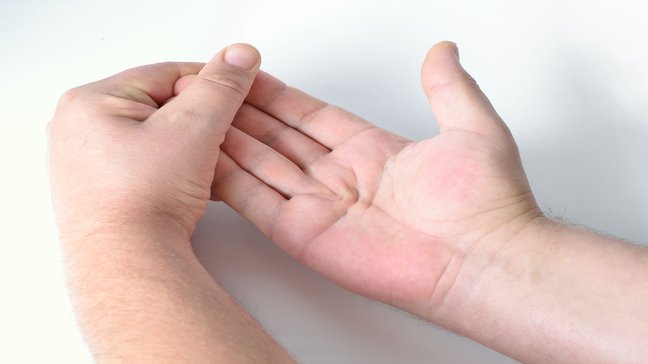
Dupuytren's disease, also known as Dupuytren's contracture, is a chronic condition of the connective tissue in the palm of the hand. It leads to a nodular thickening and shortening of the palmar aponeurosis, causing the affected fingers to…

Mouse arm (Repetitive Strain Injury - RSI)
Mouse arm, medically also referred to as Repetitive Strain Injury (RSI), is an overuse injury caused by repetitive and monotonous movements. This condition primarily affects people who work long hours at a computer and manifests as pain and…

Carpal tunnel syndrome
Carpal tunnel syndrome (CTS) is a common nerve compression disorder in which the median nerve is compressed in the wrist area. This compression leads to pain, numbness, and weakness in the hand, particularly in the thumb, index finger, and middle…
Wrist (TFCC) disc injury (Discus triangularis lesion)
Classification of TFCC Lesions
TFCC lesions can be classified according to the cause and extent of the damage:
- Traumatic TFCC lesion:
- Acute injury due to external influences such as falls or sudden rotational movements.
- Degenerative TFCC lesion:
- Damage due to wear and tear, often caused by age-related wear or chronic overuse.
- Complex TFCC lesion:
- Combination of traumatic and degenerative damage with additional accompanying injuries.
Causes of TFCC disc injury
The causes of TFCC disc injury are varied and include:
- Traumatic events:
- A fall on the outstretched hand is a common cause of TFCC lesions.
- Sudden, forceful twisting movements of the wrist, as seen in sports or accidents, can damage the TFCC.
- Degenerative changes:
- With increasing age, the load-bearing capacity of the TFCC decreases, increasing the likelihood of damage.
- Chronic overuse from repeated movements or stresses, such as in tennis or working with heavy tools.
- Anatomical factors:
- An elongated ulna (ulna-plus variant) leads to increased stress on the TFCC, resulting in wear and tear.
- Inflammatory diseases:
- Rheumatoid arthritis or other inflammatory diseases can weaken the TFCC and make it more susceptible to injury.
Symptoms of TFCC disc injury
The symptoms of a TFCC disc injury vary depending on the severity and cause, but often include:
- **Pain:**
- Localized pain on the little finger side (ulnar side) of the wrist, intensified during rotational movements or stress.
- **Swelling:**
- Visible or palpable swelling in the wrist area.
- **Clicking or snapping noises:**
- An audible or palpable clicking when moving the wrist.
- **Feeling of instability:**
- The sensation that the wrist is "giving way" or is unstable.
- **Movement restrictions:**
- Difficulties with rotational movements such as turning a key or opening a jar.
Diagnosis of TFCC disc injury
The diagnosis is made through a combination of medical history, clinical examination, and imaging techniques:
- Medical history:
- The doctor inquires about the course of the symptoms, possible causes of injury, and stress patterns of the wrist.
- Clinical examination:
- Special tests such as the grip strength test or the press test help identify pain and instability in the TFCC area.
- Imaging techniques:
- MRI: High-resolution imaging of soft tissue damage such as tears in the TFCC.
- Arthroscopy: Diagnostic and therapeutic method for direct viewing of joint structures.
Treatment options for TFCC disc injury
Conservative Therapy
In many cases, a TFCC disc injury can be treated without surgery:
- Immobilization:
- Use of wrist splints or orthoses to relieve the TFCC.
- Physiotherapy:
- Exercises to strengthen the surrounding muscles and improve stability.
- Pain therapy:
- Nonsteroidal anti-inflammatory drugs (NSAIDs) like ibuprofen to reduce pain and inflammation.
- Injection therapy:
- Injections of cortisone or hyaluronic acid to relieve inflammation.
Surgical Therapy
If conservative measures are not sufficient or in cases of severe damage, surgery may be necessary:
- Arthroscopic repair:
- Minimally invasive techniques for suturing or removing damaged TFCC parts.
- Open surgery:
- Required in rare cases of complex damage, e.g., with an ulna-plus variant.
- Reconstruction:
- Replacement of the damaged TFCC with tissue from other body areas.
Preventive measures for TFCC disc injury
To prevent TFCC disc injuries, the following measures are recommended:
- Ergonomic work: Avoiding unilateral strain or repetitive rotational movements.
- Proper technique in sports: Using protective measures and training correct movement patterns.
- Strengthening wrist muscles: Regular exercises to improve stability.
- Avoiding overstrain: Taking breaks during intense activities or wrist strain.
- Early treatment: Immediate clarification at the first signs of pain or instability.
Tendovaginitis
Tendovaginitis, medically referred to as tenosynovitis, is an inflammatory condition of the tendon sheath that surrounds the tendon and ensures its gliding ability. It often occurs in the hands, wrists, or forearms, but can also affect other body…
Dupuytren's disease
Dupuytren's disease, also known as Dupuytren's contracture, is a chronic condition of the connective tissue in the palm of the hand. It leads to a nodular thickening and shortening of the palmar aponeurosis, causing the affected fingers to…
Mouse arm (Repetitive Strain Injury - RSI)
Mouse arm, medically also referred to as Repetitive Strain Injury (RSI), is an overuse injury caused by repetitive and monotonous movements. This condition primarily affects people who work long hours at a computer and manifests as pain and…
Carpal tunnel syndrome
Carpal tunnel syndrome (CTS) is a common nerve compression disorder in which the median nerve is compressed in the wrist area. This compression leads to pain, numbness, and weakness in the hand, particularly in the thumb, index finger, and middle…