

Dupuytren's disease
Classification of Dupuytren's Disease
The disease is divided into different stages, depending on the manifestation and severity:
1. **Early stage:** Nodule formation in the palm of the hand without significant functional limitations.
2. **Advanced stage:** Formation of cords causing finger flexion.
3. **Severe stage:** Pronounced flexion contractures, where the fingers can hardly be straightened.
4. **Recurrence:** Reappearance of the contracture after previous treatment.
Causes of Dupuytren's disease
The exact causes of Dupuytren's disease are not fully understood, but genetic and external factors play an important role:
- Genetic predisposition:
- A familial clustering is common, especially among people of Northern European descent.
- Age:
- The disease usually occurs from the age of 50.
- Gender:
- Men are about five times more likely to be affected than women.
- Risk factors:
- Comorbidities such as diabetes mellitus, alcohol abuse, or epilepsy.
- Mechanical stress:
- Regular overuse of the hands, e.g., through heavy physical work.
Symptoms of Dupuytren's disease
The symptoms develop gradually and are often bilateral, with one hand often more affected:
- Nodule formation: Painless, firm nodules in the palm, often the first sign.
- Cord formation: Visible or palpable cords that extend along the flexor tendons.
- Flexion contracture: Progressive shortening of the cords, leading to an inability to straighten the fingers.
- Limited function: Difficulty in grasping or holding objects, especially in advanced stages.
- Skin changes: Indentations or hardening of the skin over the affected areas.
Diagnosis of Dupuytren's Disease
Conservative Therapy
In the early stages, treatment can be done without surgery:
- Physiotherapy:
- Exercises to maintain finger mobility.
- Injection Therapy:
- Collagenase injections to dissolve the cords.
- Manual Therapy:
- Mobilization of the hand through targeted maneuvers.
Surgical Therapy
In advanced stages or with severe functional impairment, surgery is necessary:
- Fasciotomy:
- Cutting the thickened cords to restore finger mobility.
- Fasciectomy:
- Removal of the diseased connective tissue.
- Dermofasciectomy:
- Removal of the palmar aponeurosis and the overlying skin with skin grafting.
Treatment options for Dupuytren's disease
Conservative Therapy
In the early stages, treatment can be done without surgery:
- Physiotherapy:
- Exercises to maintain finger mobility.
- Injection Therapy:
- Collagenase injections to dissolve the cords.
- Manual Therapy:
- Mobilization of the hand through targeted maneuvers.
Surgical Therapy
In advanced stages or with severe functional impairment, surgery is necessary:
- Fasciotomy:
- Cutting the thickened cords to restore finger mobility.
- Fasciectomy:
- Removal of the diseased connective tissue.
- Dermofasciectomy:
- Removal of the palmar aponeurosis and the overlying skin with skin grafting.
Preventive measures for Dupuytren's disease
To prevent or delay the progression of the disease, the following measures are recommended:
- Regular exercise: Stretching exercises and mobilization of the fingers to maintain flexibility.
- Ergonomic work practices: Reducing the strain on the hands through optimized tools or work techniques.
- Minimize risk factors: Control of comorbidities such as diabetes and avoidance of alcohol abuse.
- Early detection: Seek medical advice early at the first signs such as nodule formation.
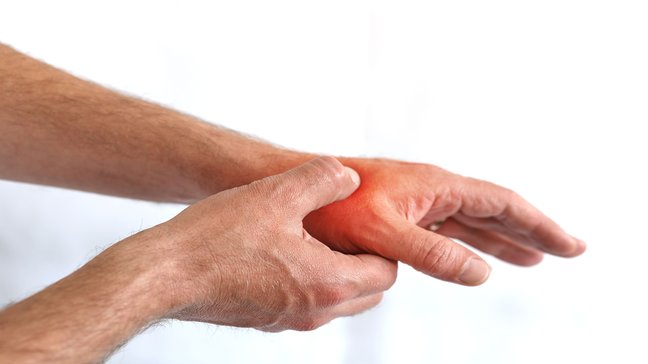
Rhizarthrosis
Rhizarthrosis is a degenerative disease of the thumb saddle joint, caused by the wear of the cartilage between the first metacarpal bone and the trapezium bone (Os trapezium). It is one of the most common forms of osteoarthritis in the hand and…

Finger polyarthrosis
Finger polyarthrosis, also known as polyarthrosis of the finger joints, is a degenerative disease characterized by the progressive wear of the joint cartilage in multiple finger joints. It leads to pain, stiffness, and limited mobility and occurs…

Wrist (TFCC) disc injury (Discus triangularis lesion)
A TFCC disc injury, also known as a triangular fibrocartilage complex lesion, affects the triangular fibrocartilage complex (TFCC) in the wrist. This structure consists of fibrocartilage and ligaments and is located between the ulna, the radius, and…
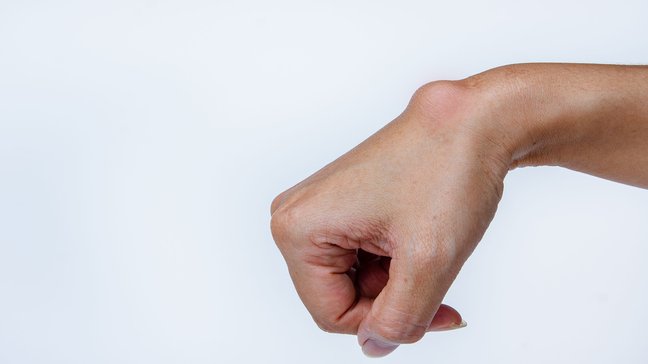
Wrist ganglion
A wrist ganglion, colloquially also known as a synovial cyst, is a benign, fluid-filled cyst that forms near joints or tendon sheaths. A ganglion most commonly occurs on the dorsal side of the wrist, but it can also appear on the palmar side or in…
Dupuytren's disease
Classification of Dupuytren's Disease
The disease is divided into different stages, depending on the manifestation and severity:
1. **Early stage:** Nodule formation in the palm of the hand without significant functional limitations.
2. **Advanced stage:** Formation of cords causing finger flexion.
3. **Severe stage:** Pronounced flexion contractures, where the fingers can hardly be straightened.
4. **Recurrence:** Reappearance of the contracture after previous treatment.
Causes of Dupuytren's disease
The exact causes of Dupuytren's disease are not fully understood, but genetic and external factors play an important role:
- Genetic predisposition:
- A familial clustering is common, especially among people of Northern European descent.
- Age:
- The disease usually occurs from the age of 50.
- Gender:
- Men are about five times more likely to be affected than women.
- Risk factors:
- Comorbidities such as diabetes mellitus, alcohol abuse, or epilepsy.
- Mechanical stress:
- Regular overuse of the hands, e.g., through heavy physical work.
Symptoms of Dupuytren's disease
The symptoms develop gradually and are often bilateral, with one hand often more affected:
- Nodule formation: Painless, firm nodules in the palm, often the first sign.
- Cord formation: Visible or palpable cords that extend along the flexor tendons.
- Flexion contracture: Progressive shortening of the cords, leading to an inability to straighten the fingers.
- Limited function: Difficulty in grasping or holding objects, especially in advanced stages.
- Skin changes: Indentations or hardening of the skin over the affected areas.
Diagnosis of Dupuytren's Disease
Conservative Therapy
In the early stages, treatment can be done without surgery:
- Physiotherapy:
- Exercises to maintain finger mobility.
- Injection Therapy:
- Collagenase injections to dissolve the cords.
- Manual Therapy:
- Mobilization of the hand through targeted maneuvers.
Surgical Therapy
In advanced stages or with severe functional impairment, surgery is necessary:
- Fasciotomy:
- Cutting the thickened cords to restore finger mobility.
- Fasciectomy:
- Removal of the diseased connective tissue.
- Dermofasciectomy:
- Removal of the palmar aponeurosis and the overlying skin with skin grafting.
Treatment options for Dupuytren's disease
Conservative Therapy
In the early stages, treatment can be done without surgery:
- Physiotherapy:
- Exercises to maintain finger mobility.
- Injection Therapy:
- Collagenase injections to dissolve the cords.
- Manual Therapy:
- Mobilization of the hand through targeted maneuvers.
Surgical Therapy
In advanced stages or with severe functional impairment, surgery is necessary:
- Fasciotomy:
- Cutting the thickened cords to restore finger mobility.
- Fasciectomy:
- Removal of the diseased connective tissue.
- Dermofasciectomy:
- Removal of the palmar aponeurosis and the overlying skin with skin grafting.
Preventive measures for Dupuytren's disease
To prevent or delay the progression of the disease, the following measures are recommended:
- Regular exercise: Stretching exercises and mobilization of the fingers to maintain flexibility.
- Ergonomic work practices: Reducing the strain on the hands through optimized tools or work techniques.
- Minimize risk factors: Control of comorbidities such as diabetes and avoidance of alcohol abuse.
- Early detection: Seek medical advice early at the first signs such as nodule formation.
Rhizarthrosis
Rhizarthrosis is a degenerative disease of the thumb saddle joint, caused by the wear of the cartilage between the first metacarpal bone and the trapezium bone (Os trapezium). It is one of the most common forms of osteoarthritis in the hand and…
Finger polyarthrosis
Finger polyarthrosis, also known as polyarthrosis of the finger joints, is a degenerative disease characterized by the progressive wear of the joint cartilage in multiple finger joints. It leads to pain, stiffness, and limited mobility and occurs…
Wrist (TFCC) disc injury (Discus triangularis lesion)
A TFCC disc injury, also known as a triangular fibrocartilage complex lesion, affects the triangular fibrocartilage complex (TFCC) in the wrist. This structure consists of fibrocartilage and ligaments and is located between the ulna, the radius, and…
Wrist ganglion
A wrist ganglion, colloquially also known as a synovial cyst, is a benign, fluid-filled cyst that forms near joints or tendon sheaths. A ganglion most commonly occurs on the dorsal side of the wrist, but it can also appear on the palmar side or in…