

Posture, Stability, and Mobility Analysis with Medi Mouse
What is measured in the Medi Mouse analysis?
The Medi Mouse is guided along the spine and records various parameters of spinal function.
Among other things, the following are assessed:
• Posture of the spine
• Mobility of individual sections of the spine
• Stability of the back
• Possible muscular imbalances
• Limitations of mobility
The results are analyzed digitally and presented in a clear graphical representation.
When is a Medi Mouse analysis useful?
An examination can be helpful in various situations.
For example:
• for back pain or muscle tension
• for posture problems
• for functional analysis after injuries or surgeries
• for assessing the mobility of the spine
• for training management in sports
• for monitoring progress during therapy
Advantages of the Medi Mouse examination
The examination offers several benefits for patients.
• radiation-free measurement
• pain-free examination
• objective and immediately available results
• graphical representation of spinal function
• suitable for follow-up evaluations
The analysis can be very well combined with physiotherapy treatments.
What are the results used for?
The results help to better understand the function of the spine and to detect potential problems at an early stage.
They can be used for:
• individual therapy planning
• training management in sports
• monitoring therapy progress
• prevention of back problems
No. The examination is completely painless. The measuring device is simply guided along the skin over the spine.
No. The Medi Mouse operates without X-ray radiation and is therefore a gentle examination method.
The examination usually takes about 10 to 15 minutes.
No special preparation is necessary. Comfortable clothing makes it easier to perform the measurement.
Yes. The Medi Mouse is very well suited for progress monitoring, as it can be repeated at any time.
The examination is suitable for people with back pain, for physically active individuals, as well as for patients undergoing orthopedic or physiotherapy treatment.

Spine Coaching
Complaints in the area of the spine are among the most common reasons to visit an orthopedic specialist. The causes can be varied—from disc problems and overuse syndromes to muscular tension or stress-related symptoms.
Our spine coaching provides a…

Vertebral fracture
A vertebral fracture or vertebral fracture refers to a fracture of one or more vertebral bodies of the spine. This injury can be caused by acute trauma, such as falls or traffic accidents, or by pathological processes such as osteoporosis or tumors.…
Scoliosis
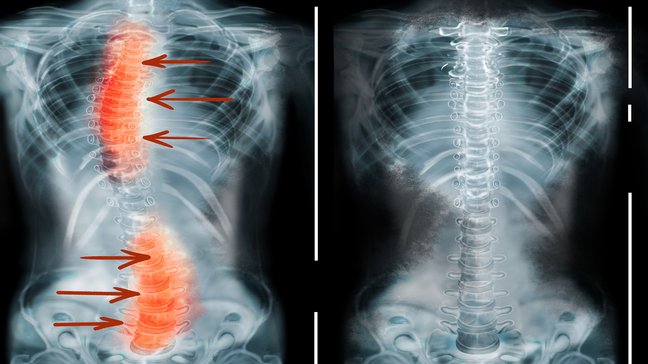
Scoliosis refers to a lateral curvature of the spine that is accompanied by a rotation of the vertebral bodies. This misalignment can occur in any section of the spine, but most commonly in the thoracic and lumbar spine. Scoliosis occurs in both…
Posture, Stability, and Mobility Analysis with Medi Mouse
What is measured in the Medi Mouse analysis?
The Medi Mouse is guided along the spine and records various parameters of spinal function.
Among other things, the following are assessed:
• Posture of the spine
• Mobility of individual sections of the spine
• Stability of the back
• Possible muscular imbalances
• Limitations of mobility
The results are analyzed digitally and presented in a clear graphical representation.
When is a Medi Mouse analysis useful?
An examination can be helpful in various situations.
For example:
• for back pain or muscle tension
• for posture problems
• for functional analysis after injuries or surgeries
• for assessing the mobility of the spine
• for training management in sports
• for monitoring progress during therapy
Advantages of the Medi Mouse examination
The examination offers several benefits for patients.
• radiation-free measurement
• pain-free examination
• objective and immediately available results
• graphical representation of spinal function
• suitable for follow-up evaluations
The analysis can be very well combined with physiotherapy treatments.
What are the results used for?
The results help to better understand the function of the spine and to detect potential problems at an early stage.
They can be used for:
• individual therapy planning
• training management in sports
• monitoring therapy progress
• prevention of back problems
No. The examination is completely painless. The measuring device is simply guided along the skin over the spine.
No. The Medi Mouse operates without X-ray radiation and is therefore a gentle examination method.
The examination usually takes about 10 to 15 minutes.
No special preparation is necessary. Comfortable clothing makes it easier to perform the measurement.
Yes. The Medi Mouse is very well suited for progress monitoring, as it can be repeated at any time.
The examination is suitable for people with back pain, for physically active individuals, as well as for patients undergoing orthopedic or physiotherapy treatment.
Spine Coaching
Complaints in the area of the spine are among the most common reasons to visit an orthopedic specialist. The causes can be varied—from disc problems and overuse syndromes to muscular tension or stress-related symptoms.
Our spine coaching provides a…
Vertebral fracture
A vertebral fracture or vertebral fracture refers to a fracture of one or more vertebral bodies of the spine. This injury can be caused by acute trauma, such as falls or traffic accidents, or by pathological processes such as osteoporosis or tumors.…
Scoliosis
Scoliosis refers to a lateral curvature of the spine that is accompanied by a rotation of the vertebral bodies. This misalignment can occur in any section of the spine, but most commonly in the thoracic and lumbar spine. Scoliosis occurs in both…