

Finger polyarthrosis
Classification of Finger Polyarthrosis
Finger polyarthroses are classified according to the affected joints:
- Heberden's osteoarthritis:
- Affects the distal interphalangeal joints.
- Common symptoms include nodules and deformities at the end joints.
- Bouchard's osteoarthritis:
- Affects the proximal interphalangeal joints.
- Characterized by swelling and stiffness of the affected joints.
- Thumb saddle joint osteoarthritis (Rhizarthrosis):
- Affects the thumb saddle joint (carpometacarpal joint), which is crucial for the thumb's gripping function.
- Generalized osteoarthritis syndrome:
- Combination of multiple osteoarthritis in the finger joints and other joints such as the knee or hip.
Causes of finger polyarthrosis
The main causes of finger polyarthrosis can be divided into different categories:
Genetic predisposition:
A familial accumulation indicates a genetic component that increases the risk of arthrosis.
Age:
With increasing age, the regenerative capacity of the joint cartilage decreases, increasing the likelihood of arthrosis.
Mechanical stress:
Repeated overloads, such as those occurring in manual work or frequent typing, promote joint wear.
Gender:
Women are more frequently affected, especially after menopause, which suggests hormonal influences.
Injuries:
Previous injuries or fractures of the fingers can weaken the joint structures and increase the risk of arthrosis.
Inflammatory diseases:
Chronic inflammations, as in rheumatoid arthritis, can promote the development of finger polyarthrosis.
Symptoms of finger polyarthrosis
The symptoms of finger polyarthritis vary depending on the severity and affected joints, but typically include:
- Pain:
- Initially, the pain occurs only under stress, later also at rest.
- Stiffness:
- Especially in the morning or after longer periods of rest, it is difficult to move the fingers.
- Nodule formation:
- Heberden's and Bouchard's nodes are visible thickenings on the finger or middle joints.
- Movement restrictions:
- The gripping function and mobility of the fingers are increasingly restricted.
- Deformities:
- In the advanced stage, deformations of the affected joints occur.
- Crepitation:
- Crunching or grinding noises when moving the fingers.
Diagnosis of finger polyarthrosis
The diagnosis is based on a combination of medical history, clinical examination, and imaging techniques:
- Medical History:
- The doctor inquires about the symptoms, their duration, and possible family history.
- Physical Examination:
- Visible nodule formation, swelling, and movement restrictions of the affected joints.
- Imaging Techniques:
- X-ray: Depiction of joint space narrowing, bone spurs (osteophytes), and deformities.
- MRI: Helpful in early stages for assessing cartilage and soft tissue damage.
- Ultrasound: Depiction of inflammatory processes in the joints.
Treatment options for finger polyarthrosis
Conservative Therapy
Conservative therapy is the main focus and aims to alleviate symptoms and improve function:
- Physiotherapy:
- Exercises to strengthen the hand muscles and improve mobility.
- Heat or cold therapy to relieve pain and inflammation.
- Pain medication:
- Use of nonsteroidal anti-inflammatory drugs (NSAIDs) like ibuprofen to reduce pain and inflammation.
- Orthopedic aids:
- Use of splints or braces to stabilize and relieve the affected joints.
- Occupational therapy:
- Adjustment of daily activities to protect the joints.
Surgical Therapy
In severe cases or with progressive symptoms, surgery may be necessary:
- Joint fusion (arthrodesis):
- Fixation of the affected joint in a functional position.
- Joint replacement:
- Use of artificial joints for severely damaged finger or thumb joints.
- Nodule removal:
- Surgical removal may be advisable for painful Heberden's or Bouchard's nodes.
Preventive measures for finger polyarthrosis
To prevent finger polyarthrosis, the following measures are recommended:
- Joint protection: Avoiding overstrain and using ergonomic tools.
- Regular exercise: Promoting joint health through targeted exercises.
- Balanced diet: Ensuring adequate supply of vitamins and minerals to support cartilage regeneration.
- Early treatment of injuries: Immediate care of hand injuries to prevent long-term damage.
- Weight management: Avoiding overweight, which can increase the strain on the joints.
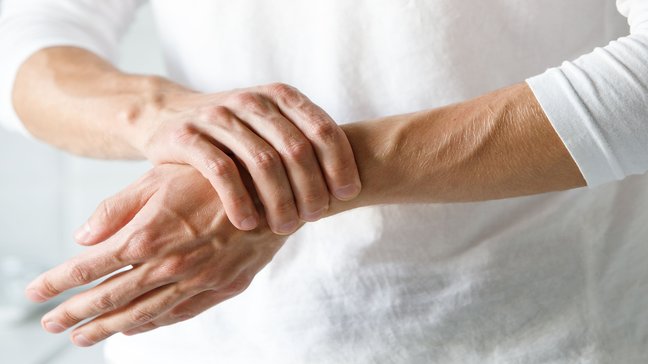
Tendovaginitis
Tendovaginitis, medically referred to as tenosynovitis, is an inflammatory condition of the tendon sheath that surrounds the tendon and ensures its gliding ability. It often occurs in the hands, wrists, or forearms, but can also affect other body…
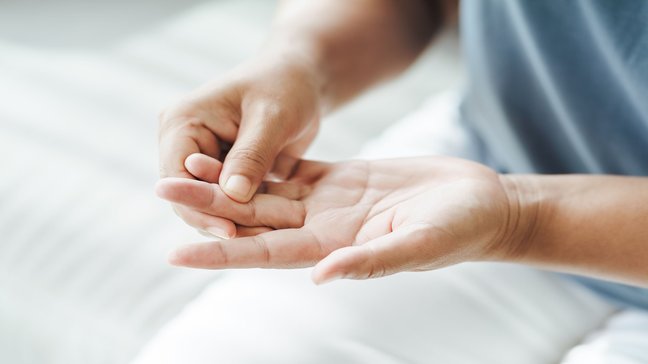
Trigger finger
Trigger finger, medically known as stenosing tenosynovitis, is a common condition caused by inflammation or thickening of the flexor tendons in the fingers or the thumb tendon. The tendons no longer glide smoothly through the tendon sheath (pulleys),…
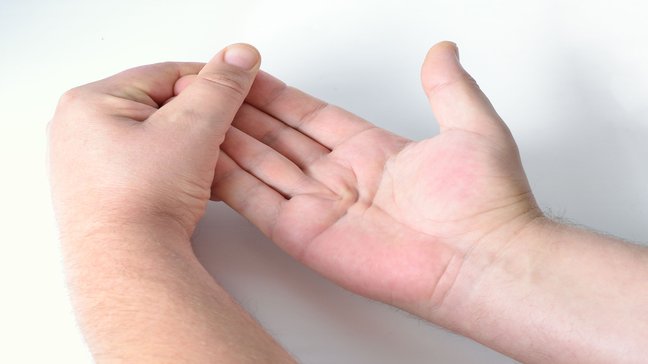
Dupuytren's disease
Dupuytren's disease, also known as Dupuytren's contracture, is a chronic condition of the connective tissue in the palm of the hand. It leads to a nodular thickening and shortening of the palmar aponeurosis, causing the affected fingers to…

Mouse arm (Repetitive Strain Injury - RSI)
Mouse arm, medically also referred to as Repetitive Strain Injury (RSI), is an overuse injury caused by repetitive and monotonous movements. This condition primarily affects people who work long hours at a computer and manifests as pain and…
Finger polyarthrosis
Classification of Finger Polyarthrosis
Finger polyarthroses are classified according to the affected joints:
- Heberden's osteoarthritis:
- Affects the distal interphalangeal joints.
- Common symptoms include nodules and deformities at the end joints.
- Bouchard's osteoarthritis:
- Affects the proximal interphalangeal joints.
- Characterized by swelling and stiffness of the affected joints.
- Thumb saddle joint osteoarthritis (Rhizarthrosis):
- Affects the thumb saddle joint (carpometacarpal joint), which is crucial for the thumb's gripping function.
- Generalized osteoarthritis syndrome:
- Combination of multiple osteoarthritis in the finger joints and other joints such as the knee or hip.
Causes of finger polyarthrosis
The main causes of finger polyarthrosis can be divided into different categories:
Genetic predisposition:
A familial accumulation indicates a genetic component that increases the risk of arthrosis.
Age:
With increasing age, the regenerative capacity of the joint cartilage decreases, increasing the likelihood of arthrosis.
Mechanical stress:
Repeated overloads, such as those occurring in manual work or frequent typing, promote joint wear.
Gender:
Women are more frequently affected, especially after menopause, which suggests hormonal influences.
Injuries:
Previous injuries or fractures of the fingers can weaken the joint structures and increase the risk of arthrosis.
Inflammatory diseases:
Chronic inflammations, as in rheumatoid arthritis, can promote the development of finger polyarthrosis.
Symptoms of finger polyarthrosis
The symptoms of finger polyarthritis vary depending on the severity and affected joints, but typically include:
- Pain:
- Initially, the pain occurs only under stress, later also at rest.
- Stiffness:
- Especially in the morning or after longer periods of rest, it is difficult to move the fingers.
- Nodule formation:
- Heberden's and Bouchard's nodes are visible thickenings on the finger or middle joints.
- Movement restrictions:
- The gripping function and mobility of the fingers are increasingly restricted.
- Deformities:
- In the advanced stage, deformations of the affected joints occur.
- Crepitation:
- Crunching or grinding noises when moving the fingers.
Diagnosis of finger polyarthrosis
The diagnosis is based on a combination of medical history, clinical examination, and imaging techniques:
- Medical History:
- The doctor inquires about the symptoms, their duration, and possible family history.
- Physical Examination:
- Visible nodule formation, swelling, and movement restrictions of the affected joints.
- Imaging Techniques:
- X-ray: Depiction of joint space narrowing, bone spurs (osteophytes), and deformities.
- MRI: Helpful in early stages for assessing cartilage and soft tissue damage.
- Ultrasound: Depiction of inflammatory processes in the joints.
Treatment options for finger polyarthrosis
Conservative Therapy
Conservative therapy is the main focus and aims to alleviate symptoms and improve function:
- Physiotherapy:
- Exercises to strengthen the hand muscles and improve mobility.
- Heat or cold therapy to relieve pain and inflammation.
- Pain medication:
- Use of nonsteroidal anti-inflammatory drugs (NSAIDs) like ibuprofen to reduce pain and inflammation.
- Orthopedic aids:
- Use of splints or braces to stabilize and relieve the affected joints.
- Occupational therapy:
- Adjustment of daily activities to protect the joints.
Surgical Therapy
In severe cases or with progressive symptoms, surgery may be necessary:
- Joint fusion (arthrodesis):
- Fixation of the affected joint in a functional position.
- Joint replacement:
- Use of artificial joints for severely damaged finger or thumb joints.
- Nodule removal:
- Surgical removal may be advisable for painful Heberden's or Bouchard's nodes.
Preventive measures for finger polyarthrosis
To prevent finger polyarthrosis, the following measures are recommended:
- Joint protection: Avoiding overstrain and using ergonomic tools.
- Regular exercise: Promoting joint health through targeted exercises.
- Balanced diet: Ensuring adequate supply of vitamins and minerals to support cartilage regeneration.
- Early treatment of injuries: Immediate care of hand injuries to prevent long-term damage.
- Weight management: Avoiding overweight, which can increase the strain on the joints.
Tendovaginitis
Tendovaginitis, medically referred to as tenosynovitis, is an inflammatory condition of the tendon sheath that surrounds the tendon and ensures its gliding ability. It often occurs in the hands, wrists, or forearms, but can also affect other body…
Trigger finger
Trigger finger, medically known as stenosing tenosynovitis, is a common condition caused by inflammation or thickening of the flexor tendons in the fingers or the thumb tendon. The tendons no longer glide smoothly through the tendon sheath (pulleys),…
Dupuytren's disease
Dupuytren's disease, also known as Dupuytren's contracture, is a chronic condition of the connective tissue in the palm of the hand. It leads to a nodular thickening and shortening of the palmar aponeurosis, causing the affected fingers to…
Mouse arm (Repetitive Strain Injury - RSI)
Mouse arm, medically also referred to as Repetitive Strain Injury (RSI), is an overuse injury caused by repetitive and monotonous movements. This condition primarily affects people who work long hours at a computer and manifests as pain and…