

Carpal tunnel syndrome
Classification of Carpal Tunnel Syndrome
Carpal tunnel syndrome is classified into different stages based on the severity and duration of symptoms:
- Mild CTS:
- Occasional pain and numbness, especially at night or with certain movements.
- Moderate CTS:
- More frequent symptoms that also occur during the day, as well as initial limitations in hand strength.
- Severe CTS:
- Persistent pain, significant weakness, and muscle atrophy in the area of the thumb base.
Causes of Carpal Tunnel Syndrome
The main cause of carpal tunnel syndrome is an increase in pressure in the carpal tunnel, leading to compression of the median nerve. The main triggers are:
- Repeated movements:
- Activities that require continuous strain on the hand, such as typing, writing, or working on an assembly line.
- Anatomical factors:
- A narrow carpal tunnel due to genetic predisposition or anatomical variations.
- Diseases:
- Comorbidities such as diabetes mellitus, rheumatoid arthritis, or thyroid diseases increase the risk.
- Pregnancy:
- Hormonal changes and water retention can cause a temporary narrowing of the carpal tunnel.
- Injuries:
- Wrist fractures or injuries that alter the structure of the carpal tunnel.
Symptoms of carpal tunnel syndrome
The symptoms vary depending on the severity of the condition, but typically include:
- Numbness and tingling:
- Especially in the thumb, index finger, and middle finger, often at night or with certain hand positions.
- Pain:
- Local pain in the wrist, which can radiate to the arm or shoulder.
- Weakness:
- Difficulty holding objects or performing fine movements.
- Muscle atrophy:
- In advanced CTS, shrinkage of the muscles in the area of the thumb ball.
Diagnosis of carpal tunnel syndrome
The diagnosis is made through a combination of medical history, clinical examination, and specific tests:
- Medical history:
- Collection of medical history, typical symptoms, and their progression.
- Clinical examination:
- Tests such as the Phalen test (pain provocation by bending the wrist) or the Tinel test (tapping on the carpal tunnel to irritate the median nerve).
- Nerve conduction studies:
- Measurement of nerve conduction velocity to confirm compression of the median nerve.
- Imaging techniques:
- Ultrasound: Visualization of thickening of the median nerve.
- MRI: Detailed examination in case of unclear findings or suspicion of other causes.
Treatment options for carpal tunnel syndrome
Conservative Therapy
In the early stages, carpal tunnel syndrome can often be treated without surgery:
- Wrist Splints:
- Immobilization of the wrist, especially at night, to reduce pressure on the median nerve.
- Physical Therapy:
- Exercises to improve mobility and strengthen the hand muscles.
- Medication Therapy:
- Anti-inflammatory medications (NSAIDs) or cortisone injections to relieve pain and inflammation.
Surgical Therapy
In severe or therapy-resistant cases, surgery is required:
- Carpal Tunnel Release:
- Surgical relief of the median nerve by splitting the carpal ligament, either open or minimally invasive.
Preventive measures for carpal tunnel syndrome
The following measures are helpful in preventing carpal tunnel syndrome:
- Ergonomic adjustments: Optimizing the workplace to avoid poor posture and overloading the hands.
- Regular breaks: Interruptions during monotonous activities to reduce hand strain.
- Strengthening exercises: Targeted training of the hand and forearm muscles to support the joints.
- Early treatment: Consult a doctor promptly at the first signs of numbness or pain.

Tendovaginitis
Tendovaginitis, medically referred to as tenosynovitis, is an inflammatory condition of the tendon sheath that surrounds the tendon and ensures its gliding ability. It often occurs in the hands, wrists, or forearms, but can also affect other body…

Trigger finger
Trigger finger, medically known as stenosing tenosynovitis, is a common condition caused by inflammation or thickening of the flexor tendons in the fingers or the thumb tendon. The tendons no longer glide smoothly through the tendon sheath (pulleys),…
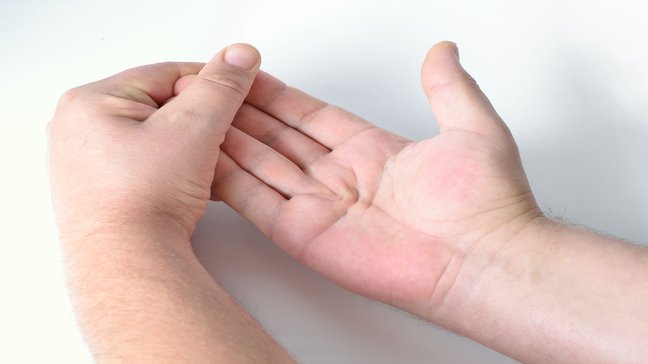
Dupuytren's disease
Dupuytren's disease, also known as Dupuytren's contracture, is a chronic condition of the connective tissue in the palm of the hand. It leads to a nodular thickening and shortening of the palmar aponeurosis, causing the affected fingers to…

Mouse arm (Repetitive Strain Injury - RSI)
Mouse arm, medically also referred to as Repetitive Strain Injury (RSI), is an overuse injury caused by repetitive and monotonous movements. This condition primarily affects people who work long hours at a computer and manifests as pain and…
Carpal tunnel syndrome
Classification of Carpal Tunnel Syndrome
Carpal tunnel syndrome is classified into different stages based on the severity and duration of symptoms:
- Mild CTS:
- Occasional pain and numbness, especially at night or with certain movements.
- Moderate CTS:
- More frequent symptoms that also occur during the day, as well as initial limitations in hand strength.
- Severe CTS:
- Persistent pain, significant weakness, and muscle atrophy in the area of the thumb base.
Causes of Carpal Tunnel Syndrome
The main cause of carpal tunnel syndrome is an increase in pressure in the carpal tunnel, leading to compression of the median nerve. The main triggers are:
- Repeated movements:
- Activities that require continuous strain on the hand, such as typing, writing, or working on an assembly line.
- Anatomical factors:
- A narrow carpal tunnel due to genetic predisposition or anatomical variations.
- Diseases:
- Comorbidities such as diabetes mellitus, rheumatoid arthritis, or thyroid diseases increase the risk.
- Pregnancy:
- Hormonal changes and water retention can cause a temporary narrowing of the carpal tunnel.
- Injuries:
- Wrist fractures or injuries that alter the structure of the carpal tunnel.
Symptoms of carpal tunnel syndrome
The symptoms vary depending on the severity of the condition, but typically include:
- Numbness and tingling:
- Especially in the thumb, index finger, and middle finger, often at night or with certain hand positions.
- Pain:
- Local pain in the wrist, which can radiate to the arm or shoulder.
- Weakness:
- Difficulty holding objects or performing fine movements.
- Muscle atrophy:
- In advanced CTS, shrinkage of the muscles in the area of the thumb ball.
Diagnosis of carpal tunnel syndrome
The diagnosis is made through a combination of medical history, clinical examination, and specific tests:
- Medical history:
- Collection of medical history, typical symptoms, and their progression.
- Clinical examination:
- Tests such as the Phalen test (pain provocation by bending the wrist) or the Tinel test (tapping on the carpal tunnel to irritate the median nerve).
- Nerve conduction studies:
- Measurement of nerve conduction velocity to confirm compression of the median nerve.
- Imaging techniques:
- Ultrasound: Visualization of thickening of the median nerve.
- MRI: Detailed examination in case of unclear findings or suspicion of other causes.
Treatment options for carpal tunnel syndrome
Conservative Therapy
In the early stages, carpal tunnel syndrome can often be treated without surgery:
- Wrist Splints:
- Immobilization of the wrist, especially at night, to reduce pressure on the median nerve.
- Physical Therapy:
- Exercises to improve mobility and strengthen the hand muscles.
- Medication Therapy:
- Anti-inflammatory medications (NSAIDs) or cortisone injections to relieve pain and inflammation.
Surgical Therapy
In severe or therapy-resistant cases, surgery is required:
- Carpal Tunnel Release:
- Surgical relief of the median nerve by splitting the carpal ligament, either open or minimally invasive.
Preventive measures for carpal tunnel syndrome
The following measures are helpful in preventing carpal tunnel syndrome:
- Ergonomic adjustments: Optimizing the workplace to avoid poor posture and overloading the hands.
- Regular breaks: Interruptions during monotonous activities to reduce hand strain.
- Strengthening exercises: Targeted training of the hand and forearm muscles to support the joints.
- Early treatment: Consult a doctor promptly at the first signs of numbness or pain.
Tendovaginitis
Tendovaginitis, medically referred to as tenosynovitis, is an inflammatory condition of the tendon sheath that surrounds the tendon and ensures its gliding ability. It often occurs in the hands, wrists, or forearms, but can also affect other body…
Trigger finger
Trigger finger, medically known as stenosing tenosynovitis, is a common condition caused by inflammation or thickening of the flexor tendons in the fingers or the thumb tendon. The tendons no longer glide smoothly through the tendon sheath (pulleys),…
Dupuytren's disease
Dupuytren's disease, also known as Dupuytren's contracture, is a chronic condition of the connective tissue in the palm of the hand. It leads to a nodular thickening and shortening of the palmar aponeurosis, causing the affected fingers to…
Mouse arm (Repetitive Strain Injury - RSI)
Mouse arm, medically also referred to as Repetitive Strain Injury (RSI), is an overuse injury caused by repetitive and monotonous movements. This condition primarily affects people who work long hours at a computer and manifests as pain and…