

Tarsal arthritis
Classification of tarsal arthritis
Foot root osteoarthritis is classified according to location and severity:
- Local osteoarthritis:
- Affects individual joints in the foot root, such as the Lisfranc joint or the Chopart joint.
- Generalized osteoarthritis:
- Includes multiple joints in the foot root and can also affect adjacent areas such as the midfoot.
- Post-traumatic osteoarthritis:
- Develops as a result of injuries, such as bone fractures or ligament injuries, leading to misalignment or overloading of the joints.
Causes of tarsal joint osteoarthritis
The causes of tarsal arthritis are diverse and include:
- Aging processes:
- With increasing age, cartilage loses elasticity and resilience, leading to increased wear.
- Mechanical overload:
- Excessive loads, such as prolonged standing, intensive walking, or sports with high impact loads, promote cartilage degradation.
- Injuries:
- Traumas such as bone fractures or sprains can permanently damage the joint structure and promote arthritis.
- Misalignments:
- Foot misalignments such as flatfoot or high arch increase the load on certain areas of the tarsus and promote wear.
- Inflammatory diseases:
- Chronic diseases such as rheumatoid arthritis can damage cartilage and joint structures.
Symptoms of tarsal joint osteoarthritis
The symptoms of tarsal arthritis are varied and usually develop gradually:
- Pain:
- Initially, pain occurs only during exertion, later also at rest. Dull pain in the tarsal area is typical.
- Stiffness:
- Especially after periods of rest or in the morning, it is difficult to move the foot.
- Swelling:
- Inflammatory reactions in the affected area can lead to swelling.
- Movement restrictions:
- The range of motion of the foot becomes increasingly restricted, making walking and standing difficult.
- Deformities:
- In advanced stages, visible changes in the shape of the foot may occur.
- Grinding or rubbing:
- When moving the affected joints, crepitus sounds are often audible.
Diagnosis of tarsal joint osteoarthritis
The diagnosis is made through a combination of medical history, clinical examination, and imaging techniques:
- Medical history:
- The doctor inquires about the symptoms, their duration, and possible triggers such as injuries or misalignments.
- Physical examination:
- Checking mobility, tenderness, and visual inspection for swelling or deformities.
- Imaging techniques:
- X-ray: Visualization of joint space narrowing, osteophytes, and bony changes.
- MRI: Detailed assessment of cartilage and soft tissue damage.
- CT: Precise depiction of complex changes in the tarsal bones.
Treatment options for tarsal joint osteoarthritis
Conservative Therapy Most cases of tarsal arthritis can be treated without surgery:
- Pain therapy:
- Use of anti-inflammatory medications like ibuprofen to relieve acute discomfort.
- Physiotherapy:
- Exercises to improve mobility and strengthen the foot muscles.
- Manual therapy to relieve the affected joints.
- Orthopedic aids:
- Special shoe inserts or heel cushions to support and relieve the foot.
- Shock wave therapy:
- Promotion of blood circulation and pain relief through high-energy sound waves.
Surgical Therapy In severe cases or with progressive discomfort, surgery may be necessary:
- Joint fusion (arthrodesis):
- Fixation of the affected joint to eliminate pain and restore stability.
- Cartilage transplantation:
- In rare cases, cartilage transplants can be performed to restore joint function.
- Prostheses:
- Use of artificial joints in severely damaged joint surfaces.
Preventive measures for tarsal joint osteoarthritis
The following measures are helpful in preventing tarsal arthritis:
- Ergonomic footwear: Wearing shoes with good cushioning and support.
- Regular exercise: Promoting foot health through targeted exercises.
- Weight management: Reducing excess weight to minimize stress on the tarsal bones.
- Early treatment: Immediate clarification and therapy at the first signs of pain or misalignment.
- Protection against injuries: Avoiding sports with a high risk of injury or using protective gear.

Metatarsalgia
Metatarsalgia describes pain in the forefoot area, often occurring under the metatarsal heads. These complaints usually arise from overuse, misalignments, or degenerative changes in the foot. People who stand a lot, walk, or are physically active are…
Hallux rigidus
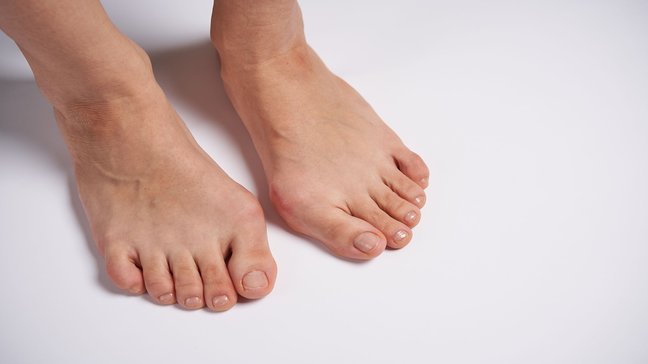
Hallux rigidus is osteoarthritis of the big toe joint, which can lead to painful movement restrictions and eventually to joint stiffening. This condition significantly impairs the rolling motion of the foot and often affects people from middle age…
Clubfoot (Pes Equinovarus)
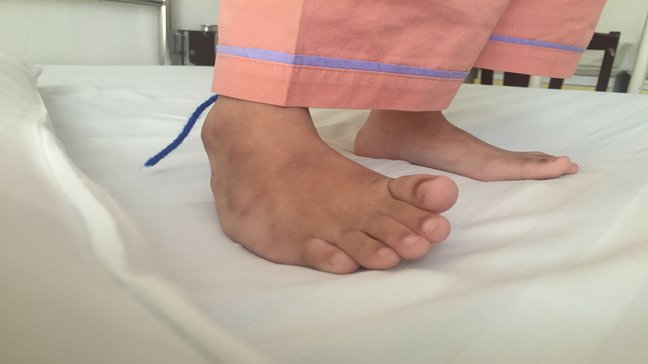
Clubfoot (Pes equinovarus) is a complex congenital foot deformity that occurs in about 1 in 1,000 newborns worldwide. Boys are more frequently affected than girls, and in about 50% of cases, the clubfoot is bilateral. This deformity, which can lead…

Tarsal tunnel syndrome
Tarsal tunnel syndrome is a nerve compression disorder in which the tibial nerve is constricted in the area of the tarsal tunnel, an anatomical structure on the inside of the foot. This compression leads to pain, sensory disturbances, and possibly…
Tarsal arthritis
Classification of tarsal arthritis
Foot root osteoarthritis is classified according to location and severity:
- Local osteoarthritis:
- Affects individual joints in the foot root, such as the Lisfranc joint or the Chopart joint.
- Generalized osteoarthritis:
- Includes multiple joints in the foot root and can also affect adjacent areas such as the midfoot.
- Post-traumatic osteoarthritis:
- Develops as a result of injuries, such as bone fractures or ligament injuries, leading to misalignment or overloading of the joints.
Causes of tarsal joint osteoarthritis
The causes of tarsal arthritis are diverse and include:
- Aging processes:
- With increasing age, cartilage loses elasticity and resilience, leading to increased wear.
- Mechanical overload:
- Excessive loads, such as prolonged standing, intensive walking, or sports with high impact loads, promote cartilage degradation.
- Injuries:
- Traumas such as bone fractures or sprains can permanently damage the joint structure and promote arthritis.
- Misalignments:
- Foot misalignments such as flatfoot or high arch increase the load on certain areas of the tarsus and promote wear.
- Inflammatory diseases:
- Chronic diseases such as rheumatoid arthritis can damage cartilage and joint structures.
Symptoms of tarsal joint osteoarthritis
The symptoms of tarsal arthritis are varied and usually develop gradually:
- Pain:
- Initially, pain occurs only during exertion, later also at rest. Dull pain in the tarsal area is typical.
- Stiffness:
- Especially after periods of rest or in the morning, it is difficult to move the foot.
- Swelling:
- Inflammatory reactions in the affected area can lead to swelling.
- Movement restrictions:
- The range of motion of the foot becomes increasingly restricted, making walking and standing difficult.
- Deformities:
- In advanced stages, visible changes in the shape of the foot may occur.
- Grinding or rubbing:
- When moving the affected joints, crepitus sounds are often audible.
Diagnosis of tarsal joint osteoarthritis
The diagnosis is made through a combination of medical history, clinical examination, and imaging techniques:
- Medical history:
- The doctor inquires about the symptoms, their duration, and possible triggers such as injuries or misalignments.
- Physical examination:
- Checking mobility, tenderness, and visual inspection for swelling or deformities.
- Imaging techniques:
- X-ray: Visualization of joint space narrowing, osteophytes, and bony changes.
- MRI: Detailed assessment of cartilage and soft tissue damage.
- CT: Precise depiction of complex changes in the tarsal bones.
Treatment options for tarsal joint osteoarthritis
Conservative Therapy Most cases of tarsal arthritis can be treated without surgery:
- Pain therapy:
- Use of anti-inflammatory medications like ibuprofen to relieve acute discomfort.
- Physiotherapy:
- Exercises to improve mobility and strengthen the foot muscles.
- Manual therapy to relieve the affected joints.
- Orthopedic aids:
- Special shoe inserts or heel cushions to support and relieve the foot.
- Shock wave therapy:
- Promotion of blood circulation and pain relief through high-energy sound waves.
Surgical Therapy In severe cases or with progressive discomfort, surgery may be necessary:
- Joint fusion (arthrodesis):
- Fixation of the affected joint to eliminate pain and restore stability.
- Cartilage transplantation:
- In rare cases, cartilage transplants can be performed to restore joint function.
- Prostheses:
- Use of artificial joints in severely damaged joint surfaces.
Preventive measures for tarsal joint osteoarthritis
The following measures are helpful in preventing tarsal arthritis:
- Ergonomic footwear: Wearing shoes with good cushioning and support.
- Regular exercise: Promoting foot health through targeted exercises.
- Weight management: Reducing excess weight to minimize stress on the tarsal bones.
- Early treatment: Immediate clarification and therapy at the first signs of pain or misalignment.
- Protection against injuries: Avoiding sports with a high risk of injury or using protective gear.
Metatarsalgia
Metatarsalgia describes pain in the forefoot area, often occurring under the metatarsal heads. These complaints usually arise from overuse, misalignments, or degenerative changes in the foot. People who stand a lot, walk, or are physically active are…
Hallux rigidus
Hallux rigidus is osteoarthritis of the big toe joint, which can lead to painful movement restrictions and eventually to joint stiffening. This condition significantly impairs the rolling motion of the foot and often affects people from middle age…
Clubfoot (Pes Equinovarus)
Clubfoot (Pes equinovarus) is a complex congenital foot deformity that occurs in about 1 in 1,000 newborns worldwide. Boys are more frequently affected than girls, and in about 50% of cases, the clubfoot is bilateral. This deformity, which can lead…
Tarsal tunnel syndrome
Tarsal tunnel syndrome is a nerve compression disorder in which the tibial nerve is constricted in the area of the tarsal tunnel, an anatomical structure on the inside of the foot. This compression leads to pain, sensory disturbances, and possibly…