

Hallux rigidus
Classification of Hallux Rigidus
Hallux rigidus is classified according to the severity of the condition:
- Early stage (Grade I):
- Mild pain under load and minimal movement restriction.
- Intermediate stage (Grade II):
- Pain during daily activities, limited mobility, and initial bone spurs (osteophytes).
- Advanced stage (Grade III):
- Significant movement restriction, constant pain, and pronounced joint stiffness.
- End stage (Grade IV):
- Complete joint stiffness and severe impairment of mobility.
Causes of Hallux Rigidus
The causes of hallux rigidus are diverse and include:
- Mechanical overload:
- Repeated stress from sports or occupation leads to microtrauma in the metatarsophalangeal joint of the big toe.
- Anatomical misalignments:
- Foot deformities such as flatfoot or high arch increase the load on the metatarsophalangeal joint of the big toe.
- Injuries:
- Previous injuries such as fractures or dislocations can promote osteoarthritis in the joint.
- Genetic predisposition:
- Familial clustering of osteoarthritis suggests a genetic predisposition.
- Inflammatory diseases:
- Diseases such as rheumatoid arthritis or gout promote degenerative changes.
Symptoms of Hallux Rigidus
The symptoms often develop insidiously and intensify as the disease progresses:
- Pain:
- Initially only under stress, later also at rest.
- Movement restriction:
- Especially the dorsal extension (movement of the toe upwards) is restricted, making rolling off difficult.
- Swelling and redness:
- Inflammatory reactions can lead to visible changes.
- Bone growths:
- Osteophytes are palpable as hard protrusions and cause pressure pain in shoes.
- Gait changes:
- Pain often leads to limping, which promotes discomfort in other joints.
Diagnosis of Hallux Rigidus
The diagnosis is based on medical history, clinical examination, and imaging techniques:
- Medical History:
- Collection of medical history, description of pain, and possible risk factors.
- Clinical Examination:
- Assessment of mobility, tenderness, and visible changes.
- Imaging Techniques:
- X-ray: Visualization of joint space narrowing, osteophytes, and subchondral sclerosis.
- MRI: Detailed visualization of cartilage damage and soft tissues.
Treatment options for hallux rigidus
Conservative Therapy
In early stages, non-operative treatment is often sufficient:
- Shoe Modifications:
- Shoes with stiff soles or rolling aids relieve the joint.
- Orthopedic Insoles:
- Special insoles improve pressure distribution and reduce pain.
- Physiotherapy:
- Exercises to maintain mobility and strengthen foot muscles.
- Pain Therapy:
- Non-steroidal anti-inflammatory drugs (NSAIDs) like Ibuprofen to relieve pain and inflammation.
- Injections with cortisone, hyaluron, or PRP.
- Shock Wave Therapy:
- Mechanical stimuli promote healing and reduce pain.
Surgical Therapy
In advanced stages, surgical intervention may be necessary:
- Cheilectomy:
- Removal of bone spurs to improve mobility.
- Arthrodesis:
- Joint fusion to reduce pain in severely advanced osteoarthritis.
- Endoprosthesis:
- Joint replacement with an artificial prosthesis to restore function.
Preventive measures for Hallux Rigidus
To prevent hallux rigidus, it is recommended:
- Suitable footwear: Shoes with enough space for the toes and good cushioning.
- Regular exercise: Promoting joint mobility through targeted exercises.
- Avoiding overstrain: Protecting the joint during sports or professional activities.
- Early treatment: Immediate therapy at the first signs of pain or movement restrictions.
- Weight management: Reducing excess weight to relieve the joints.
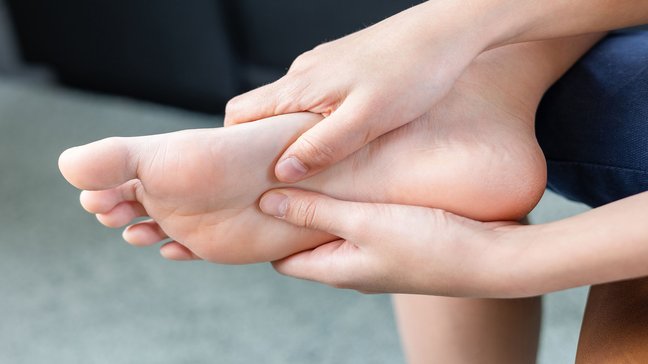
Metatarsalgia
Metatarsalgia describes pain in the forefoot area, often occurring under the metatarsal heads. These complaints usually arise from overuse, misalignments, or degenerative changes in the foot. People who stand a lot, walk, or are physically active are…
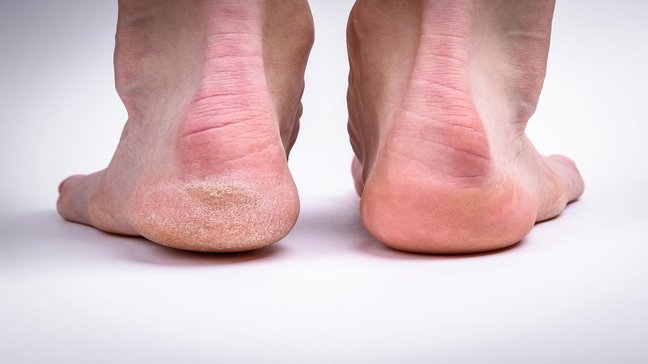
Upper heel spur
The upper heel spur, also known as Haglund's deformity, is a bony protrusion at the back of the heel bone (calcaneus). This condition often causes pain, swelling, and restricted movement, especially when the heel is under stress. The upper heel spur…
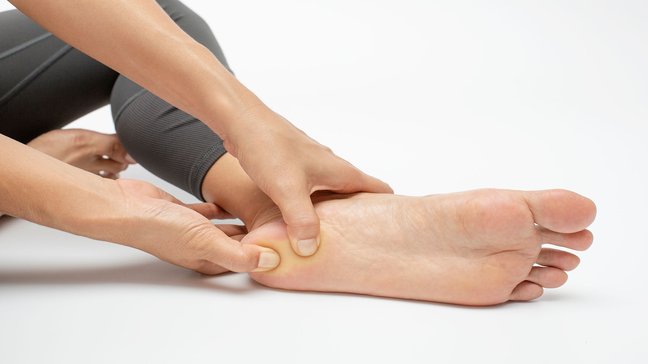
Heelspoor en fasciitis plantaris
Heel spurs and plantar fasciitis are closely related conditions that are often the cause of heel pain. While a heel spur is a bony change in the heel bone, plantar fasciitis is an inflammatory condition of the plantar fascia, an important tendon…
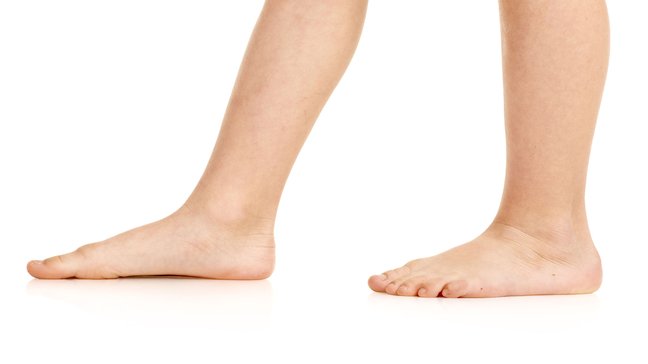
Adducted foot (Pes Adductus)
The sickle foot, medically referred to as Pes Adductus, is a deformity of the foot where the front part of the foot deviates inward while the heel remains straight. This deformity often occurs in newborns and young children and is usually congenital.…
Hallux rigidus
Classification of Hallux Rigidus
Hallux rigidus is classified according to the severity of the condition:
- Early stage (Grade I):
- Mild pain under load and minimal movement restriction.
- Intermediate stage (Grade II):
- Pain during daily activities, limited mobility, and initial bone spurs (osteophytes).
- Advanced stage (Grade III):
- Significant movement restriction, constant pain, and pronounced joint stiffness.
- End stage (Grade IV):
- Complete joint stiffness and severe impairment of mobility.
Causes of Hallux Rigidus
The causes of hallux rigidus are diverse and include:
- Mechanical overload:
- Repeated stress from sports or occupation leads to microtrauma in the metatarsophalangeal joint of the big toe.
- Anatomical misalignments:
- Foot deformities such as flatfoot or high arch increase the load on the metatarsophalangeal joint of the big toe.
- Injuries:
- Previous injuries such as fractures or dislocations can promote osteoarthritis in the joint.
- Genetic predisposition:
- Familial clustering of osteoarthritis suggests a genetic predisposition.
- Inflammatory diseases:
- Diseases such as rheumatoid arthritis or gout promote degenerative changes.
Symptoms of Hallux Rigidus
The symptoms often develop insidiously and intensify as the disease progresses:
- Pain:
- Initially only under stress, later also at rest.
- Movement restriction:
- Especially the dorsal extension (movement of the toe upwards) is restricted, making rolling off difficult.
- Swelling and redness:
- Inflammatory reactions can lead to visible changes.
- Bone growths:
- Osteophytes are palpable as hard protrusions and cause pressure pain in shoes.
- Gait changes:
- Pain often leads to limping, which promotes discomfort in other joints.
Diagnosis of Hallux Rigidus
The diagnosis is based on medical history, clinical examination, and imaging techniques:
- Medical History:
- Collection of medical history, description of pain, and possible risk factors.
- Clinical Examination:
- Assessment of mobility, tenderness, and visible changes.
- Imaging Techniques:
- X-ray: Visualization of joint space narrowing, osteophytes, and subchondral sclerosis.
- MRI: Detailed visualization of cartilage damage and soft tissues.
Treatment options for hallux rigidus
Conservative Therapy
In early stages, non-operative treatment is often sufficient:
- Shoe Modifications:
- Shoes with stiff soles or rolling aids relieve the joint.
- Orthopedic Insoles:
- Special insoles improve pressure distribution and reduce pain.
- Physiotherapy:
- Exercises to maintain mobility and strengthen foot muscles.
- Pain Therapy:
- Non-steroidal anti-inflammatory drugs (NSAIDs) like Ibuprofen to relieve pain and inflammation.
- Injections with cortisone, hyaluron, or PRP.
- Shock Wave Therapy:
- Mechanical stimuli promote healing and reduce pain.
Surgical Therapy
In advanced stages, surgical intervention may be necessary:
- Cheilectomy:
- Removal of bone spurs to improve mobility.
- Arthrodesis:
- Joint fusion to reduce pain in severely advanced osteoarthritis.
- Endoprosthesis:
- Joint replacement with an artificial prosthesis to restore function.
Preventive measures for Hallux Rigidus
To prevent hallux rigidus, it is recommended:
- Suitable footwear: Shoes with enough space for the toes and good cushioning.
- Regular exercise: Promoting joint mobility through targeted exercises.
- Avoiding overstrain: Protecting the joint during sports or professional activities.
- Early treatment: Immediate therapy at the first signs of pain or movement restrictions.
- Weight management: Reducing excess weight to relieve the joints.
Metatarsalgia
Metatarsalgia describes pain in the forefoot area, often occurring under the metatarsal heads. These complaints usually arise from overuse, misalignments, or degenerative changes in the foot. People who stand a lot, walk, or are physically active are…
Upper heel spur
The upper heel spur, also known as Haglund's deformity, is a bony protrusion at the back of the heel bone (calcaneus). This condition often causes pain, swelling, and restricted movement, especially when the heel is under stress. The upper heel spur…
Heelspoor en fasciitis plantaris
Heel spurs and plantar fasciitis are closely related conditions that are often the cause of heel pain. While a heel spur is a bony change in the heel bone, plantar fasciitis is an inflammatory condition of the plantar fascia, an important tendon…
Adducted foot (Pes Adductus)
The sickle foot, medically referred to as Pes Adductus, is a deformity of the foot where the front part of the foot deviates inward while the heel remains straight. This deformity often occurs in newborns and young children and is usually congenital.…