

Torn lateral ligament of the ankle
Classification of Ligament Tears
An outer ligament tear can be divided into different degrees of severity:
- Grade I (Stretching): Slight overstretching of the ligament without structural damage. Pain and slight swelling occur.
- Grade II (Partial tear): Partial tearing of the ligament fibers with significant swelling, bruising, and limited mobility.
- Grade III (Complete tear): Complete rupture of the ligament with severe swelling, instability, and possible accompanying injuries such as cartilage damage.
Causes of ligament tear
The main causes of an external ligament tear can be divided into several categories:
- Sudden movements: Quick twisting or rolling movements of the foot, often in sports such as soccer, basketball, or volleyball.
- Uncontrolled loads: Accidents or falls that strain the joint beyond its normal range of motion.
- Previous injuries: Previously sustained ligament injuries can impair the stability of the joint and increase the risk of re-injury.
- Weak muscles: Insufficiently trained muscles offer less protection against injuries.
- Inappropriate footwear: Shoes with inadequate stability or cushioning increase the risk of an external ligament tear.
Symptoms of ligament tear
The symptoms vary depending on the severity of the injury, but often include:
- **Pain:** Acute, sharp pain in the area of the affected ligament, which intensifies with strain.
- **Swelling:** Rapid onset of swelling due to bleeding into the surrounding tissue.
- **Bruising:** Visible hematomas that may spread after a few hours or days.
- **Instability:** Feeling of insecurity in the joint, especially under strain or certain movements.
- **Movement restrictions:** Difficulty moving or putting weight on the joint normally.
Diagnosis of ligament tear
The diagnosis is made through a combination of medical history, physical examination, and imaging techniques:
- **Medical History:** The doctor asks about the mechanism of injury, the intensity of pain, and the mobility of the joint.
- **Physical Examination:** Checking for swelling, tenderness, and stability of the joint. Specific functional tests, such as the drawer test, help assess the injury.
- **Imaging Techniques:**
- *Ultrasound:* To visualize ligament injuries and swelling.
- *MRI:* Detailed assessment of the ligament and possible accompanying injuries such as cartilage damage.
- *X-ray:* To rule out fractures or bony accompanying injuries.
Treatment options for ligament tear
Conservative Therapy
In most cases, lateral ligament tears can be treated without surgery:
-
RICE Rule:
- Rest: Immediate immobilization of the joint to prevent further damage.
- Ice: Regular cooling for 15–20 minutes every 2–3 hours to relieve pain and reduce swelling.
- Compression: Application of an elastic bandage to stabilize the joint and minimize swelling.
- Elevation: Elevation of the affected leg above heart level to improve circulation and reduce swelling.
-
Physiotherapy:
- Exercises to restore mobility and strengthen the muscles.
- Proprioception training to improve stability and prevent future injuries.
-
Orthopedic Aids:
- Use of bandages or braces to support the joint during the healing phase.
-
Pain Medication:
- Intake of anti-inflammatory medications to relieve pain and swelling.
Surgical Therapy
In cases of severe tears or persistent instability, surgery may be necessary:
- Reconstruction of the Ligament: Restoration of the torn ligament through suturing or reinforcement with the body's own tissue.
- Arthroscopic Procedures: Minimally invasive techniques to remove damaged tissue or stabilize the joint.
- Postoperative Rehabilitation: Intensive physiotherapeutic training to restore joint function and prevent complications.
Preventive measures for ligament tear
To prevent lateral ligament tears, the following measures are recommended:
- Muscle strengthening: Regular training of the muscles surrounding the joint to increase stability.
- Warming up: Careful warming up before sports activities to prepare the muscles and ligaments.
- Avoiding overstrain: Adjusting the load to the individual fitness level.
- Appropriate footwear: Wearing stable shoes with good cushioning and support.
- Proprioception training: Exercises to improve body awareness and joint stability.
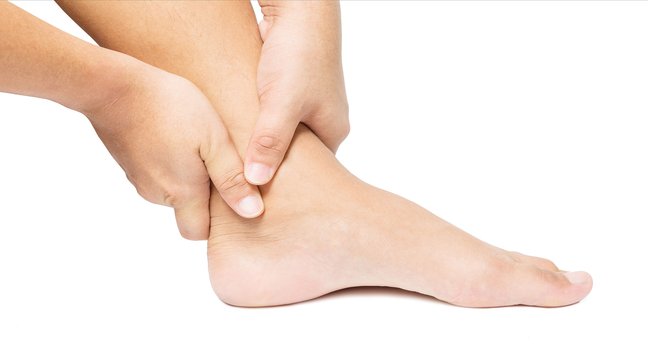
Ankle osteoarthritis
Ankle osteoarthritis is a degenerative disease of the upper ankle joint (OSG), characterized by the wear and tear of the joint cartilage and adjacent structures. It leads to pain, restricted movement, and long-term functional impairment of the joint.…
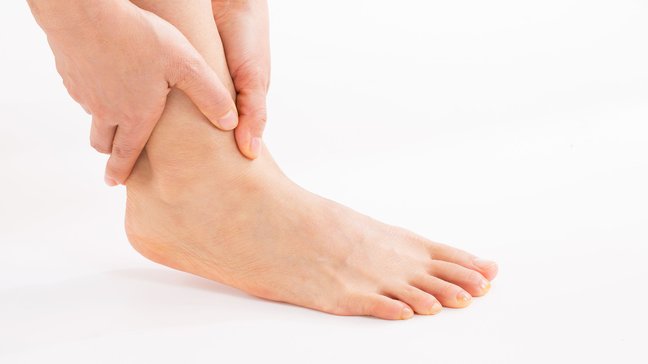
Sinus tarsi syndrome
The sinus tarsi syndrome is a painful condition caused by inflammation or irritation of the sinus tarsi, a bony canal between the talus (ankle bone) and calcaneus (heel bone). This anatomical structure contains important ligaments, vessels, and…
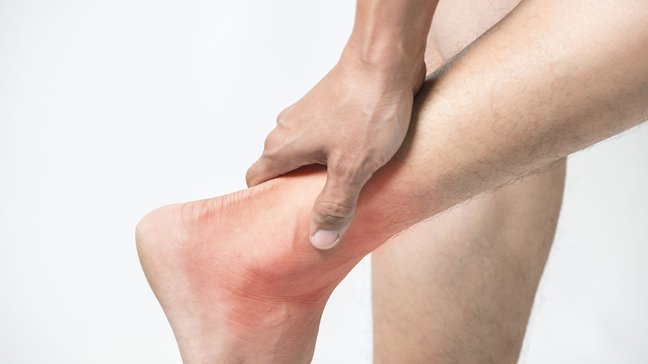
Müller-Weiss syndrome
Müller-Weiss syndrome is a rare, degenerative disease of the navicular bone in the midfoot, primarily occurring in adults between 40 and 60 years of age. It is a spontaneous, non-traumatic bone necrosis that leads to deformities, pain, and movement…
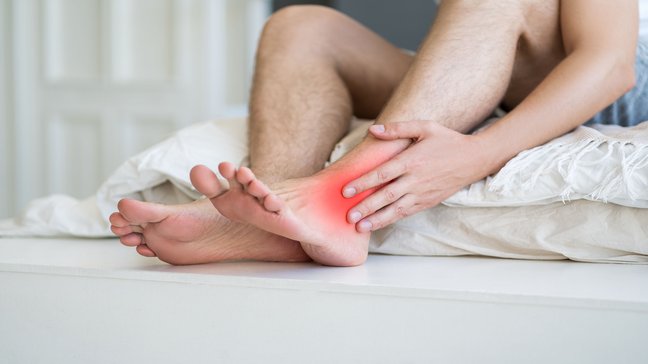
Osteoarthritis in the lower ankle joint
Osteoarthritis of the lower ankle joint, also known as subtalar osteoarthritis, is a degenerative joint disease in which the cartilage between the talus (ankle bone) and calcaneus (heel bone) is gradually broken down. This condition primarily affects…
Torn lateral ligament of the ankle
Classification of Ligament Tears
An outer ligament tear can be divided into different degrees of severity:
- Grade I (Stretching): Slight overstretching of the ligament without structural damage. Pain and slight swelling occur.
- Grade II (Partial tear): Partial tearing of the ligament fibers with significant swelling, bruising, and limited mobility.
- Grade III (Complete tear): Complete rupture of the ligament with severe swelling, instability, and possible accompanying injuries such as cartilage damage.
Causes of ligament tear
The main causes of an external ligament tear can be divided into several categories:
- Sudden movements: Quick twisting or rolling movements of the foot, often in sports such as soccer, basketball, or volleyball.
- Uncontrolled loads: Accidents or falls that strain the joint beyond its normal range of motion.
- Previous injuries: Previously sustained ligament injuries can impair the stability of the joint and increase the risk of re-injury.
- Weak muscles: Insufficiently trained muscles offer less protection against injuries.
- Inappropriate footwear: Shoes with inadequate stability or cushioning increase the risk of an external ligament tear.
Symptoms of ligament tear
The symptoms vary depending on the severity of the injury, but often include:
- **Pain:** Acute, sharp pain in the area of the affected ligament, which intensifies with strain.
- **Swelling:** Rapid onset of swelling due to bleeding into the surrounding tissue.
- **Bruising:** Visible hematomas that may spread after a few hours or days.
- **Instability:** Feeling of insecurity in the joint, especially under strain or certain movements.
- **Movement restrictions:** Difficulty moving or putting weight on the joint normally.
Diagnosis of ligament tear
The diagnosis is made through a combination of medical history, physical examination, and imaging techniques:
- **Medical History:** The doctor asks about the mechanism of injury, the intensity of pain, and the mobility of the joint.
- **Physical Examination:** Checking for swelling, tenderness, and stability of the joint. Specific functional tests, such as the drawer test, help assess the injury.
- **Imaging Techniques:**
- *Ultrasound:* To visualize ligament injuries and swelling.
- *MRI:* Detailed assessment of the ligament and possible accompanying injuries such as cartilage damage.
- *X-ray:* To rule out fractures or bony accompanying injuries.
Treatment options for ligament tear
Conservative Therapy
In most cases, lateral ligament tears can be treated without surgery:
-
RICE Rule:
- Rest: Immediate immobilization of the joint to prevent further damage.
- Ice: Regular cooling for 15–20 minutes every 2–3 hours to relieve pain and reduce swelling.
- Compression: Application of an elastic bandage to stabilize the joint and minimize swelling.
- Elevation: Elevation of the affected leg above heart level to improve circulation and reduce swelling.
-
Physiotherapy:
- Exercises to restore mobility and strengthen the muscles.
- Proprioception training to improve stability and prevent future injuries.
-
Orthopedic Aids:
- Use of bandages or braces to support the joint during the healing phase.
-
Pain Medication:
- Intake of anti-inflammatory medications to relieve pain and swelling.
Surgical Therapy
In cases of severe tears or persistent instability, surgery may be necessary:
- Reconstruction of the Ligament: Restoration of the torn ligament through suturing or reinforcement with the body's own tissue.
- Arthroscopic Procedures: Minimally invasive techniques to remove damaged tissue or stabilize the joint.
- Postoperative Rehabilitation: Intensive physiotherapeutic training to restore joint function and prevent complications.
Preventive measures for ligament tear
To prevent lateral ligament tears, the following measures are recommended:
- Muscle strengthening: Regular training of the muscles surrounding the joint to increase stability.
- Warming up: Careful warming up before sports activities to prepare the muscles and ligaments.
- Avoiding overstrain: Adjusting the load to the individual fitness level.
- Appropriate footwear: Wearing stable shoes with good cushioning and support.
- Proprioception training: Exercises to improve body awareness and joint stability.
Ankle osteoarthritis
Ankle osteoarthritis is a degenerative disease of the upper ankle joint (OSG), characterized by the wear and tear of the joint cartilage and adjacent structures. It leads to pain, restricted movement, and long-term functional impairment of the joint.…
Sinus tarsi syndrome
The sinus tarsi syndrome is a painful condition caused by inflammation or irritation of the sinus tarsi, a bony canal between the talus (ankle bone) and calcaneus (heel bone). This anatomical structure contains important ligaments, vessels, and…
Müller-Weiss syndrome
Müller-Weiss syndrome is a rare, degenerative disease of the navicular bone in the midfoot, primarily occurring in adults between 40 and 60 years of age. It is a spontaneous, non-traumatic bone necrosis that leads to deformities, pain, and movement…
Osteoarthritis in the lower ankle joint
Osteoarthritis of the lower ankle joint, also known as subtalar osteoarthritis, is a degenerative joint disease in which the cartilage between the talus (ankle bone) and calcaneus (heel bone) is gradually broken down. This condition primarily affects…