

Rotator cuff tear
Classification of Rotator Cuff Tears
Rotator cuff tears are classified according to their severity, location, and cause:
- Partial tear: Only part of the tendon is affected, either on the upper or lower side.
- Complete tear: The tendon is completely severed, leading to a significant loss of function.
- Traumatic tear: Occurs suddenly due to injuries such as falls or heavy strains.
- Degenerative tear: Develops slowly due to age-related wear or chronic overuse.
- Massive tear: Several tendons of the rotator cuff are affected simultaneously.
- Chronic tear: A long-standing injury that can lead to muscle atrophy and joint stiffness.
Causes of Rotator Cuff Tear
The causes of a rotator cuff tear are varied and can be divided into acute and chronic factors:
- Acute causes:
- Sudden stresses, such as those occurring during falls or heavy lifting movements.
- Direct trauma, for example, from an accident or sports injuries.
- Chronic causes:
- Degenerative changes due to aging that weaken the tendons.
- Repeated overhead movements in sports such as tennis, swimming, or weightlifting.
- Impingement syndromes that permanently irritate and weaken the tendons.
- Contributing factors:
- Anatomical peculiarities such as bony protrusions.
- Muscle imbalances or weaknesses in the shoulder region.
Symptoms of rotator cuff tear
The symptoms of a rotator cuff tear vary depending on the severity and type of injury, but often include:
- **Pain:** Localized pain in the shoulder, often radiating into the arm.
- **Loss of strength:** Difficulty lifting the arm or performing overhead tasks.
- **Movement restrictions:** Limited mobility in abduction and rotation of the arm.
- **Night pain:** Increased discomfort when lying on the affected shoulder.
- **Cracking or snapping noises:** Occurring during movements, especially with complete tears.
- **Muscle atrophy:** In chronic tears, visible wasting of the shoulder muscles may occur.
Diagnosis of rotator cuff tear
The diagnosis is made through a combination of medical history, clinical examination, and imaging techniques:
- Medical history:
- The doctor inquires about the course of the symptoms, possible injuries, and stressful activities.
- Physical examination:
- Special tests such as the Jobe test or the Hawkins-Kennedy test to check the function of the rotator cuff.
- Palpation of the shoulder for tenderness and movement restrictions.
- Imaging:
- MRI: Detailed depiction of tendon damage, muscle atrophy, and fluid accumulation.
- Ultrasound: Detection of tears and changes in tendon structure.
- X-ray: To assess bony changes or calcifications.
Treatment options for rotator cuff tear
Conservative Therapy
For partial tears or minor symptoms, non-operative treatment is often sufficient:
- Medication Therapy:
- NSAIDs: To relieve pain and inflammation.
- Physiotherapy:
- Exercises to strengthen the rotator cuff and restore mobility.
- Manual therapy to improve shoulder stability.
- Pain Management:
- Heat or cold therapy to relax the muscles.
- Injections:
- Corticosteroids to reduce inflammation and pain.
Surgical Therapy
For complete tears, persistent pain, or loss of function, surgery is necessary:
- Arthroscopic Repair: Minimally invasive technique to restore the tendon.
- Open Repair: Used for more complex or larger tears.
- Tendon Transfer: Replacement of an irreparable tendon with adjacent tissue.
- Shoulder Prostheses: For massive damage or irreparable tears.
Preventive measures for rotator cuff rupture
The following measures are suitable for preventing rotator cuff tears:
- Strengthening the shoulder: Targeted training of the rotator cuff and surrounding muscles.
- Avoiding overstrain: Protecting the shoulder from repeated or intense stress.
- Warming up before activities: Preparing the shoulder for sports or occupational stress.
- Correcting poor posture: Improving posture and movement patterns.
- Regular check-ups: Timely treatment of initial complaints or pre-existing conditions.

Dislocación de hombro.
A shoulder dislocation describes the complete or partial dislocation of the shoulder joint, where the head of the upper arm (humeral head) slips out of the socket (glenoid). Due to the special mobility and anatomy of the shoulder joint, it is the…

Bursitis
A bursitis, also called bursitis, is an inflammatory condition of a bursa, caused by irritation, overuse, or infections. Bursae are small fluid-filled cushions that lie between bones, muscles, and tendons and serve as shock absorbers and sliding…
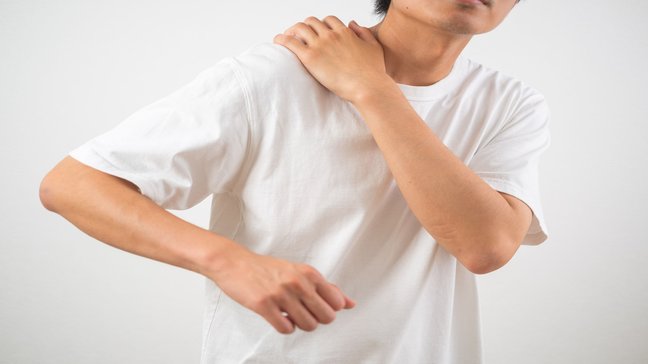
Tear of the supraspinatus tendon
A tear of the supraspinatus tendon is a common injury of the rotator cuff and affects the tendon of the supraspinatus muscle, which is responsible for the abduction and stabilization of the shoulder joint. The injury can occur acutely or chronically…
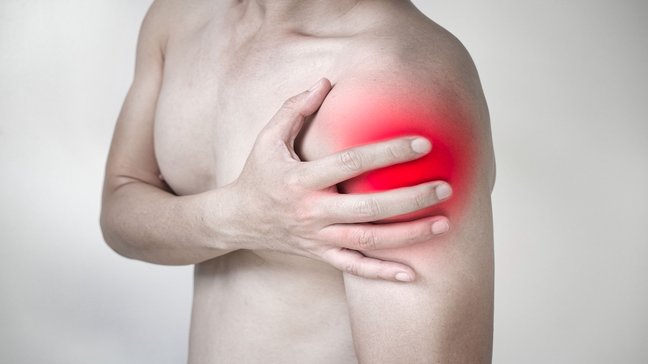
Rupture of the long biceps tendon
A tear of the long biceps tendon is a common injury that usually occurs due to acute overload or degenerative changes. The long biceps tendon connects the biceps muscle to the shoulder and plays an important role in the mobility and stability of the…
Rotator cuff tear
Classification of Rotator Cuff Tears
Rotator cuff tears are classified according to their severity, location, and cause:
- Partial tear: Only part of the tendon is affected, either on the upper or lower side.
- Complete tear: The tendon is completely severed, leading to a significant loss of function.
- Traumatic tear: Occurs suddenly due to injuries such as falls or heavy strains.
- Degenerative tear: Develops slowly due to age-related wear or chronic overuse.
- Massive tear: Several tendons of the rotator cuff are affected simultaneously.
- Chronic tear: A long-standing injury that can lead to muscle atrophy and joint stiffness.
Causes of Rotator Cuff Tear
The causes of a rotator cuff tear are varied and can be divided into acute and chronic factors:
- Acute causes:
- Sudden stresses, such as those occurring during falls or heavy lifting movements.
- Direct trauma, for example, from an accident or sports injuries.
- Chronic causes:
- Degenerative changes due to aging that weaken the tendons.
- Repeated overhead movements in sports such as tennis, swimming, or weightlifting.
- Impingement syndromes that permanently irritate and weaken the tendons.
- Contributing factors:
- Anatomical peculiarities such as bony protrusions.
- Muscle imbalances or weaknesses in the shoulder region.
Symptoms of rotator cuff tear
The symptoms of a rotator cuff tear vary depending on the severity and type of injury, but often include:
- **Pain:** Localized pain in the shoulder, often radiating into the arm.
- **Loss of strength:** Difficulty lifting the arm or performing overhead tasks.
- **Movement restrictions:** Limited mobility in abduction and rotation of the arm.
- **Night pain:** Increased discomfort when lying on the affected shoulder.
- **Cracking or snapping noises:** Occurring during movements, especially with complete tears.
- **Muscle atrophy:** In chronic tears, visible wasting of the shoulder muscles may occur.
Diagnosis of rotator cuff tear
The diagnosis is made through a combination of medical history, clinical examination, and imaging techniques:
- Medical history:
- The doctor inquires about the course of the symptoms, possible injuries, and stressful activities.
- Physical examination:
- Special tests such as the Jobe test or the Hawkins-Kennedy test to check the function of the rotator cuff.
- Palpation of the shoulder for tenderness and movement restrictions.
- Imaging:
- MRI: Detailed depiction of tendon damage, muscle atrophy, and fluid accumulation.
- Ultrasound: Detection of tears and changes in tendon structure.
- X-ray: To assess bony changes or calcifications.
Treatment options for rotator cuff tear
Conservative Therapy
For partial tears or minor symptoms, non-operative treatment is often sufficient:
- Medication Therapy:
- NSAIDs: To relieve pain and inflammation.
- Physiotherapy:
- Exercises to strengthen the rotator cuff and restore mobility.
- Manual therapy to improve shoulder stability.
- Pain Management:
- Heat or cold therapy to relax the muscles.
- Injections:
- Corticosteroids to reduce inflammation and pain.
Surgical Therapy
For complete tears, persistent pain, or loss of function, surgery is necessary:
- Arthroscopic Repair: Minimally invasive technique to restore the tendon.
- Open Repair: Used for more complex or larger tears.
- Tendon Transfer: Replacement of an irreparable tendon with adjacent tissue.
- Shoulder Prostheses: For massive damage or irreparable tears.
Preventive measures for rotator cuff rupture
The following measures are suitable for preventing rotator cuff tears:
- Strengthening the shoulder: Targeted training of the rotator cuff and surrounding muscles.
- Avoiding overstrain: Protecting the shoulder from repeated or intense stress.
- Warming up before activities: Preparing the shoulder for sports or occupational stress.
- Correcting poor posture: Improving posture and movement patterns.
- Regular check-ups: Timely treatment of initial complaints or pre-existing conditions.
Dislocación de hombro.
A shoulder dislocation describes the complete or partial dislocation of the shoulder joint, where the head of the upper arm (humeral head) slips out of the socket (glenoid). Due to the special mobility and anatomy of the shoulder joint, it is the…
Bursitis
A bursitis, also called bursitis, is an inflammatory condition of a bursa, caused by irritation, overuse, or infections. Bursae are small fluid-filled cushions that lie between bones, muscles, and tendons and serve as shock absorbers and sliding…
Tear of the supraspinatus tendon
A tear of the supraspinatus tendon is a common injury of the rotator cuff and affects the tendon of the supraspinatus muscle, which is responsible for the abduction and stabilization of the shoulder joint. The injury can occur acutely or chronically…
Rupture of the long biceps tendon
A tear of the long biceps tendon is a common injury that usually occurs due to acute overload or degenerative changes. The long biceps tendon connects the biceps muscle to the shoulder and plays an important role in the mobility and stability of the…