

Rhizarthrosis
Classification of Rhizarthrosis
Rhizarthrosis is classified according to severity and clinical symptoms:
- Early stage: Mild pain during exertion, especially during gripping movements.
- Middle stage: Increasing pain even at rest, accompanied by swelling and limited mobility.
- Late stage: Joint deformities, loss of thumb function, and chronic pain.
- Primary rhizarthrosis: Age-related wear without identifiable pre-existing conditions.
- Secondary rhizarthrosis: Result of injuries, misalignments, or inflammatory diseases.
Causes of rhizarthrosis
The causes of rhizarthrosis are diverse and include both degenerative and mechanical factors:
- Degenerative processes:
- Age-related wear of the joint cartilage.
- Mechanical overload:
- Repeated gripping and twisting movements, as occur in some professions or hobbies.
- Genetic predisposition:
- Familial accumulation of osteoarthritis diseases.
- Traumatic injuries:
- Previous injuries such as fractures or dislocations.
- Inflammatory diseases:
- Accompanying diseases such as rheumatoid arthritis can accelerate joint wear.
Symptoms of rhizarthrosis
The symptoms vary depending on the stage of the disease, but typically include:
- **Pain:** Initially dependent on stress, later also at rest.
- **Movement restrictions:** Difficulties with everyday activities such as writing, opening jars, or grasping objects.
- **Loss of strength:** Reduced grip strength, especially with pinch grips.
- **Deformities:** Visible misalignments and swelling of the thumb saddle joint.
- **Crepitus:** Crunching noises during joint movements.
Diagnosis of rhizarthrosis
The diagnosis is made through a combination of medical history, clinical examination, and imaging techniques:
- Medical history:
- Assessment of symptoms, duration, and dependency on stress.
- Physical examination:
- Palpation of the thumb saddle joint for tenderness.
- Functional tests such as the grind test to check joint mobility.
- Imaging:
- X-ray: Visualization of joint space narrowing, osteophytes, and deformities.
- MRI: Rarely required, but helpful for early cartilage damage.
- Ultrasound: Assessment of soft tissue changes.
Treatment options for rhizarthrosis
Conservative Therapy
Most patients initially benefit from non-surgical measures:
- Medication Therapy:
- NSAIDs: To relieve pain and inflammation.
- Injections: Hyaluronic acid or cortisone to improve joint function and relieve pain.
- Physiotherapy:
- Special exercises to strengthen the thumb muscles and improve mobility.
- Orthoses:
- Use of thumb splints to stabilize and relieve the joint.
- Pain Management:
- Local applications such as heat or cold therapy.
Surgical Therapy
In severe cases or failure of conservative measures:
- Resection Arthroplasty: Removal of the affected joint and replacement with soft tissue.
- Partial Prosthesis: Replacement of the joint with an artificial prosthesis.
- Arthrodesis: Surgical fusion of the joint to eliminate pain.
- Minimally Invasive Techniques: Gentle procedures to reduce postoperative rehabilitation.
Preventive measures for rhizarthrosis
To prevent and alleviate symptoms, the following measures are recommended:
- Ergonomic adjustments: Avoidance of repetitive strain through suitable aids.
- Regular exercise: Promotion of joint function through targeted training.
- Joint protection: Use of orthoses during strenuous activities.
- Early treatment: At the first symptoms, to prevent the progression of the disease.

Carpal tunnel syndrome
Carpal tunnel syndrome (CTS) is a common nerve compression disorder in which the median nerve is compressed in the wrist area. This compression leads to pain, numbness, and weakness in the hand, particularly in the thumb, index finger, and middle…

Finger polyarthrosis
Finger polyarthrosis, also known as polyarthrosis of the finger joints, is a degenerative disease characterized by the progressive wear of the joint cartilage in multiple finger joints. It leads to pain, stiffness, and limited mobility and occurs…

Wrist (TFCC) disc injury (Discus triangularis lesion)
A TFCC disc injury, also known as a triangular fibrocartilage complex lesion, affects the triangular fibrocartilage complex (TFCC) in the wrist. This structure consists of fibrocartilage and ligaments and is located between the ulna, the radius, and…
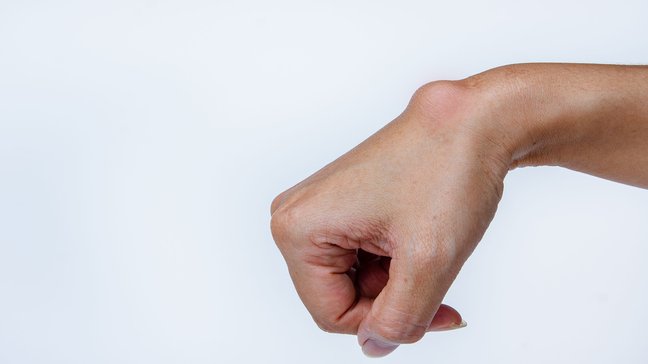
Wrist ganglion
A wrist ganglion, colloquially also known as a synovial cyst, is a benign, fluid-filled cyst that forms near joints or tendon sheaths. A ganglion most commonly occurs on the dorsal side of the wrist, but it can also appear on the palmar side or in…
Rhizarthrosis
Classification of Rhizarthrosis
Rhizarthrosis is classified according to severity and clinical symptoms:
- Early stage: Mild pain during exertion, especially during gripping movements.
- Middle stage: Increasing pain even at rest, accompanied by swelling and limited mobility.
- Late stage: Joint deformities, loss of thumb function, and chronic pain.
- Primary rhizarthrosis: Age-related wear without identifiable pre-existing conditions.
- Secondary rhizarthrosis: Result of injuries, misalignments, or inflammatory diseases.
Causes of rhizarthrosis
The causes of rhizarthrosis are diverse and include both degenerative and mechanical factors:
- Degenerative processes:
- Age-related wear of the joint cartilage.
- Mechanical overload:
- Repeated gripping and twisting movements, as occur in some professions or hobbies.
- Genetic predisposition:
- Familial accumulation of osteoarthritis diseases.
- Traumatic injuries:
- Previous injuries such as fractures or dislocations.
- Inflammatory diseases:
- Accompanying diseases such as rheumatoid arthritis can accelerate joint wear.
Symptoms of rhizarthrosis
The symptoms vary depending on the stage of the disease, but typically include:
- **Pain:** Initially dependent on stress, later also at rest.
- **Movement restrictions:** Difficulties with everyday activities such as writing, opening jars, or grasping objects.
- **Loss of strength:** Reduced grip strength, especially with pinch grips.
- **Deformities:** Visible misalignments and swelling of the thumb saddle joint.
- **Crepitus:** Crunching noises during joint movements.
Diagnosis of rhizarthrosis
The diagnosis is made through a combination of medical history, clinical examination, and imaging techniques:
- Medical history:
- Assessment of symptoms, duration, and dependency on stress.
- Physical examination:
- Palpation of the thumb saddle joint for tenderness.
- Functional tests such as the grind test to check joint mobility.
- Imaging:
- X-ray: Visualization of joint space narrowing, osteophytes, and deformities.
- MRI: Rarely required, but helpful for early cartilage damage.
- Ultrasound: Assessment of soft tissue changes.
Treatment options for rhizarthrosis
Conservative Therapy
Most patients initially benefit from non-surgical measures:
- Medication Therapy:
- NSAIDs: To relieve pain and inflammation.
- Injections: Hyaluronic acid or cortisone to improve joint function and relieve pain.
- Physiotherapy:
- Special exercises to strengthen the thumb muscles and improve mobility.
- Orthoses:
- Use of thumb splints to stabilize and relieve the joint.
- Pain Management:
- Local applications such as heat or cold therapy.
Surgical Therapy
In severe cases or failure of conservative measures:
- Resection Arthroplasty: Removal of the affected joint and replacement with soft tissue.
- Partial Prosthesis: Replacement of the joint with an artificial prosthesis.
- Arthrodesis: Surgical fusion of the joint to eliminate pain.
- Minimally Invasive Techniques: Gentle procedures to reduce postoperative rehabilitation.
Preventive measures for rhizarthrosis
To prevent and alleviate symptoms, the following measures are recommended:
- Ergonomic adjustments: Avoidance of repetitive strain through suitable aids.
- Regular exercise: Promotion of joint function through targeted training.
- Joint protection: Use of orthoses during strenuous activities.
- Early treatment: At the first symptoms, to prevent the progression of the disease.
Carpal tunnel syndrome
Carpal tunnel syndrome (CTS) is a common nerve compression disorder in which the median nerve is compressed in the wrist area. This compression leads to pain, numbness, and weakness in the hand, particularly in the thumb, index finger, and middle…
Finger polyarthrosis
Finger polyarthrosis, also known as polyarthrosis of the finger joints, is a degenerative disease characterized by the progressive wear of the joint cartilage in multiple finger joints. It leads to pain, stiffness, and limited mobility and occurs…
Wrist (TFCC) disc injury (Discus triangularis lesion)
A TFCC disc injury, also known as a triangular fibrocartilage complex lesion, affects the triangular fibrocartilage complex (TFCC) in the wrist. This structure consists of fibrocartilage and ligaments and is located between the ulna, the radius, and…
Wrist ganglion
A wrist ganglion, colloquially also known as a synovial cyst, is a benign, fluid-filled cyst that forms near joints or tendon sheaths. A ganglion most commonly occurs on the dorsal side of the wrist, but it can also appear on the palmar side or in…