

Labrum tear
Classification of Labrum Tears
Labrum tears can be classified according to location and severity:
1. **Partial tear:** An incomplete tear where part of the labrum remains intact.
2. **Complete tear:** A complete tear where the labrum is detached from the socket.
3. **Traumatic tear:** Caused by sudden force, e.g., during a fall or impact.
4. **Degenerative tear:** Caused by chronic wear or age-related cartilage deterioration.
Causes of labrum tear
The main causes of labrum tears can be divided into several categories:
- Acute injuries:
- Direct impact, e.g., from a fall or trauma in contact sports.
- Overuse:
- Repetitive movements, e.g., in sports like tennis, swimming, or weightlifting, that stress the labrum.
- Degenerative changes:
- Age-related wear of the cartilage, making the labrum more susceptible to tears.
- Anatomical misalignments:
- Misalignments or deformities of the joint, such as hip dysplasia or an unstable shoulder, can promote a labrum tear.
- Dislocations:
- Repeated dislocations of the joint can lead to chronic damage and tears in the labrum.
Symptoms of labrum tear
The symptoms of a labrum tear depend on the location and extent of the damage:
- Pain: Localized pain that is exacerbated by certain movements, such as overhead work (shoulder) or rotational movements (hip).
- Movement restrictions: Difficulty moving the joint, especially when bearing loads or during rotations.
- Instability: A feeling of uncertainty or "giving way" in the joint.
- Grinding or snapping: An audible or palpable snapping in the joint during movement.
- Swelling: Slight swelling in the area of the affected joint.
- Loss of strength: Reduced muscle strength due to protective posture or pain.
Diagnosis of labrum tear.
The diagnosis is made through a combination of medical history, clinical examination, and imaging techniques:
- Medical History:
- Collection of symptoms, accident details, and possible risk factors.
- Clinical Examination:
- Special tests such as the O’Brien test (shoulder) or the FADIR test (hip) to identify labrum injuries.
- Imaging Techniques:
- MRI: Visualization of the labrum and possible accompanying injuries.
- CT Arthrography: Detailed examination of the labrum using a contrast agent.
- X-ray: To rule out bony changes or accompanying injuries.
Treatment options for labrum tear
Conservative Therapy
In less severe cases, a labrum tear can be treated conservatively:
- Physiotherapy:
- Exercises to strengthen the muscles and stabilize the affected joint.
- Medication Therapy:
- NSAIDs to relieve pain and inflammation.
- Rest:
- Reduction of strenuous activities to support healing.
- Injections:
- Cortisone injections for pain relief and anti-inflammatory effects.
Surgical Therapy
In severe or non-conservatively treatable labrum tears, surgery is necessary:
- Arthroscopic Labrum Repair:
- Minimally invasive reattachment of the labrum to the joint socket.
- Labrum Reconstruction:
- Replacement of the damaged labrum with autologous or artificial tissue.
- Additional Stabilization:
- Treatment of accompanying injuries, e.g., dislocations or joint instabilities.
Preventive measures for labrum tear
To prevent labrum tears, the following measures are recommended:
- Regular strengthening: Building muscle to stabilize the joint.
- Technique training: Optimizing movement patterns to avoid incorrect loading.
- Injury protection: Using appropriate protective gear in sports with a high risk of injury.
- Adequate recovery: Observing breaks and recovery phases between intense activities.
- Early detection: Seeking medical advice promptly at the first signs of discomfort to prevent major damage.

Shoulder osteoarthritis (omarthrosis)
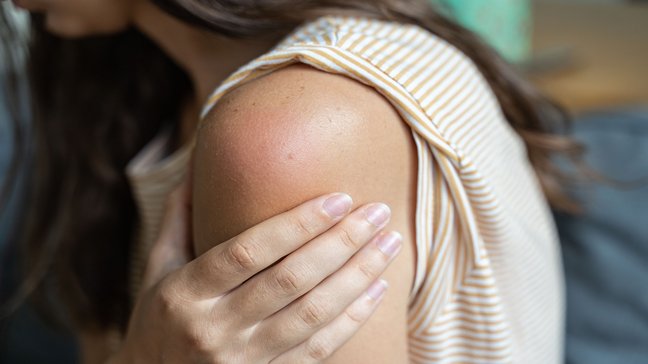
Shoulder osteoarthritis, also known as omarthrosis, is a degenerative disease of the shoulder joint, in which the joint cartilage between the head of the humerus and the glenoid cavity is increasingly worn down. This wear leads to pain, restricted…
Rotator cuff tear
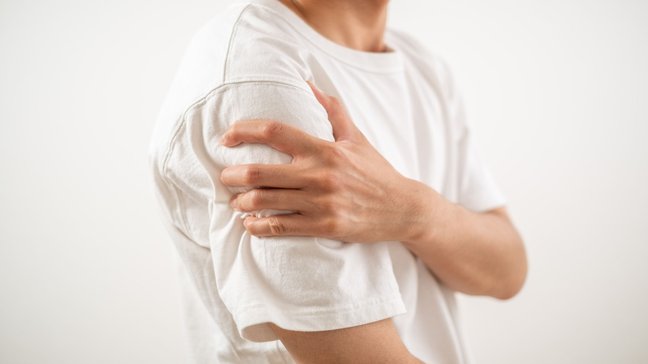
A rotator cuff tear refers to damage or a tear of the tendons in the shoulder joint that connect the muscles of the rotator cuff to the humerus. It is one of the most common causes of shoulder pain and limitations in shoulder mobility. The injury can…
Calcific shoulder
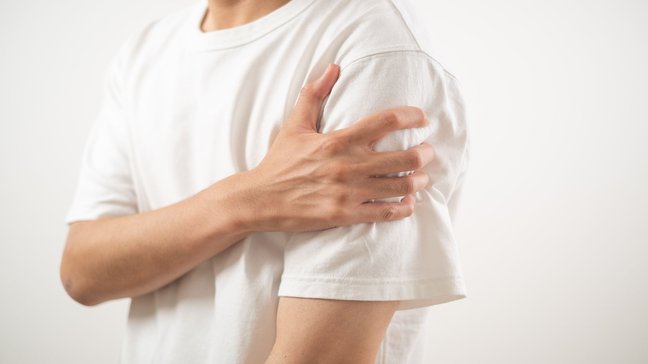
Calcific shoulder, medically referred to as calcific tendinitis, is a condition where calcium deposits form in the tendons of the shoulder's rotator cuff. These deposits can lead to severe pain, restricted movement, and inflammation. Calcific…
Shoulder impingement
Shoulder impingement syndrome, also known as subacromial impingement, is a common cause of shoulder pain and movement restrictions. It involves a mechanical narrowing of structures, such as tendons or bursae, in the space beneath the bony shoulder…
Labrum tear
Classification of Labrum Tears
Labrum tears can be classified according to location and severity:
1. **Partial tear:** An incomplete tear where part of the labrum remains intact.
2. **Complete tear:** A complete tear where the labrum is detached from the socket.
3. **Traumatic tear:** Caused by sudden force, e.g., during a fall or impact.
4. **Degenerative tear:** Caused by chronic wear or age-related cartilage deterioration.
Causes of labrum tear
The main causes of labrum tears can be divided into several categories:
- Acute injuries:
- Direct impact, e.g., from a fall or trauma in contact sports.
- Overuse:
- Repetitive movements, e.g., in sports like tennis, swimming, or weightlifting, that stress the labrum.
- Degenerative changes:
- Age-related wear of the cartilage, making the labrum more susceptible to tears.
- Anatomical misalignments:
- Misalignments or deformities of the joint, such as hip dysplasia or an unstable shoulder, can promote a labrum tear.
- Dislocations:
- Repeated dislocations of the joint can lead to chronic damage and tears in the labrum.
Symptoms of labrum tear
The symptoms of a labrum tear depend on the location and extent of the damage:
- Pain: Localized pain that is exacerbated by certain movements, such as overhead work (shoulder) or rotational movements (hip).
- Movement restrictions: Difficulty moving the joint, especially when bearing loads or during rotations.
- Instability: A feeling of uncertainty or "giving way" in the joint.
- Grinding or snapping: An audible or palpable snapping in the joint during movement.
- Swelling: Slight swelling in the area of the affected joint.
- Loss of strength: Reduced muscle strength due to protective posture or pain.
Diagnosis of labrum tear.
The diagnosis is made through a combination of medical history, clinical examination, and imaging techniques:
- Medical History:
- Collection of symptoms, accident details, and possible risk factors.
- Clinical Examination:
- Special tests such as the O’Brien test (shoulder) or the FADIR test (hip) to identify labrum injuries.
- Imaging Techniques:
- MRI: Visualization of the labrum and possible accompanying injuries.
- CT Arthrography: Detailed examination of the labrum using a contrast agent.
- X-ray: To rule out bony changes or accompanying injuries.
Treatment options for labrum tear
Conservative Therapy
In less severe cases, a labrum tear can be treated conservatively:
- Physiotherapy:
- Exercises to strengthen the muscles and stabilize the affected joint.
- Medication Therapy:
- NSAIDs to relieve pain and inflammation.
- Rest:
- Reduction of strenuous activities to support healing.
- Injections:
- Cortisone injections for pain relief and anti-inflammatory effects.
Surgical Therapy
In severe or non-conservatively treatable labrum tears, surgery is necessary:
- Arthroscopic Labrum Repair:
- Minimally invasive reattachment of the labrum to the joint socket.
- Labrum Reconstruction:
- Replacement of the damaged labrum with autologous or artificial tissue.
- Additional Stabilization:
- Treatment of accompanying injuries, e.g., dislocations or joint instabilities.
Preventive measures for labrum tear
To prevent labrum tears, the following measures are recommended:
- Regular strengthening: Building muscle to stabilize the joint.
- Technique training: Optimizing movement patterns to avoid incorrect loading.
- Injury protection: Using appropriate protective gear in sports with a high risk of injury.
- Adequate recovery: Observing breaks and recovery phases between intense activities.
- Early detection: Seeking medical advice promptly at the first signs of discomfort to prevent major damage.
Shoulder osteoarthritis (omarthrosis)
Shoulder osteoarthritis, also known as omarthrosis, is a degenerative disease of the shoulder joint, in which the joint cartilage between the head of the humerus and the glenoid cavity is increasingly worn down. This wear leads to pain, restricted…
Rotator cuff tear
A rotator cuff tear refers to damage or a tear of the tendons in the shoulder joint that connect the muscles of the rotator cuff to the humerus. It is one of the most common causes of shoulder pain and limitations in shoulder mobility. The injury can…
Calcific shoulder
Calcific shoulder, medically referred to as calcific tendinitis, is a condition where calcium deposits form in the tendons of the shoulder's rotator cuff. These deposits can lead to severe pain, restricted movement, and inflammation. Calcific…
Shoulder impingement
Shoulder impingement syndrome, also known as subacromial impingement, is a common cause of shoulder pain and movement restrictions. It involves a mechanical narrowing of structures, such as tendons or bursae, in the space beneath the bony shoulder…