

Hallux Valgus
Classification of Hallux Valgus
Hallux valgus is classified according to the severity of the misalignment:
- Mild hallux valgus:
- The deviation angle of the big toe is up to 20°.
- Moderate hallux valgus:
- The deviation angle is between 20° and 40°.
- Severe hallux valgus:
- The deviation angle exceeds 40° and is often accompanied by other deformities.
Causes of Hallux Valgus
The causes of the misalignment are diverse and include:
- Genetic predisposition:
- Hallux valgus often occurs more frequently in families, indicating a genetic predisposition.
- Foot deformities:
- A splayfoot or flatfoot increases the load on the forefoot and promotes the misalignment.
- Unsuitable footwear:
- Tight, pointed, or high-heeled shoes encourage the deviation of the big toe.
- Age and gender:
- Women and older people are more often affected, which is due to hormonal and connective tissue differences.
- Injuries or diseases:
- Trauma or inflammatory diseases such as rheumatoid arthritis can promote the development of a hallux valgus.
Symptoms of Hallux Valgus
The symptoms depend on the severity of the misalignment and include:
- Pain:
- Localized pain in the area of the big toe joint, which is intensified by pressure and strain.
- Swelling and redness:
- Inflammatory reactions due to friction, often associated with bursitis.
- Restricted movement:
- Reduced mobility of the big toe joint, especially in advanced misalignment.
- Skin changes:
- Calluses or corns due to pressure points.
- Aesthetic impairment:
- The visible bulge can be perceived as bothersome and limit the choice of footwear.
Diagnosis of Hallux Valgus
The diagnosis is made through a combination of medical history, clinical examination, and imaging techniques:
- Medical History:
- Collection of medical history, symptoms, and footwear.
- Clinical Examination:
- Assessment of foot shape, deviation angle, and tenderness of the big toe joint.
- Imaging Techniques:
- X-ray: Assessment of the angle between the big toe and metatarsal bone as well as other bony changes.
- MRI: Visualization of soft tissue damage in case of suspected accompanying diseases.
Treatment options for hallux valgus
Conservative Therapy
In early stages or with mild symptoms, conservative measures can help:
- Shoe Adjustment:
- Use of wide, comfortable shoes with enough space for the toes.
- Orthopedic Insoles:
- Support of the arch to reduce the load on the forefoot.
- Toe Spreaders and Splints:
- Improvement of toe position and pain relief in mild misalignments.
- Physiotherapy:
- Exercises to strengthen the foot muscles and improve mobility.
- Pain Therapy:
- Nonsteroidal anti-inflammatory drugs (NSAIDs) to relieve pain and inflammation.
Surgical Therapy
In advanced hallux valgus or severe symptoms, surgery is necessary:
- Chevron Osteotomy:
- Correction of the misalignment by cutting and reshaping the metatarsal bone.
- Lapidus Arthrodesis:
- Fusion of the first metatarsal joint for stabilization.
- Minimally Invasive Procedures:
- Gentle techniques for correcting minor misalignments with faster recovery.
Preventive measures for Hallux Valgus
To prevent hallux valgus, the following measures are recommended:
- Suitable footwear: Wearing shoes with a wide toe box and good cushioning.
- Foot exercises: Regular exercises to strengthen the foot muscles.
- Avoiding overload: Avoiding tight or high-heeled shoes in everyday life.
- Early treatment: Immediate therapy at the first signs of misalignment.
- Weight management: Reducing excess weight to relieve the foot.
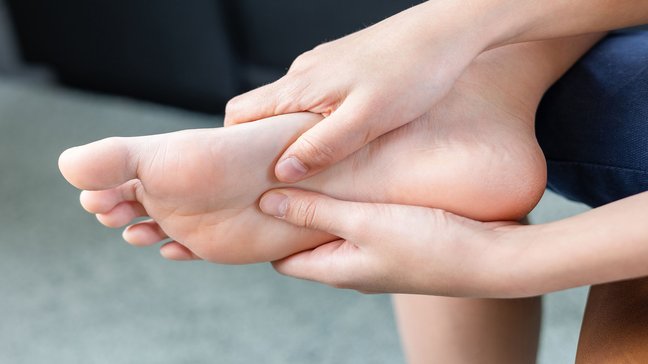
Metatarsalgia
Metatarsalgia describes pain in the forefoot area, often occurring under the metatarsal heads. These complaints usually arise from overuse, misalignments, or degenerative changes in the foot. People who stand a lot, walk, or are physically active are…
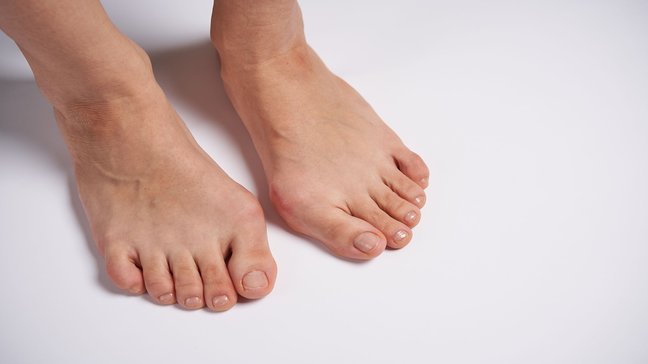
Hallux rigidus
Hallux rigidus is osteoarthritis of the big toe joint, which can lead to painful movement restrictions and eventually to joint stiffening. This condition significantly impairs the rolling motion of the foot and often affects people from middle age…
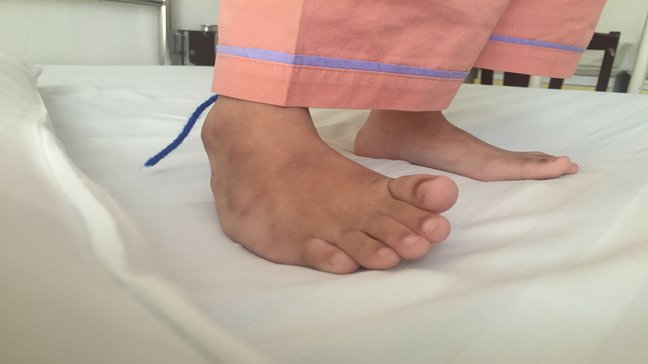
Clubfoot (Pes Equinovarus)
Clubfoot (Pes equinovarus) is a complex congenital foot deformity that occurs in about 1 in 1,000 newborns worldwide. Boys are more frequently affected than girls, and in about 50% of cases, the clubfoot is bilateral. This deformity, which can lead…

Heel pain
Heel pain is a common complaint that can affect people of all ages. It can be triggered by numerous factors, including overuse, misalignments, inflammation, or injuries. Heel pain often impairs the mobility and quality of life of those affected, as…
Hallux Valgus
Classification of Hallux Valgus
Hallux valgus is classified according to the severity of the misalignment:
- Mild hallux valgus:
- The deviation angle of the big toe is up to 20°.
- Moderate hallux valgus:
- The deviation angle is between 20° and 40°.
- Severe hallux valgus:
- The deviation angle exceeds 40° and is often accompanied by other deformities.
Causes of Hallux Valgus
The causes of the misalignment are diverse and include:
- Genetic predisposition:
- Hallux valgus often occurs more frequently in families, indicating a genetic predisposition.
- Foot deformities:
- A splayfoot or flatfoot increases the load on the forefoot and promotes the misalignment.
- Unsuitable footwear:
- Tight, pointed, or high-heeled shoes encourage the deviation of the big toe.
- Age and gender:
- Women and older people are more often affected, which is due to hormonal and connective tissue differences.
- Injuries or diseases:
- Trauma or inflammatory diseases such as rheumatoid arthritis can promote the development of a hallux valgus.
Symptoms of Hallux Valgus
The symptoms depend on the severity of the misalignment and include:
- Pain:
- Localized pain in the area of the big toe joint, which is intensified by pressure and strain.
- Swelling and redness:
- Inflammatory reactions due to friction, often associated with bursitis.
- Restricted movement:
- Reduced mobility of the big toe joint, especially in advanced misalignment.
- Skin changes:
- Calluses or corns due to pressure points.
- Aesthetic impairment:
- The visible bulge can be perceived as bothersome and limit the choice of footwear.
Diagnosis of Hallux Valgus
The diagnosis is made through a combination of medical history, clinical examination, and imaging techniques:
- Medical History:
- Collection of medical history, symptoms, and footwear.
- Clinical Examination:
- Assessment of foot shape, deviation angle, and tenderness of the big toe joint.
- Imaging Techniques:
- X-ray: Assessment of the angle between the big toe and metatarsal bone as well as other bony changes.
- MRI: Visualization of soft tissue damage in case of suspected accompanying diseases.
Treatment options for hallux valgus
Conservative Therapy
In early stages or with mild symptoms, conservative measures can help:
- Shoe Adjustment:
- Use of wide, comfortable shoes with enough space for the toes.
- Orthopedic Insoles:
- Support of the arch to reduce the load on the forefoot.
- Toe Spreaders and Splints:
- Improvement of toe position and pain relief in mild misalignments.
- Physiotherapy:
- Exercises to strengthen the foot muscles and improve mobility.
- Pain Therapy:
- Nonsteroidal anti-inflammatory drugs (NSAIDs) to relieve pain and inflammation.
Surgical Therapy
In advanced hallux valgus or severe symptoms, surgery is necessary:
- Chevron Osteotomy:
- Correction of the misalignment by cutting and reshaping the metatarsal bone.
- Lapidus Arthrodesis:
- Fusion of the first metatarsal joint for stabilization.
- Minimally Invasive Procedures:
- Gentle techniques for correcting minor misalignments with faster recovery.
Preventive measures for Hallux Valgus
To prevent hallux valgus, the following measures are recommended:
- Suitable footwear: Wearing shoes with a wide toe box and good cushioning.
- Foot exercises: Regular exercises to strengthen the foot muscles.
- Avoiding overload: Avoiding tight or high-heeled shoes in everyday life.
- Early treatment: Immediate therapy at the first signs of misalignment.
- Weight management: Reducing excess weight to relieve the foot.
Metatarsalgia
Metatarsalgia describes pain in the forefoot area, often occurring under the metatarsal heads. These complaints usually arise from overuse, misalignments, or degenerative changes in the foot. People who stand a lot, walk, or are physically active are…
Hallux rigidus
Hallux rigidus is osteoarthritis of the big toe joint, which can lead to painful movement restrictions and eventually to joint stiffening. This condition significantly impairs the rolling motion of the foot and often affects people from middle age…
Clubfoot (Pes Equinovarus)
Clubfoot (Pes equinovarus) is a complex congenital foot deformity that occurs in about 1 in 1,000 newborns worldwide. Boys are more frequently affected than girls, and in about 50% of cases, the clubfoot is bilateral. This deformity, which can lead…
Heel pain
Heel pain is a common complaint that can affect people of all ages. It can be triggered by numerous factors, including overuse, misalignments, inflammation, or injuries. Heel pain often impairs the mobility and quality of life of those affected, as…