

Haglund's heel (Haglund deformity)
Classification of Haglund's Deformity
The Haglund's heel is divided into different types and degrees of severity:
- Asymptomatic Haglund's heel:
- Bony protrusion without discomfort.
- Symptomatic Haglund's heel:
- With pain and inflammation in the area of the Achilles tendon and the bursa (retrocalcaneal bursitis).
- Chronic Haglund's heel:
- Long-term discomfort with progressive thickening of the Achilles tendon and degenerative changes.
Causes of Haglund's deformity
The Haglund's deformity arises from a combination of genetic and external factors:
- Congenital factors:
- A high arch (cavus foot) or a shortened Achilles tendon increase pressure on the heel and promote the formation of the bony protrusion.
- Mechanical stress:
- Repeated friction and pressure from tight or poorly fitting shoes, especially shoes with a hard heel counter.
- Sports activities:
- Strenuous sports such as running or jumping promote microtrauma in the heel area.
- Misalignments:
- Foot misalignments such as flatfoot or supination increase the stress on the back of the heel.
- Inflammatory processes:
- Chronic irritation and inflammation of the Achilles tendon or bursa can promote a Haglund's deformity.
Symptoms of Haglund's deformity
The symptoms depend on the severity and progression of Haglund's deformity:
- Pain in the back of the heel:
- Especially when under stress or wearing shoes with a hard heel cap.
- Swelling and redness:
- Visible inflammation in the area of the bony protrusion.
- Tenderness:
- Pain when touching the affected area.
- Movement restrictions:
- Discomfort during activities such as walking, running, or climbing stairs.
- Thickening of the Achilles tendon:
- Chronic irritation can lead to a visible thickening of the tendon.
Diagnosis of Haglund's deformity
The diagnosis is based on a thorough medical history, clinical examination, and imaging techniques:
- **Medical History:**
- The doctor inquires about the duration and nature of the symptoms as well as possible triggering factors such as athletic activities or unsuitable footwear.
- **Physical Examination:**
- Palpation of the heel to assess swelling, tenderness, and mobility.
- **Imaging Techniques:**
- **X-ray:** Visualization of the bony protrusion and assessment of joint structures.
- **MRI:** Detailed visualization of tendons, bursae, and inflammatory processes.
- **Ultrasound:** Examination of soft tissue structures and fluid accumulations.
Treatment options for Haglund's deformity
Conservative Therapy
Most cases can be treated without surgery:
- Pain Therapy:
- Use of anti-inflammatory drugs (NSAIDs) like Ibuprofen to relieve pain and inflammation.
- Physiotherapy:
- Exercises to stretch the Achilles tendon and strengthen the foot muscles.
- Manual therapy to relieve tension and alleviate the heel.
- Shoe Adjustment:
- Wearing soft, well-cushioned shoes without a hard heel cap.
- Use of heel pads or insoles to relieve pressure.
- Cold Therapy:
- Application of cold packs to reduce inflammation and swelling.
- Shock Wave Therapy:
- Promotion of blood circulation and healing through mechanical stimuli.
Surgical Therapy
If conservative measures do not provide sufficient relief, surgical intervention may be necessary:
- Removal of the Bony Protrusion:
- Surgical removal of the Haglund's deformity to relieve pressure.
- Bursa Removal:
- Removal of inflamed bursae (retrocalcaneal bursitis).
- Tendon Correction:
- Reconstruction of the Achilles tendon in advanced damage.
Preventive measures for Haglund's deformity
To prevent Haglund's deformity, the following measures are recommended:
- Shoe adjustment: Wear soft, well-fitting shoes without hard heel counters.
- Regular stretching exercises: Stretching the Achilles tendon and calf muscles to improve flexibility.
- Load management: Avoid excessive strain during sports activities.
- Weight management: Reduce excess weight to minimize stress on the heel.
- Early treatment: Immediate therapy at the first signs of discomfort to prevent chronic progression.
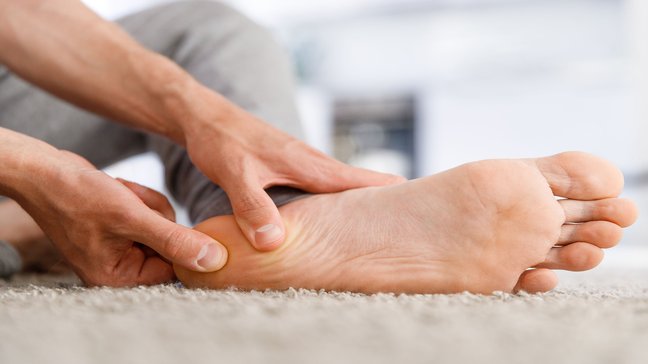
Heel pain
Heel pain is a common complaint that can affect people of all ages. It can be triggered by numerous factors, including overuse, misalignments, inflammation, or injuries. Heel pain often impairs the mobility and quality of life of those affected, as…
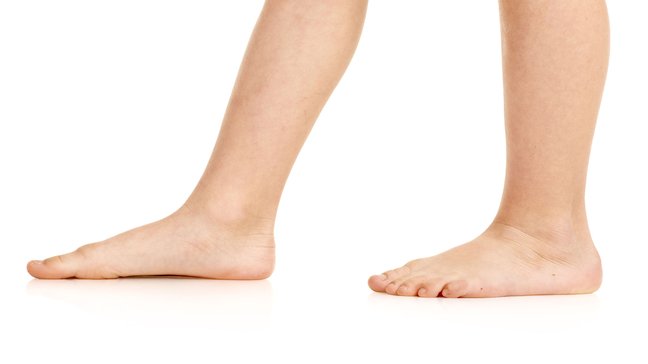
Adducted foot (Pes Adductus)
The sickle foot, medically referred to as Pes Adductus, is a deformity of the foot where the front part of the foot deviates inward while the heel remains straight. This deformity often occurs in newborns and young children and is usually congenital.…
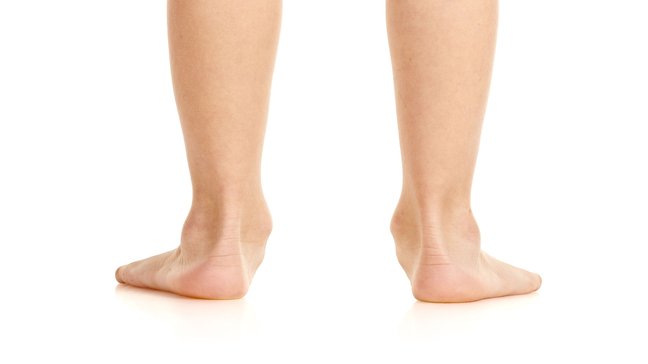
Knick-sink-foot
The flat-valgus foot (pes planovalgus) is a common foot deformity in which the longitudinal arch of the foot is flattened (flatfoot), and the heel tilts inward (valgus foot). This deformity can occur in both children and adults. While it is often…

Morton Neuroma
Morton's neuroma, also known as Morton's metatarsalgia, is a painful thickening of nerve tissue that typically occurs between the metatarsal bones in the area of the third and fourth toes. It is a common cause of forefoot pain, caused by mechanical…
Haglund's heel (Haglund deformity)
Classification of Haglund's Deformity
The Haglund's heel is divided into different types and degrees of severity:
- Asymptomatic Haglund's heel:
- Bony protrusion without discomfort.
- Symptomatic Haglund's heel:
- With pain and inflammation in the area of the Achilles tendon and the bursa (retrocalcaneal bursitis).
- Chronic Haglund's heel:
- Long-term discomfort with progressive thickening of the Achilles tendon and degenerative changes.
Causes of Haglund's deformity
The Haglund's deformity arises from a combination of genetic and external factors:
- Congenital factors:
- A high arch (cavus foot) or a shortened Achilles tendon increase pressure on the heel and promote the formation of the bony protrusion.
- Mechanical stress:
- Repeated friction and pressure from tight or poorly fitting shoes, especially shoes with a hard heel counter.
- Sports activities:
- Strenuous sports such as running or jumping promote microtrauma in the heel area.
- Misalignments:
- Foot misalignments such as flatfoot or supination increase the stress on the back of the heel.
- Inflammatory processes:
- Chronic irritation and inflammation of the Achilles tendon or bursa can promote a Haglund's deformity.
Symptoms of Haglund's deformity
The symptoms depend on the severity and progression of Haglund's deformity:
- Pain in the back of the heel:
- Especially when under stress or wearing shoes with a hard heel cap.
- Swelling and redness:
- Visible inflammation in the area of the bony protrusion.
- Tenderness:
- Pain when touching the affected area.
- Movement restrictions:
- Discomfort during activities such as walking, running, or climbing stairs.
- Thickening of the Achilles tendon:
- Chronic irritation can lead to a visible thickening of the tendon.
Diagnosis of Haglund's deformity
The diagnosis is based on a thorough medical history, clinical examination, and imaging techniques:
- **Medical History:**
- The doctor inquires about the duration and nature of the symptoms as well as possible triggering factors such as athletic activities or unsuitable footwear.
- **Physical Examination:**
- Palpation of the heel to assess swelling, tenderness, and mobility.
- **Imaging Techniques:**
- **X-ray:** Visualization of the bony protrusion and assessment of joint structures.
- **MRI:** Detailed visualization of tendons, bursae, and inflammatory processes.
- **Ultrasound:** Examination of soft tissue structures and fluid accumulations.
Treatment options for Haglund's deformity
Conservative Therapy
Most cases can be treated without surgery:
- Pain Therapy:
- Use of anti-inflammatory drugs (NSAIDs) like Ibuprofen to relieve pain and inflammation.
- Physiotherapy:
- Exercises to stretch the Achilles tendon and strengthen the foot muscles.
- Manual therapy to relieve tension and alleviate the heel.
- Shoe Adjustment:
- Wearing soft, well-cushioned shoes without a hard heel cap.
- Use of heel pads or insoles to relieve pressure.
- Cold Therapy:
- Application of cold packs to reduce inflammation and swelling.
- Shock Wave Therapy:
- Promotion of blood circulation and healing through mechanical stimuli.
Surgical Therapy
If conservative measures do not provide sufficient relief, surgical intervention may be necessary:
- Removal of the Bony Protrusion:
- Surgical removal of the Haglund's deformity to relieve pressure.
- Bursa Removal:
- Removal of inflamed bursae (retrocalcaneal bursitis).
- Tendon Correction:
- Reconstruction of the Achilles tendon in advanced damage.
Preventive measures for Haglund's deformity
To prevent Haglund's deformity, the following measures are recommended:
- Shoe adjustment: Wear soft, well-fitting shoes without hard heel counters.
- Regular stretching exercises: Stretching the Achilles tendon and calf muscles to improve flexibility.
- Load management: Avoid excessive strain during sports activities.
- Weight management: Reduce excess weight to minimize stress on the heel.
- Early treatment: Immediate therapy at the first signs of discomfort to prevent chronic progression.
Heel pain
Heel pain is a common complaint that can affect people of all ages. It can be triggered by numerous factors, including overuse, misalignments, inflammation, or injuries. Heel pain often impairs the mobility and quality of life of those affected, as…
Adducted foot (Pes Adductus)
The sickle foot, medically referred to as Pes Adductus, is a deformity of the foot where the front part of the foot deviates inward while the heel remains straight. This deformity often occurs in newborns and young children and is usually congenital.…
Knick-sink-foot
The flat-valgus foot (pes planovalgus) is a common foot deformity in which the longitudinal arch of the foot is flattened (flatfoot), and the heel tilts inward (valgus foot). This deformity can occur in both children and adults. While it is often…
Morton Neuroma
Morton's neuroma, also known as Morton's metatarsalgia, is a painful thickening of nerve tissue that typically occurs between the metatarsal bones in the area of the third and fourth toes. It is a common cause of forefoot pain, caused by mechanical…