

Adducted foot (Pes Adductus)
Classification of Clubfoot
The clubfoot is classified according to the severity and mobility of the deformity:
1. According to severity:
- Mild: Slight deviation of the forefoot, hardly visible deformity.
- Moderate: Clearly visible curvature of the forefoot with limited mobility.
- Severe: Strong deviation with pronounced deformation.
2. According to mobility:
- Flexible clubfoot: The deformity can be passively corrected.
- Rigid clubfoot: The deformity is fixed and cannot be passively corrected.
Causes of clubfoot
The causes of metatarsus adductus are usually congenital but can also be exacerbated by external influences:
- Congenital causes:
- Lack of space in the womb, e.g., in multiple pregnancies or a narrow uterus.
- Inherited misalignments due to familial predisposition.
- Acquired causes:
- Improper load on the foot in the first years of life due to incorrect footwear.
- Accompanying factors:
- Association with other foot deformities, such as clubfoot or flatfoot.
Symptoms of clubfoot
The symptoms depend on the severity of the misalignment and typically include:
- Deviation of the forefoot: Visible inward curvature of the front part of the foot.
- Asymmetrical gait pattern: The foot rolls unevenly, which can lead to load problems.
- Pressure points and calluses: Due to uneven pressure distribution, especially in more severe cases.
- Movement restrictions: Difficulties in extending or rolling the foot.
- Pain: Rare, but possible in pronounced misalignments.
Diagnosis of clubfoot
The diagnosis is made through medical history, clinical examination, and, if necessary, additional procedures:
- Medical history:
- Collection of medical history, pregnancy course, and family predisposition.
- Physical examination:
- Visual and palpation findings to assess foot position and mobility.
- Examination of gait pattern and load distribution.
- Imaging:
- X-ray: Visualization of bony structures, especially in rigid deformities.
- Pedography: Analysis of pressure distribution on the sole of the foot.
Treatment options for clubfoot
The treatment depends on the severity and mobility of the deformity:
Conservative Therapy
For flexible deformities and mild to moderate severity, conservative treatment is often sufficient:
- Stretching exercises: Regular manual correction by parents or physiotherapists to correct the deformity.
- Splints and orthoses: Special aids for passive correction of the foot, especially at night.
- Physiotherapy:
- Targeted exercises to strengthen the foot muscles and promote mobility.
- Massage of the sole of the foot to support the correction.
- Suitable footwear: Use of spacious and flexible shoes that do not constrict the foot.
Surgical Therapy
In cases of rigid deformities or unsuccessful conservative treatment, surgery may be necessary:
- Soft tissue correction: Lengthening or release of shortened tendons and ligaments.
- Bone interventions: Correction of the bony deformity, especially in severe deformities.
- Post-treatment: Use of plaster casts or orthoses for stabilization after surgery.
Preventive measures for clubfoot
To prevent clubfoot or to support treatment, the following measures are helpful:
- Early detection: Regular examinations of newborns and toddlers to detect foot deformities.
- Targeted exercises: Promoting natural foot development through walking barefoot and foot gymnastics.
- Avoidance of improper footwear: Ensuring that children's shoes provide enough space and are flexible.
- Timely treatment: Seek medical advice early at the first signs of a deformity.
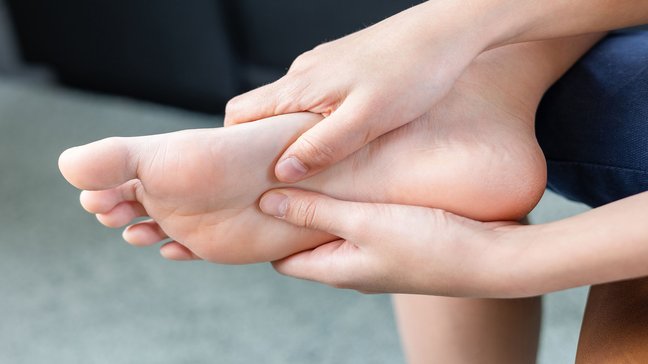
Metatarsalgia
Metatarsalgia describes pain in the forefoot area, often occurring under the metatarsal heads. These complaints usually arise from overuse, misalignments, or degenerative changes in the foot. People who stand a lot, walk, or are physically active are…
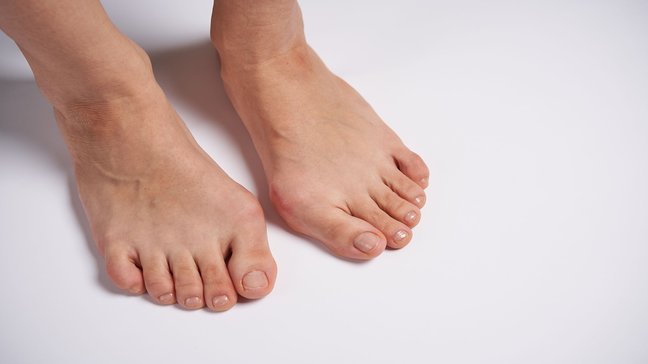
Hallux rigidus
Hallux rigidus is osteoarthritis of the big toe joint, which can lead to painful movement restrictions and eventually to joint stiffening. This condition significantly impairs the rolling motion of the foot and often affects people from middle age…
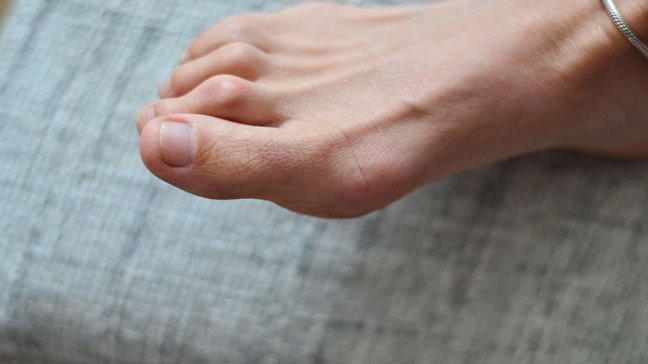
Hammer toes
Hammer toes are a common deformity of the toes, where the middle joint of the affected toe is bent upwards while the end joint points downwards. This deformity leads to a characteristic claw-like shape, which can cause pain, pressure points, and…
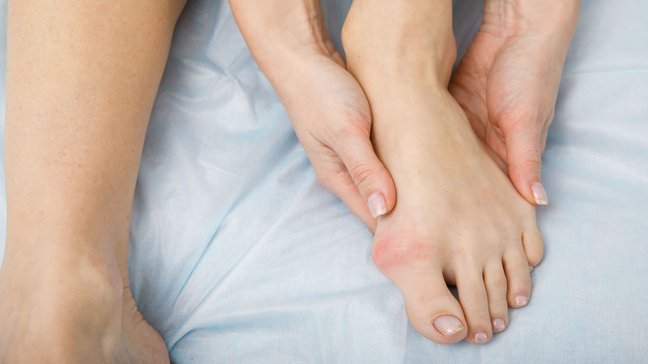
Hallux Valgus
Hallux valgus, colloquially known as a bunion, is a common foot deformity where the big toe (hallux) deviates towards the other toes. This results in a protrusion of the big toe joint, which is often painful and leads to problems when wearing shoes.…
Adducted foot (Pes Adductus)
Classification of Clubfoot
The clubfoot is classified according to the severity and mobility of the deformity:
1. According to severity:
- Mild: Slight deviation of the forefoot, hardly visible deformity.
- Moderate: Clearly visible curvature of the forefoot with limited mobility.
- Severe: Strong deviation with pronounced deformation.
2. According to mobility:
- Flexible clubfoot: The deformity can be passively corrected.
- Rigid clubfoot: The deformity is fixed and cannot be passively corrected.
Causes of clubfoot
The causes of metatarsus adductus are usually congenital but can also be exacerbated by external influences:
- Congenital causes:
- Lack of space in the womb, e.g., in multiple pregnancies or a narrow uterus.
- Inherited misalignments due to familial predisposition.
- Acquired causes:
- Improper load on the foot in the first years of life due to incorrect footwear.
- Accompanying factors:
- Association with other foot deformities, such as clubfoot or flatfoot.
Symptoms of clubfoot
The symptoms depend on the severity of the misalignment and typically include:
- Deviation of the forefoot: Visible inward curvature of the front part of the foot.
- Asymmetrical gait pattern: The foot rolls unevenly, which can lead to load problems.
- Pressure points and calluses: Due to uneven pressure distribution, especially in more severe cases.
- Movement restrictions: Difficulties in extending or rolling the foot.
- Pain: Rare, but possible in pronounced misalignments.
Diagnosis of clubfoot
The diagnosis is made through medical history, clinical examination, and, if necessary, additional procedures:
- Medical history:
- Collection of medical history, pregnancy course, and family predisposition.
- Physical examination:
- Visual and palpation findings to assess foot position and mobility.
- Examination of gait pattern and load distribution.
- Imaging:
- X-ray: Visualization of bony structures, especially in rigid deformities.
- Pedography: Analysis of pressure distribution on the sole of the foot.
Treatment options for clubfoot
The treatment depends on the severity and mobility of the deformity:
Conservative Therapy
For flexible deformities and mild to moderate severity, conservative treatment is often sufficient:
- Stretching exercises: Regular manual correction by parents or physiotherapists to correct the deformity.
- Splints and orthoses: Special aids for passive correction of the foot, especially at night.
- Physiotherapy:
- Targeted exercises to strengthen the foot muscles and promote mobility.
- Massage of the sole of the foot to support the correction.
- Suitable footwear: Use of spacious and flexible shoes that do not constrict the foot.
Surgical Therapy
In cases of rigid deformities or unsuccessful conservative treatment, surgery may be necessary:
- Soft tissue correction: Lengthening or release of shortened tendons and ligaments.
- Bone interventions: Correction of the bony deformity, especially in severe deformities.
- Post-treatment: Use of plaster casts or orthoses for stabilization after surgery.
Preventive measures for clubfoot
To prevent clubfoot or to support treatment, the following measures are helpful:
- Early detection: Regular examinations of newborns and toddlers to detect foot deformities.
- Targeted exercises: Promoting natural foot development through walking barefoot and foot gymnastics.
- Avoidance of improper footwear: Ensuring that children's shoes provide enough space and are flexible.
- Timely treatment: Seek medical advice early at the first signs of a deformity.
Metatarsalgia
Metatarsalgia describes pain in the forefoot area, often occurring under the metatarsal heads. These complaints usually arise from overuse, misalignments, or degenerative changes in the foot. People who stand a lot, walk, or are physically active are…
Hallux rigidus
Hallux rigidus is osteoarthritis of the big toe joint, which can lead to painful movement restrictions and eventually to joint stiffening. This condition significantly impairs the rolling motion of the foot and often affects people from middle age…
Hammer toes
Hammer toes are a common deformity of the toes, where the middle joint of the affected toe is bent upwards while the end joint points downwards. This deformity leads to a characteristic claw-like shape, which can cause pain, pressure points, and…
Hallux Valgus
Hallux valgus, colloquially known as a bunion, is a common foot deformity where the big toe (hallux) deviates towards the other toes. This results in a protrusion of the big toe joint, which is often painful and leads to problems when wearing shoes.…