

Tract syndrome
Classification of Tract Syndrome
The tract syndrome is classified according to cause, location, and course:
1. **By cause:**
- **Mechanical:** Overload due to repetitive movements, e.g., running or cycling.
- **Biomechanical:** Misalignments or imbalances in the musculoskeletal system.
2. **By location:**
- **Lateral tract syndrome:** Irritation in the area of the lateral knee joint.
- **Proximal tract syndrome:** Rarer, with complaints in the hip joint area.
3. **By course:**
- **Acute:** Sudden onset of symptoms after intense exertion.
- **Chronic:** Long-lasting symptoms due to repeated overload.
Causes of Tract Syndrome
The tractus syndrome is caused by friction of the iliotibial band on the lateral femoral condyle. The causes are often mechanical or biomechanical:
- Mechanical overload:
- Repeated flexion and extension of the knee, e.g., when running, cycling, or hiking.
- Increase in training volume without sufficient adaptation of the body.
- Biomechanical factors:
- Misalignments such as knock-knees or foot misalignments (e.g., flat feet).
- Muscle imbalances, especially weakness of the hip or thigh muscles.
- Shortening of the iliotibial band due to lack of stretching or mobility.
- External factors:
- Running on uneven terrain or sloped tracks.
- Improper running technique or improperly fitted shoes.
Symptoms of Tractus Syndrome
The symptoms typically occur during or after exertion and include:
- Pain: Sharp or burning pain on the outside of the knee, often intensified by activities such as running or climbing stairs.
- Tenderness: Sensitivity to pain over the lateral femoral condyle.
- Movement restrictions: Discomfort when bending or extending the knee.
- Sensation of friction: Some affected individuals report a noticeable "snapping" or rubbing of the iliotibial band.
- Activity dependence: The symptoms increase with rising activity and improve during rest periods.
Diagnosis of Tractus Syndrome
The diagnosis is made through medical history, clinical examination, and, if necessary, imaging techniques:
- Medical history:
- Collection of training habits, stress patterns, and symptoms.
- Physical examination:
- Palpation of the lateral knee area to determine tenderness.
- Functional tests such as the Ober test or the Nobel test, which may provoke the symptoms.
- Imaging:
- Ultrasound: Visualization of inflammation or thickening of the iliotibial band.
- MRI: To assess soft tissue changes or to rule out other causes of knee pain.
Treatment options for tract syndrome
Conservative Therapy
In most cases, the tractus syndrome is treated conservatively:
- Relief and adjustment of load:
- Reduction or temporary avoidance of strenuous activities.
- Adjustment of the training plan, e.g., by shorter running distances or alternative sports like swimming.
- Physiotherapy:
- Stretching exercises for the iliotibial band and surrounding muscles.
- Strengthening exercises for the hip and thigh muscles.
- Fascia rolling for loosening and relaxing the iliotibial band.
- Medication therapy:
- NSAIDs: To relieve pain and inflammation.
- Local injections of corticosteroids for persistent complaints.
- Manual therapy:
- Mobilization of affected structures and correction of biomechanical misalignments.
- Cryotherapy: For acute pain reduction and swelling.
Surgical Therapy
In therapy-resistant cases or chronic complaints, surgery may be considered:
- Fasciotomy: Surgical splitting of the iliotibial band to reduce pressure on the lateral femoral condyle.
- Post-treatment: Physiotherapy to restore mobility and muscle strength.
Preventive measures for tract syndrome
The following measures are suitable for preventing tract syndrome and avoiding relapses:
- Targeted training: Strengthening the hip and thigh muscles to improve stability.
- Stretching exercises: Regular stretching of the iliotibial band and surrounding structures.
- Running technique: Optimization of technique and use of appropriate running shoes.
- Load adjustment: Gradual increase in training intensity and avoidance of overloading.
- Ergonomic training: Avoidance of sloped paths and unilateral loads.
Iliopsoas shortening
The iliopsoas shortening describes a shortening of the iliopsoas muscle, which consists of the psoas major muscle and the iliacus muscle. This muscle complex is the main flexor of the hip joint and plays an important role in stabilizing the spine. A…
Coccygodynia/tailbone pain
Coccygodynia, also known as tailbone pain, refers to chronic pain in the area of the coccyx (os coccygis). These complaints often occur when sitting, during bowel movements, or during physical activities and can significantly affect the quality of…
Glutealgia
Glutealgia, or buttock pain, is a symptom that can be caused by various factors. The pain is usually localized in the buttock area but can also radiate to the lower back, hip, or legs. Glutealgia significantly affects mobility and quality of life,…
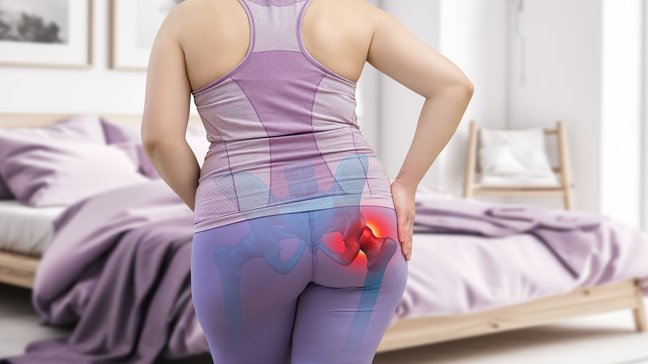
Avascular necrosis of the femoral head
Avascular necrosis of the hip, medically also referred to as femoral head necrosis, describes the death of bone tissue in the femoral head due to impaired blood supply. This condition often occurs between the ages of 30 and 50 and affects men more…
Tract syndrome
Classification of Tract Syndrome
The tract syndrome is classified according to cause, location, and course:
1. **By cause:**
- **Mechanical:** Overload due to repetitive movements, e.g., running or cycling.
- **Biomechanical:** Misalignments or imbalances in the musculoskeletal system.
2. **By location:**
- **Lateral tract syndrome:** Irritation in the area of the lateral knee joint.
- **Proximal tract syndrome:** Rarer, with complaints in the hip joint area.
3. **By course:**
- **Acute:** Sudden onset of symptoms after intense exertion.
- **Chronic:** Long-lasting symptoms due to repeated overload.
Causes of Tract Syndrome
The tractus syndrome is caused by friction of the iliotibial band on the lateral femoral condyle. The causes are often mechanical or biomechanical:
- Mechanical overload:
- Repeated flexion and extension of the knee, e.g., when running, cycling, or hiking.
- Increase in training volume without sufficient adaptation of the body.
- Biomechanical factors:
- Misalignments such as knock-knees or foot misalignments (e.g., flat feet).
- Muscle imbalances, especially weakness of the hip or thigh muscles.
- Shortening of the iliotibial band due to lack of stretching or mobility.
- External factors:
- Running on uneven terrain or sloped tracks.
- Improper running technique or improperly fitted shoes.
Symptoms of Tractus Syndrome
The symptoms typically occur during or after exertion and include:
- Pain: Sharp or burning pain on the outside of the knee, often intensified by activities such as running or climbing stairs.
- Tenderness: Sensitivity to pain over the lateral femoral condyle.
- Movement restrictions: Discomfort when bending or extending the knee.
- Sensation of friction: Some affected individuals report a noticeable "snapping" or rubbing of the iliotibial band.
- Activity dependence: The symptoms increase with rising activity and improve during rest periods.
Diagnosis of Tractus Syndrome
The diagnosis is made through medical history, clinical examination, and, if necessary, imaging techniques:
- Medical history:
- Collection of training habits, stress patterns, and symptoms.
- Physical examination:
- Palpation of the lateral knee area to determine tenderness.
- Functional tests such as the Ober test or the Nobel test, which may provoke the symptoms.
- Imaging:
- Ultrasound: Visualization of inflammation or thickening of the iliotibial band.
- MRI: To assess soft tissue changes or to rule out other causes of knee pain.
Treatment options for tract syndrome
Conservative Therapy
In most cases, the tractus syndrome is treated conservatively:
- Relief and adjustment of load:
- Reduction or temporary avoidance of strenuous activities.
- Adjustment of the training plan, e.g., by shorter running distances or alternative sports like swimming.
- Physiotherapy:
- Stretching exercises for the iliotibial band and surrounding muscles.
- Strengthening exercises for the hip and thigh muscles.
- Fascia rolling for loosening and relaxing the iliotibial band.
- Medication therapy:
- NSAIDs: To relieve pain and inflammation.
- Local injections of corticosteroids for persistent complaints.
- Manual therapy:
- Mobilization of affected structures and correction of biomechanical misalignments.
- Cryotherapy: For acute pain reduction and swelling.
Surgical Therapy
In therapy-resistant cases or chronic complaints, surgery may be considered:
- Fasciotomy: Surgical splitting of the iliotibial band to reduce pressure on the lateral femoral condyle.
- Post-treatment: Physiotherapy to restore mobility and muscle strength.
Preventive measures for tract syndrome
The following measures are suitable for preventing tract syndrome and avoiding relapses:
- Targeted training: Strengthening the hip and thigh muscles to improve stability.
- Stretching exercises: Regular stretching of the iliotibial band and surrounding structures.
- Running technique: Optimization of technique and use of appropriate running shoes.
- Load adjustment: Gradual increase in training intensity and avoidance of overloading.
- Ergonomic training: Avoidance of sloped paths and unilateral loads.
Iliopsoas shortening
The iliopsoas shortening describes a shortening of the iliopsoas muscle, which consists of the psoas major muscle and the iliacus muscle. This muscle complex is the main flexor of the hip joint and plays an important role in stabilizing the spine. A…
Coccygodynia/tailbone pain
Coccygodynia, also known as tailbone pain, refers to chronic pain in the area of the coccyx (os coccygis). These complaints often occur when sitting, during bowel movements, or during physical activities and can significantly affect the quality of…
Glutealgia
Glutealgia, or buttock pain, is a symptom that can be caused by various factors. The pain is usually localized in the buttock area but can also radiate to the lower back, hip, or legs. Glutealgia significantly affects mobility and quality of life,…
Avascular necrosis of the femoral head
Avascular necrosis of the hip, medically also referred to as femoral head necrosis, describes the death of bone tissue in the femoral head due to impaired blood supply. This condition often occurs between the ages of 30 and 50 and affects men more…