

Tennis elbow (lateral epicondylitis)
Classification of Tennis Elbow
The tennis elbow is classified according to cause and severity:
- By cause:
- Mechanical: Repeated movements or overloads that irritate the tendon attachments.
- Traumatic: Acute injuries or microtraumas in the area of the tendon attachments.
- By severity:
- Mild: Pain occurs only under stress and is temporary.
- Moderate: Pain is also present at rest and affects daily activities.
- Severe: Persistent pain with limitation of mobility and strength.
Causes of tennis elbow
The main causes are overload and repetitive movements that strain the tendon attachments:
- Mechanical stress:
- Repeated movements such as lifting, gripping, or twisting, e.g., in sports activities (tennis, golf) or manual tasks (craftsmen, office work).
- Incorrect loading:
- Unfavorable technique in sports activities, e.g., incorrect racket grip in tennis.
- Insufficient ergonomic working conditions, e.g., in computer work.
- Traumatic causes:
- Microtrauma or overuse of tendon attachments due to sudden load peaks.
- Degenerative factors:
- Age-related changes in tendons that reduce their load-bearing capacity.
Symptoms of tennis elbow
The symptoms vary depending on the severity of the inflammation and typically include:
- Pain: Localized pain on the outer elbow, which is intensified during exertion, such as lifting or gripping.
- Tenderness: Painful palpation of the lateral epicondyle.
- Loss of strength: Reduced grip strength and difficulties with everyday activities like holding objects.
- Movement restrictions: Discomfort when extending the wrist or fingers.
- Radiating pain: Pain may radiate into the forearm and occasionally into the shoulder.
Diagnosis of Tennis Elbow
The diagnosis is made through a combination of medical history, clinical examination, and, if necessary, imaging techniques:
- Medical history:
- Collection of symptoms, stress patterns, and possible triggers.
- Physical examination:
- Pain provocation tests such as the Cozen's test (resistance against wrist extension) or the Maudsley's test (resistance against finger extension).
- Palpation of the lateral epicondyle to determine tenderness.
- Imaging:
- Ultrasound: Visualization of inflammation or microtrauma of the tendons.
- MRI: Detailed analysis in case of suspected chronic damage or ruptures.
- X-ray: Exclusion of bony changes or osteoarthritis.
Treatment options for tennis elbow
Conservative Therapy
Most cases can be successfully treated conservatively:
- Relief and Immobilization:
- Avoidance of triggering activities and immobilization of the arm.
- Use of elbow bandages or orthoses to relieve pressure.
- Physiotherapy:
- Stretching and strengthening exercises to stabilize the muscles and improve mobility.
- Manual therapy and trigger point treatment to relieve pain.
- Medication Therapy:
- NSAIDs: To relieve pain and inflammation.
- Local injections of corticosteroids for severe discomfort.
- Shockwave Therapy: Promotes blood circulation and healing in the area of tendon attachments.
- Cryotherapy: Relief of acute pain through local application of ice packs.
Surgical Therapy
In severe or chronic cases that do not respond to conservative measures, surgery may be necessary:
- Tendon Reconstruction: Removal of damaged tissue and repair of tendon attachments.
- Decompression: Exposure and relief of the affected area.
- Minimally Invasive Procedures: Arthroscopic interventions with shorter recovery time.
Preventive measures for tennis elbow
To prevent tennis elbow and support recovery, the following measures are suitable:
- Ergonomic working conditions: Adjusting workplace design, e.g., through ergonomic keyboards or wrist rests.
- Correct technique: Training and optimizing movement sequences in sports or manual activities.
- Regular training: Strengthening the forearm and hand muscles to improve resilience.
- Load management: Avoiding excessive or unilateral loads through regular breaks.
- Early treatment: At the first signs of pain, the load should be reduced and medical advice sought.
Ulnar nerve sulcus syndrome (elbow tingling)
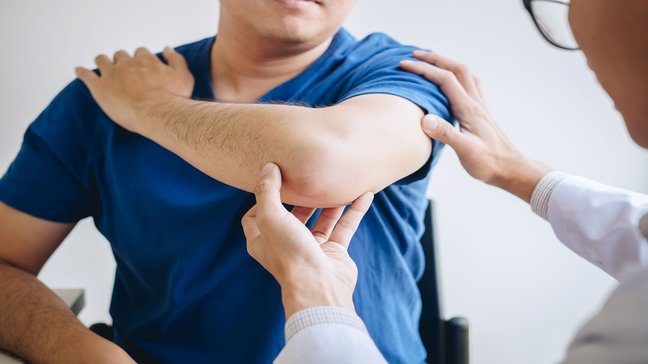
The ulnar nerve sulcus syndrome, colloquially known as elbow tingling, is a common nerve compression disorder where the ulnar nerve is constricted in the area of the elbow (sulcus nervi ulnaris). This compression leads to abnormal sensations, pain,…
Olecranon spur
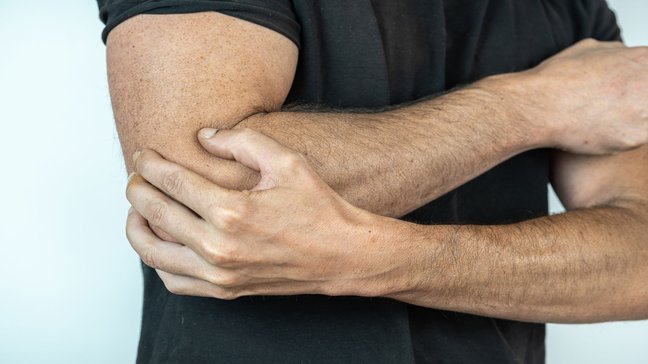
An olecranon spur is a bony growth on the olecranon, the upper end of the ulna in the elbow area. These changes usually arise from chronic irritation or mechanical overload. The olecranon spur can cause pain and restricted movement, especially during…
Golfer's elbow (medial epicondylitis)
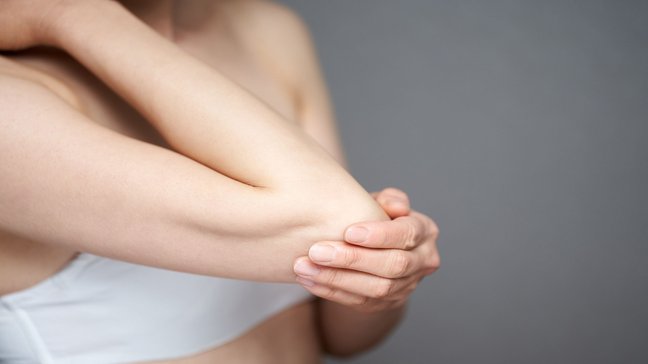
Golfer's elbow, medically referred to as medial epicondylitis, is a painful overuse condition affecting the tendon attachments of the wrist and finger flexor muscles on the inside of the elbow. Despite its name, this condition does not only occur in…
Osteoarthritis in the elbow
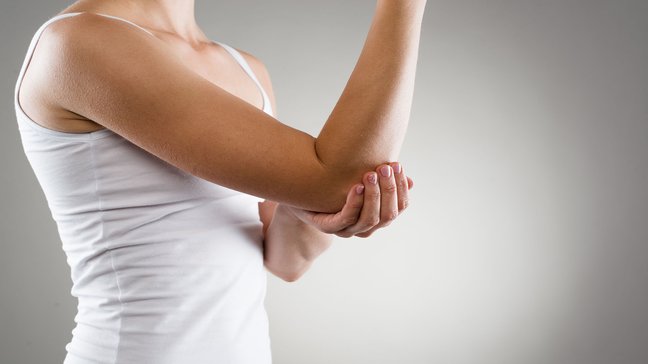
Elbow osteoarthritis, also known as cubital osteoarthritis, is a degenerative condition in which the cartilage in the elbow joint is gradually broken down. This form of osteoarthritis occurs less frequently than in joints with higher stress, such as…
Tennis elbow (lateral epicondylitis)
Classification of Tennis Elbow
The tennis elbow is classified according to cause and severity:
- By cause:
- Mechanical: Repeated movements or overloads that irritate the tendon attachments.
- Traumatic: Acute injuries or microtraumas in the area of the tendon attachments.
- By severity:
- Mild: Pain occurs only under stress and is temporary.
- Moderate: Pain is also present at rest and affects daily activities.
- Severe: Persistent pain with limitation of mobility and strength.
Causes of tennis elbow
The main causes are overload and repetitive movements that strain the tendon attachments:
- Mechanical stress:
- Repeated movements such as lifting, gripping, or twisting, e.g., in sports activities (tennis, golf) or manual tasks (craftsmen, office work).
- Incorrect loading:
- Unfavorable technique in sports activities, e.g., incorrect racket grip in tennis.
- Insufficient ergonomic working conditions, e.g., in computer work.
- Traumatic causes:
- Microtrauma or overuse of tendon attachments due to sudden load peaks.
- Degenerative factors:
- Age-related changes in tendons that reduce their load-bearing capacity.
Symptoms of tennis elbow
The symptoms vary depending on the severity of the inflammation and typically include:
- Pain: Localized pain on the outer elbow, which is intensified during exertion, such as lifting or gripping.
- Tenderness: Painful palpation of the lateral epicondyle.
- Loss of strength: Reduced grip strength and difficulties with everyday activities like holding objects.
- Movement restrictions: Discomfort when extending the wrist or fingers.
- Radiating pain: Pain may radiate into the forearm and occasionally into the shoulder.
Diagnosis of Tennis Elbow
The diagnosis is made through a combination of medical history, clinical examination, and, if necessary, imaging techniques:
- Medical history:
- Collection of symptoms, stress patterns, and possible triggers.
- Physical examination:
- Pain provocation tests such as the Cozen's test (resistance against wrist extension) or the Maudsley's test (resistance against finger extension).
- Palpation of the lateral epicondyle to determine tenderness.
- Imaging:
- Ultrasound: Visualization of inflammation or microtrauma of the tendons.
- MRI: Detailed analysis in case of suspected chronic damage or ruptures.
- X-ray: Exclusion of bony changes or osteoarthritis.
Treatment options for tennis elbow
Conservative Therapy
Most cases can be successfully treated conservatively:
- Relief and Immobilization:
- Avoidance of triggering activities and immobilization of the arm.
- Use of elbow bandages or orthoses to relieve pressure.
- Physiotherapy:
- Stretching and strengthening exercises to stabilize the muscles and improve mobility.
- Manual therapy and trigger point treatment to relieve pain.
- Medication Therapy:
- NSAIDs: To relieve pain and inflammation.
- Local injections of corticosteroids for severe discomfort.
- Shockwave Therapy: Promotes blood circulation and healing in the area of tendon attachments.
- Cryotherapy: Relief of acute pain through local application of ice packs.
Surgical Therapy
In severe or chronic cases that do not respond to conservative measures, surgery may be necessary:
- Tendon Reconstruction: Removal of damaged tissue and repair of tendon attachments.
- Decompression: Exposure and relief of the affected area.
- Minimally Invasive Procedures: Arthroscopic interventions with shorter recovery time.
Preventive measures for tennis elbow
To prevent tennis elbow and support recovery, the following measures are suitable:
- Ergonomic working conditions: Adjusting workplace design, e.g., through ergonomic keyboards or wrist rests.
- Correct technique: Training and optimizing movement sequences in sports or manual activities.
- Regular training: Strengthening the forearm and hand muscles to improve resilience.
- Load management: Avoiding excessive or unilateral loads through regular breaks.
- Early treatment: At the first signs of pain, the load should be reduced and medical advice sought.
Ulnar nerve sulcus syndrome (elbow tingling)
The ulnar nerve sulcus syndrome, colloquially known as elbow tingling, is a common nerve compression disorder where the ulnar nerve is constricted in the area of the elbow (sulcus nervi ulnaris). This compression leads to abnormal sensations, pain,…
Olecranon spur
An olecranon spur is a bony growth on the olecranon, the upper end of the ulna in the elbow area. These changes usually arise from chronic irritation or mechanical overload. The olecranon spur can cause pain and restricted movement, especially during…
Golfer's elbow (medial epicondylitis)
Golfer's elbow, medically referred to as medial epicondylitis, is a painful overuse condition affecting the tendon attachments of the wrist and finger flexor muscles on the inside of the elbow. Despite its name, this condition does not only occur in…
Osteoarthritis in the elbow
Elbow osteoarthritis, also known as cubital osteoarthritis, is a degenerative condition in which the cartilage in the elbow joint is gradually broken down. This form of osteoarthritis occurs less frequently than in joints with higher stress, such as…