

Lumbago
Classification of Lumbago
Lumbago is divided into different categories based on cause and progression:
1. Acute lumbago:
- Sudden, intense pain that subsides within a few days to weeks.
2. Chronic lumbago:
- Pain that lasts longer than three months and recurs.
3. Mechanical lumbago:
- The cause of pain is an overload or poor posture of the back.
4. Non-mechanical lumbago:
- Pain caused by inflammatory diseases or neurological problems.
Causes of Lumbago
The most common causes of a lumbago are:
- Unfavorable movements:
- Sudden twisting movements or lifting heavy loads in the wrong posture can overload the back muscles or vertebral joints.
- Muscle tension:
- Chronic poor posture, stress, or prolonged sitting lead to tension that can trigger a lumbago.
- Vertebral blockages:
- Blockages in the small vertebral joints of the lumbar spine often cause acute pain.
- Disc problems:
- A herniated disc or a bulge can put pressure on nerve roots and cause symptoms similar to a lumbago.
- Degenerative changes:
- Wear and tear of the spine, such as osteoarthritis, can impair the stability of the back.
- Inflammatory diseases:
- Diseases like ankylosing spondylitis can lead to lower back pain similar to a lumbago.
Symptoms of lumbago
The symptoms of a lumbago often appear suddenly and can be very intense:
- Sudden pain:
- Stabbing or pulling pain in the lower back, often triggered by an awkward movement.
- Movement restrictions:
- Those affected can only move with limitations or under severe pain.
- Muscle hardening:
- The muscles in the affected area are often hardened and painful when pressed.
- Radiating pain:
- In some cases, the pain radiates to the buttocks or thighs.
- Change in posture:
- Those affected often adopt a protective posture to alleviate the pain.
Diagnosis of Lumbago
The diagnosis of a lumbago is made through a thorough medical history, clinical examination, and, if necessary, imaging techniques:
- Medical history:
- The doctor inquires about the exact location of the pain, duration, and possible triggering factors.
- Clinical examination:
- Checking the mobility of the spine, tenderness, and muscle hardening.
- Imaging techniques:
- X-ray: Visualization of vertebral blockages or degenerative changes.
- MRI: In case of suspected disc problems or inflammatory diseases.
- CT: Detailed representation of bony structures.
Treatment options for lumbago
Conservative Therapy
Most cases of lumbago can be treated without surgery:
- Pain therapy:
- Use of non-steroidal anti-inflammatory drugs (NSAIDs) like ibuprofen for pain relief.
- Physiotherapy:
- Mobilizing and strengthening exercises to improve mobility and stability.
- Heat therapy:
- Application of heat packs or infrared lamps to relax the muscles.
- Immobilization:
- Short-term rest, but not complete bed rest, to promote healing.
- Manual therapy:
- Treatment by chiropractors or physiotherapists to resolve blockages.
Surgical Therapy
In cases of chronic complaints or those caused by disc damage, surgery may be necessary:
- Disc surgery:
- Removal of protrusions or inflamed parts of the disc.
- Fusion:
- Stabilization of the affected vertebral sections in advanced degeneration.
Preventive measures for lumbago
To prevent a lumbago, the following measures are recommended:
- Back training: Regular exercises to strengthen the back and abdominal muscles.
- Ergonomic working: Use of height-adjustable desks and chairs to avoid poor posture.
- Weight management: Avoidance of overweight to reduce the strain on the spine.
- Correct lifting techniques: When lifting heavy loads, knees should be bent and the back kept straight.
- Regular exercise: Promotion of flexibility and stability of the spine through sports such as swimming or yoga.
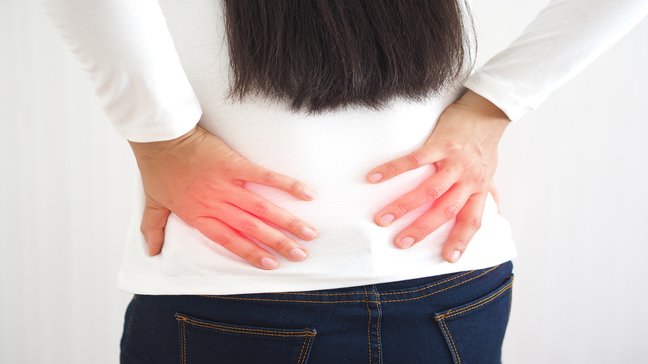
Sacroiliac joint pain
The sacroiliac joint pain, also known as SIJ pain, affects the sacroiliac joint (SIJ), which forms the connection between the sacrum and the ilium. This joint plays a central role in the transmission of force between the upper body and the legs.…
Neck pain
Neck pain is one of the most common complaints in modern society and can affect people of all ages. It can occur both acutely and chronically and may be accompanied by other symptoms such as tension, restricted movement, and headaches. Neck pain…
Spondylodiscitis
Spondylodiscitis is a rare but serious inflammatory disease that affects both the intervertebral discs (discus) and the adjacent vertebral bodies. It is caused in most cases by bacterial infections, but in rare cases, it can also be of mycotic…
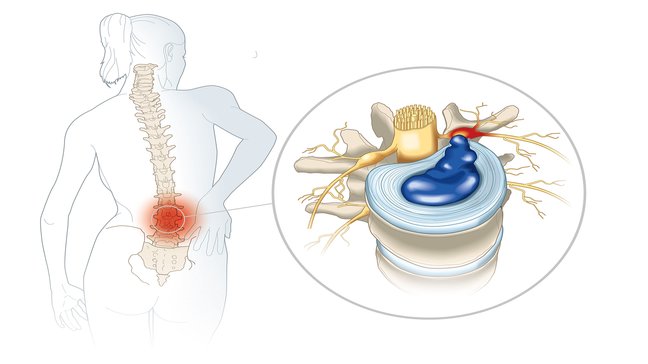
Herniated disc
A herniated disc (disc prolapse) occurs when the gelatinous core (nucleus pulposus) of a disc protrudes through the fibrous ring (annulus fibrosus). This condition can lead to pain, numbness, and restricted movement, especially if the protruding disc…
Lumbago
Classification of Lumbago
Lumbago is divided into different categories based on cause and progression:
1. Acute lumbago:
- Sudden, intense pain that subsides within a few days to weeks.
2. Chronic lumbago:
- Pain that lasts longer than three months and recurs.
3. Mechanical lumbago:
- The cause of pain is an overload or poor posture of the back.
4. Non-mechanical lumbago:
- Pain caused by inflammatory diseases or neurological problems.
Causes of Lumbago
The most common causes of a lumbago are:
- Unfavorable movements:
- Sudden twisting movements or lifting heavy loads in the wrong posture can overload the back muscles or vertebral joints.
- Muscle tension:
- Chronic poor posture, stress, or prolonged sitting lead to tension that can trigger a lumbago.
- Vertebral blockages:
- Blockages in the small vertebral joints of the lumbar spine often cause acute pain.
- Disc problems:
- A herniated disc or a bulge can put pressure on nerve roots and cause symptoms similar to a lumbago.
- Degenerative changes:
- Wear and tear of the spine, such as osteoarthritis, can impair the stability of the back.
- Inflammatory diseases:
- Diseases like ankylosing spondylitis can lead to lower back pain similar to a lumbago.
Symptoms of lumbago
The symptoms of a lumbago often appear suddenly and can be very intense:
- Sudden pain:
- Stabbing or pulling pain in the lower back, often triggered by an awkward movement.
- Movement restrictions:
- Those affected can only move with limitations or under severe pain.
- Muscle hardening:
- The muscles in the affected area are often hardened and painful when pressed.
- Radiating pain:
- In some cases, the pain radiates to the buttocks or thighs.
- Change in posture:
- Those affected often adopt a protective posture to alleviate the pain.
Diagnosis of Lumbago
The diagnosis of a lumbago is made through a thorough medical history, clinical examination, and, if necessary, imaging techniques:
- Medical history:
- The doctor inquires about the exact location of the pain, duration, and possible triggering factors.
- Clinical examination:
- Checking the mobility of the spine, tenderness, and muscle hardening.
- Imaging techniques:
- X-ray: Visualization of vertebral blockages or degenerative changes.
- MRI: In case of suspected disc problems or inflammatory diseases.
- CT: Detailed representation of bony structures.
Treatment options for lumbago
Conservative Therapy
Most cases of lumbago can be treated without surgery:
- Pain therapy:
- Use of non-steroidal anti-inflammatory drugs (NSAIDs) like ibuprofen for pain relief.
- Physiotherapy:
- Mobilizing and strengthening exercises to improve mobility and stability.
- Heat therapy:
- Application of heat packs or infrared lamps to relax the muscles.
- Immobilization:
- Short-term rest, but not complete bed rest, to promote healing.
- Manual therapy:
- Treatment by chiropractors or physiotherapists to resolve blockages.
Surgical Therapy
In cases of chronic complaints or those caused by disc damage, surgery may be necessary:
- Disc surgery:
- Removal of protrusions or inflamed parts of the disc.
- Fusion:
- Stabilization of the affected vertebral sections in advanced degeneration.
Preventive measures for lumbago
To prevent a lumbago, the following measures are recommended:
- Back training: Regular exercises to strengthen the back and abdominal muscles.
- Ergonomic working: Use of height-adjustable desks and chairs to avoid poor posture.
- Weight management: Avoidance of overweight to reduce the strain on the spine.
- Correct lifting techniques: When lifting heavy loads, knees should be bent and the back kept straight.
- Regular exercise: Promotion of flexibility and stability of the spine through sports such as swimming or yoga.
Sacroiliac joint pain
The sacroiliac joint pain, also known as SIJ pain, affects the sacroiliac joint (SIJ), which forms the connection between the sacrum and the ilium. This joint plays a central role in the transmission of force between the upper body and the legs.…
Neck pain
Neck pain is one of the most common complaints in modern society and can affect people of all ages. It can occur both acutely and chronically and may be accompanied by other symptoms such as tension, restricted movement, and headaches. Neck pain…
Spondylodiscitis
Spondylodiscitis is a rare but serious inflammatory disease that affects both the intervertebral discs (discus) and the adjacent vertebral bodies. It is caused in most cases by bacterial infections, but in rare cases, it can also be of mycotic…
Herniated disc
A herniated disc (disc prolapse) occurs when the gelatinous core (nucleus pulposus) of a disc protrudes through the fibrous ring (annulus fibrosus). This condition can lead to pain, numbness, and restricted movement, especially if the protruding disc…