

Elbow pain
Classification of Elbow Pain
Elbow pain can be divided into different categories:
- Acute pain: Occurs suddenly, often as a result of injuries such as bruises or fractures.
- Chronic pain: Develops over a longer period, usually due to overuse or degenerative processes.
- Mechanical pain: Results from movements or stresses on the elbow, for example through sports or work.
- Inflammatory pain: Caused by conditions such as arthritis or bursitis.
- Neuropathic pain: Occurs when nerves in the elbow area are irritated or pinched, as in cubital tunnel syndrome.
Causes of elbow pain
The main causes of elbow pain can be divided into several categories:
- Overuse and improper loading:
- Tennis elbow (lateral epicondylitis): Pain on the outside of the elbow, often caused by repetitive movements such as playing tennis or intensive computer work.
- Golfer's elbow (medial epicondylitis): Pain on the inside of the elbow, often triggered by repetitive bending movements.
- Injuries:
- Bruises and fractures: Injuries from falls or accidents that cause acute pain and swelling.
- Dislocations: Dislocations of the elbow joint that cause severe pain and movement restrictions.
- Inflammatory diseases:
- Arthritis: Joint inflammation that can result from infections, autoimmune diseases, or degenerative processes.
- Bursitis (bursa inflammation): Inflammation of the bursa in the elbow area, often caused by pressure or overuse.
- Nerve compression syndromes:
- Cubital tunnel syndrome: Compression of the ulnar nerve in the elbow area, leading to pain, tingling, and numbness.
- Degenerative changes:
- Osteoarthritis: Wear and tear of the elbow joint, leading to pain, stiffness, and limited mobility.
Symptoms of elbow pain
The symptoms vary depending on the cause and extent of the complaints, but typically include:
- **Pain:** Localized or radiating pain that occurs on the inner, outer, or back side of the elbow, depending on the cause.
- **Movement restrictions:** Difficulties in bending, extending, or rotating the elbow.
- **Swelling:** Common in inflammatory or traumatic causes such as bursitis or bruises.
- **Tenderness:** Pain upon touch, especially in overuse conditions like tennis elbow.
- **Numbness or tingling:** Signs of nerve compression, as in cubital tunnel syndrome.
- **Grinding or cracking:** Mechanical noises during movement, often caused by osteoarthritis or degenerative changes.
Diagnosis of Elbow Pain
The diagnosis is made through a combination of medical history, clinical examination, and imaging techniques:
- Medical history: The doctor inquires about the patient's medical history, the course of the pain, and possible triggering factors.
- Physical examination: Checking the mobility, tenderness, and stability of the elbow.
- Imaging techniques:
- X-ray: Visualization of bone changes or fractures.
- MRI: Identification of soft tissue damage such as tendon or bursa inflammation.
- Ultrasound: Examination of fluid accumulations or soft tissue injuries.
Treatment options for elbow pain
Conservative Therapy
Most elbow pain can be treated without surgery:
- Physiotherapy:
- Exercises to strengthen and mobilize the elbow.
- Manual therapy to relieve overloaded structures.
- Pain Therapy:
- Taking anti-inflammatory medications such as Ibuprofen or Diclofenac.
- Local applications of cold or heat packs for pain relief.
- Orthopedic Aids:
- Use of bandages or orthoses to stabilize the joint.
- Injections:
- Cortisone or hyaluronic acid injections for inflammatory or degenerative conditions.
Surgical Therapy
Surgery is only considered for severe injuries or chronic conditions:
- Tendon Reconstruction: Restoration of damaged tendons, for example, in tennis elbow.
- Arthroscopy: Minimally invasive procedures to treat joint inflammation or cartilage damage.
- Fracture Correction: Surgical fixation of bone fractures in the elbow joint.
Preventive measures for elbow pain
To prevent elbow pain, the following measures are recommended:
- Ergonomic work: Adjusting the workplace and posture to avoid unilateral strain.
- Warming up before physical activity: Reducing the risk of injury through targeted stretching and strengthening exercises.
- Regular breaks: Avoiding overload from prolonged work or sports activities.
- Use of protective measures: Using bandages or protective equipment during sports activities.
- Correct technique: Learning and applying correct movement patterns in sports and work.
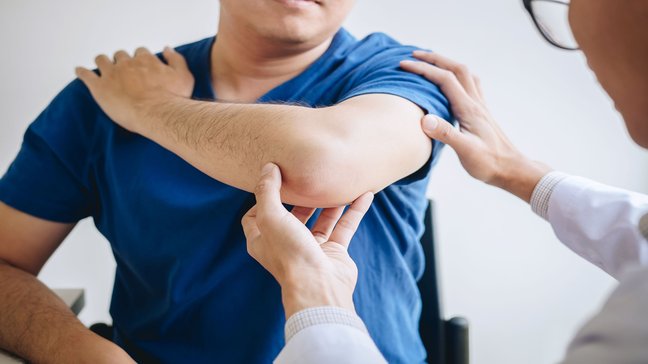
Ulnar nerve sulcus syndrome (elbow tingling)
The ulnar nerve sulcus syndrome, colloquially known as elbow tingling, is a common nerve compression disorder where the ulnar nerve is constricted in the area of the elbow (sulcus nervi ulnaris). This compression leads to abnormal sensations, pain,…
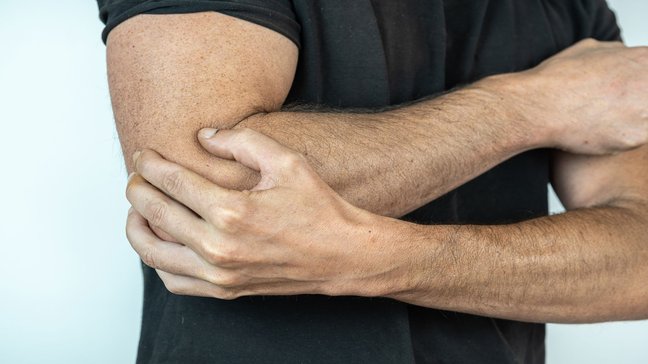
Olecranon spur
An olecranon spur is a bony growth on the olecranon, the upper end of the ulna in the elbow area. These changes usually arise from chronic irritation or mechanical overload. The olecranon spur can cause pain and restricted movement, especially during…

Tennis elbow (lateral epicondylitis)
Tennis elbow, medically referred to as lateral epicondylitis, is a common condition where the tendon attachments of the forearm extensor muscles at the lateral (outer) epicondyle of the upper arm are inflamed or irritated. The condition often occurs…
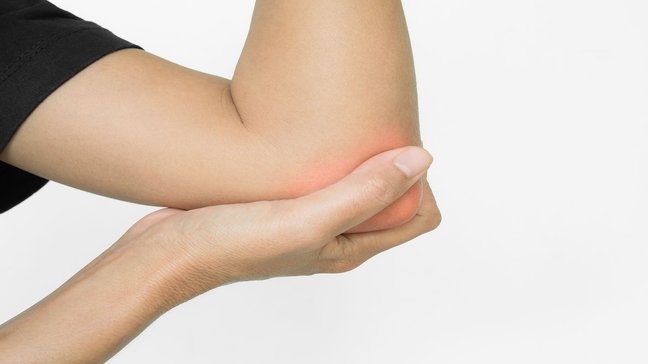
Bursitis (Olecranon bursitis)
Olecranon bursitis, also known as elbow bursitis, is a common condition in which the bursa (bursa olecrani) becomes inflamed. This bursa is located on the back of the elbow and serves as a cushion between the skin and the bony olecranon. The…
Elbow pain
Classification of Elbow Pain
Elbow pain can be divided into different categories:
- Acute pain: Occurs suddenly, often as a result of injuries such as bruises or fractures.
- Chronic pain: Develops over a longer period, usually due to overuse or degenerative processes.
- Mechanical pain: Results from movements or stresses on the elbow, for example through sports or work.
- Inflammatory pain: Caused by conditions such as arthritis or bursitis.
- Neuropathic pain: Occurs when nerves in the elbow area are irritated or pinched, as in cubital tunnel syndrome.
Causes of elbow pain
The main causes of elbow pain can be divided into several categories:
- Overuse and improper loading:
- Tennis elbow (lateral epicondylitis): Pain on the outside of the elbow, often caused by repetitive movements such as playing tennis or intensive computer work.
- Golfer's elbow (medial epicondylitis): Pain on the inside of the elbow, often triggered by repetitive bending movements.
- Injuries:
- Bruises and fractures: Injuries from falls or accidents that cause acute pain and swelling.
- Dislocations: Dislocations of the elbow joint that cause severe pain and movement restrictions.
- Inflammatory diseases:
- Arthritis: Joint inflammation that can result from infections, autoimmune diseases, or degenerative processes.
- Bursitis (bursa inflammation): Inflammation of the bursa in the elbow area, often caused by pressure or overuse.
- Nerve compression syndromes:
- Cubital tunnel syndrome: Compression of the ulnar nerve in the elbow area, leading to pain, tingling, and numbness.
- Degenerative changes:
- Osteoarthritis: Wear and tear of the elbow joint, leading to pain, stiffness, and limited mobility.
Symptoms of elbow pain
The symptoms vary depending on the cause and extent of the complaints, but typically include:
- **Pain:** Localized or radiating pain that occurs on the inner, outer, or back side of the elbow, depending on the cause.
- **Movement restrictions:** Difficulties in bending, extending, or rotating the elbow.
- **Swelling:** Common in inflammatory or traumatic causes such as bursitis or bruises.
- **Tenderness:** Pain upon touch, especially in overuse conditions like tennis elbow.
- **Numbness or tingling:** Signs of nerve compression, as in cubital tunnel syndrome.
- **Grinding or cracking:** Mechanical noises during movement, often caused by osteoarthritis or degenerative changes.
Diagnosis of Elbow Pain
The diagnosis is made through a combination of medical history, clinical examination, and imaging techniques:
- Medical history: The doctor inquires about the patient's medical history, the course of the pain, and possible triggering factors.
- Physical examination: Checking the mobility, tenderness, and stability of the elbow.
- Imaging techniques:
- X-ray: Visualization of bone changes or fractures.
- MRI: Identification of soft tissue damage such as tendon or bursa inflammation.
- Ultrasound: Examination of fluid accumulations or soft tissue injuries.
Treatment options for elbow pain
Conservative Therapy
Most elbow pain can be treated without surgery:
- Physiotherapy:
- Exercises to strengthen and mobilize the elbow.
- Manual therapy to relieve overloaded structures.
- Pain Therapy:
- Taking anti-inflammatory medications such as Ibuprofen or Diclofenac.
- Local applications of cold or heat packs for pain relief.
- Orthopedic Aids:
- Use of bandages or orthoses to stabilize the joint.
- Injections:
- Cortisone or hyaluronic acid injections for inflammatory or degenerative conditions.
Surgical Therapy
Surgery is only considered for severe injuries or chronic conditions:
- Tendon Reconstruction: Restoration of damaged tendons, for example, in tennis elbow.
- Arthroscopy: Minimally invasive procedures to treat joint inflammation or cartilage damage.
- Fracture Correction: Surgical fixation of bone fractures in the elbow joint.
Preventive measures for elbow pain
To prevent elbow pain, the following measures are recommended:
- Ergonomic work: Adjusting the workplace and posture to avoid unilateral strain.
- Warming up before physical activity: Reducing the risk of injury through targeted stretching and strengthening exercises.
- Regular breaks: Avoiding overload from prolonged work or sports activities.
- Use of protective measures: Using bandages or protective equipment during sports activities.
- Correct technique: Learning and applying correct movement patterns in sports and work.
Ulnar nerve sulcus syndrome (elbow tingling)
The ulnar nerve sulcus syndrome, colloquially known as elbow tingling, is a common nerve compression disorder where the ulnar nerve is constricted in the area of the elbow (sulcus nervi ulnaris). This compression leads to abnormal sensations, pain,…
Olecranon spur
An olecranon spur is a bony growth on the olecranon, the upper end of the ulna in the elbow area. These changes usually arise from chronic irritation or mechanical overload. The olecranon spur can cause pain and restricted movement, especially during…
Tennis elbow (lateral epicondylitis)
Tennis elbow, medically referred to as lateral epicondylitis, is a common condition where the tendon attachments of the forearm extensor muscles at the lateral (outer) epicondyle of the upper arm are inflamed or irritated. The condition often occurs…
Bursitis (Olecranon bursitis)
Olecranon bursitis, also known as elbow bursitis, is a common condition in which the bursa (bursa olecrani) becomes inflamed. This bursa is located on the back of the elbow and serves as a cushion between the skin and the bony olecranon. The…