

Rupture of the ulnar collateral ligament (UCL rupture)
Classification of UCL Ruptures
UCL ruptures are classified by severity and cause:
- Partial rupture: The ligament is partially damaged, leading to mild to moderate symptoms.
- Complete rupture: The ligament is completely severed, leading to significant instability.
- Acute rupture: Sudden injury due to a strong load or trauma.
- Chronic rupture: Slow wear of the ligament due to repeated stresses.
- Accompanying injuries: Damage to adjacent structures such as muscles or tendons often occurs.
Causes of rupture of the ulnar collateral ligament
The causes of a UCL rupture are varied and can include both traumatic and overload-related factors:
- Acute causes:
- Sudden stress on the elbow, for example, due to a fall or a jerky movement.
- Direct injuries, such as in contact sports.
- Chronic causes:
- Repeated overhead movements that stress the ligament over a longer period.
- Microtrauma from throwing sports like baseball, handball, or javelin throw.
- Contributing factors:
- Anatomical misalignments in the elbow joint.
- Weaknesses in the surrounding musculature that stabilize the joint less.
Symptoms of rupture of the ulnar collateral ligament
The symptoms vary depending on the severity of the rupture, but typically include:
- Pain: Often localized on the inside of the elbow, especially under stress.
- Instability: A feeling of "giving way" or uncertainty in the elbow joint.
- Limited mobility: Difficulty in extending or bending the arm.
- Swelling and tenderness: Often in the area of the medial elbow.
- Popping sound: Often heard in acute ruptures.
- Loss of performance: Reduced strength and precision in throwing movements.
Diagnosis of rupture of the ulnar collateral ligament
The diagnosis is made through a combination of medical history, clinical examination, and imaging techniques:
- Medical history:
- The doctor inquires about the circumstances of the injury, the nature of the symptoms, and athletic activities.
- Physical examination:
- Special tests such as the valgus stress test or the moving valgus stress test to check ligament stability.
- Palpation of the medial elbow for tenderness.
- Imaging:
- MRI: Detailed depiction of the ligament and any accompanying injuries.
- Ultrasound: Detection of ligament injuries and fluid accumulations.
- X-ray: To rule out bone injuries or accompanying changes.
Treatment options for rupture of the ulnar collateral ligament
Conservative Therapy
For partial tears or minor symptoms, non-operative treatment is often sufficient:
- Immobilization: Use of a brace or splint to stabilize the elbow.
- Medication Therapy:
- NSAIDs: For pain relief and anti-inflammatory effects.
- Physiotherapy:
- Exercises to strengthen the elbow muscles and improve joint stability.
- Functional movement exercises to gradually load the arm.
- Injections:
- Platelet-Rich Plasma (PRP) to promote tissue regeneration.
Surgical Therapy
For complete tears or persistent instability, surgery is required:
- Ligament Reconstruction: Replacing the torn ligament with a graft, often using the body's own tendons (e.g., palmaris tendon).
- Tommy John Surgery: A specific technique for UCL reconstruction, particularly used in athletes.
- Arthroscopic Procedures: Minimally invasive procedures with faster rehabilitation.
Preventive measures for rupture of the ulnar collateral ligament.
The following measures are suitable for preventing UCL ruptures and supporting recovery:
- Strengthening the muscles: Targeted training of the shoulder, arm, and elbow muscles.
- Warming up and stretching: Preparing the joint for athletic stress.
- Load management: Avoiding excessive repetitions of overhead movements, especially in young athletes.
- Ergonomic movement patterns: Improving throwing technique to reduce stress.
- Regular check-ups: Early detection and treatment of overload symptoms.
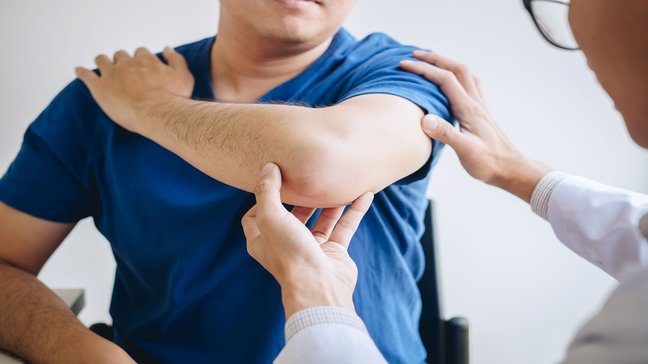
Ulnar nerve sulcus syndrome (elbow tingling)
The ulnar nerve sulcus syndrome, colloquially known as elbow tingling, is a common nerve compression disorder where the ulnar nerve is constricted in the area of the elbow (sulcus nervi ulnaris). This compression leads to abnormal sensations, pain,…
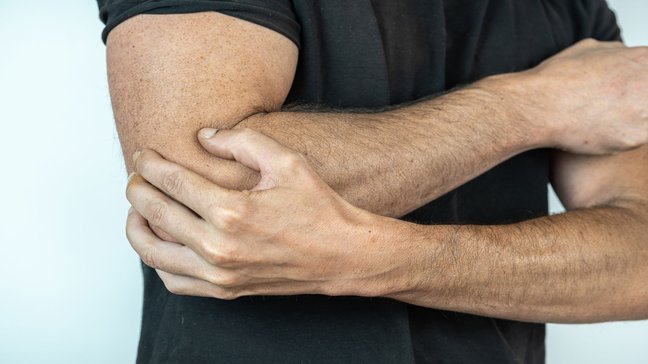
Olecranon spur
An olecranon spur is a bony growth on the olecranon, the upper end of the ulna in the elbow area. These changes usually arise from chronic irritation or mechanical overload. The olecranon spur can cause pain and restricted movement, especially during…
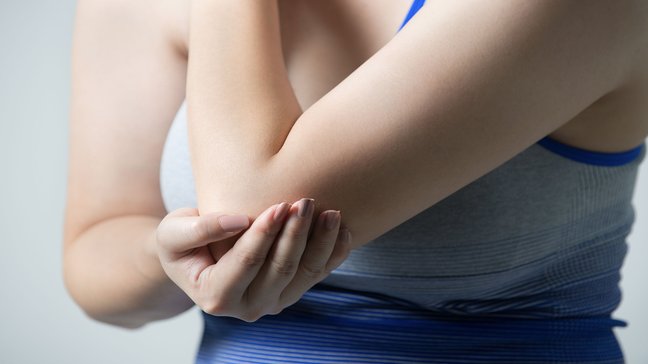
Tennis elbow (lateral epicondylitis)
Tennis elbow, medically referred to as lateral epicondylitis, is a common condition where the tendon attachments of the forearm extensor muscles at the lateral (outer) epicondyle of the upper arm are inflamed or irritated. The condition often occurs…
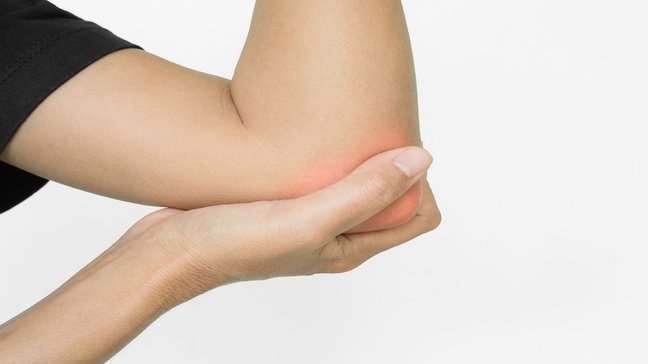
Bursitis (Olecranon bursitis)
Olecranon bursitis, also known as elbow bursitis, is a common condition in which the bursa (bursa olecrani) becomes inflamed. This bursa is located on the back of the elbow and serves as a cushion between the skin and the bony olecranon. The…
Rupture of the ulnar collateral ligament (UCL rupture)
Classification of UCL Ruptures
UCL ruptures are classified by severity and cause:
- Partial rupture: The ligament is partially damaged, leading to mild to moderate symptoms.
- Complete rupture: The ligament is completely severed, leading to significant instability.
- Acute rupture: Sudden injury due to a strong load or trauma.
- Chronic rupture: Slow wear of the ligament due to repeated stresses.
- Accompanying injuries: Damage to adjacent structures such as muscles or tendons often occurs.
Causes of rupture of the ulnar collateral ligament
The causes of a UCL rupture are varied and can include both traumatic and overload-related factors:
- Acute causes:
- Sudden stress on the elbow, for example, due to a fall or a jerky movement.
- Direct injuries, such as in contact sports.
- Chronic causes:
- Repeated overhead movements that stress the ligament over a longer period.
- Microtrauma from throwing sports like baseball, handball, or javelin throw.
- Contributing factors:
- Anatomical misalignments in the elbow joint.
- Weaknesses in the surrounding musculature that stabilize the joint less.
Symptoms of rupture of the ulnar collateral ligament
The symptoms vary depending on the severity of the rupture, but typically include:
- Pain: Often localized on the inside of the elbow, especially under stress.
- Instability: A feeling of "giving way" or uncertainty in the elbow joint.
- Limited mobility: Difficulty in extending or bending the arm.
- Swelling and tenderness: Often in the area of the medial elbow.
- Popping sound: Often heard in acute ruptures.
- Loss of performance: Reduced strength and precision in throwing movements.
Diagnosis of rupture of the ulnar collateral ligament
The diagnosis is made through a combination of medical history, clinical examination, and imaging techniques:
- Medical history:
- The doctor inquires about the circumstances of the injury, the nature of the symptoms, and athletic activities.
- Physical examination:
- Special tests such as the valgus stress test or the moving valgus stress test to check ligament stability.
- Palpation of the medial elbow for tenderness.
- Imaging:
- MRI: Detailed depiction of the ligament and any accompanying injuries.
- Ultrasound: Detection of ligament injuries and fluid accumulations.
- X-ray: To rule out bone injuries or accompanying changes.
Treatment options for rupture of the ulnar collateral ligament
Conservative Therapy
For partial tears or minor symptoms, non-operative treatment is often sufficient:
- Immobilization: Use of a brace or splint to stabilize the elbow.
- Medication Therapy:
- NSAIDs: For pain relief and anti-inflammatory effects.
- Physiotherapy:
- Exercises to strengthen the elbow muscles and improve joint stability.
- Functional movement exercises to gradually load the arm.
- Injections:
- Platelet-Rich Plasma (PRP) to promote tissue regeneration.
Surgical Therapy
For complete tears or persistent instability, surgery is required:
- Ligament Reconstruction: Replacing the torn ligament with a graft, often using the body's own tendons (e.g., palmaris tendon).
- Tommy John Surgery: A specific technique for UCL reconstruction, particularly used in athletes.
- Arthroscopic Procedures: Minimally invasive procedures with faster rehabilitation.
Preventive measures for rupture of the ulnar collateral ligament.
The following measures are suitable for preventing UCL ruptures and supporting recovery:
- Strengthening the muscles: Targeted training of the shoulder, arm, and elbow muscles.
- Warming up and stretching: Preparing the joint for athletic stress.
- Load management: Avoiding excessive repetitions of overhead movements, especially in young athletes.
- Ergonomic movement patterns: Improving throwing technique to reduce stress.
- Regular check-ups: Early detection and treatment of overload symptoms.
Ulnar nerve sulcus syndrome (elbow tingling)
The ulnar nerve sulcus syndrome, colloquially known as elbow tingling, is a common nerve compression disorder where the ulnar nerve is constricted in the area of the elbow (sulcus nervi ulnaris). This compression leads to abnormal sensations, pain,…
Olecranon spur
An olecranon spur is a bony growth on the olecranon, the upper end of the ulna in the elbow area. These changes usually arise from chronic irritation or mechanical overload. The olecranon spur can cause pain and restricted movement, especially during…
Tennis elbow (lateral epicondylitis)
Tennis elbow, medically referred to as lateral epicondylitis, is a common condition where the tendon attachments of the forearm extensor muscles at the lateral (outer) epicondyle of the upper arm are inflamed or irritated. The condition often occurs…
Bursitis (Olecranon bursitis)
Olecranon bursitis, also known as elbow bursitis, is a common condition in which the bursa (bursa olecrani) becomes inflamed. This bursa is located on the back of the elbow and serves as a cushion between the skin and the bony olecranon. The…