

Athlete's Groin
Classification of the Athlete's Groin
The athlete's groin is classified according to the affected structures and the underlying cause:
1. According to affected structures:
- Muscular athlete's groin: Injury or overload of the adductor muscles.
- Tendon-related athlete's groin: Irritation or inflammation of the tendon attachments of the abdominal or thigh muscles.
- Ligamentous athlete's groin: Overload of the inguinal ligaments.
2. According to cause:
- Acute athlete's groin: Sudden complaints due to an injury or trauma.
- Chronic athlete's groin: Long-term pain due to repeated stress or instability.
Causes of the athlete's groin
The causes of a sports hernia are diverse and can be divided into mechanical, muscular, and structural factors:
- Mechanical stress:
- Repeated, explosive movements such as quick changes of direction, stops, and starts that heavily strain the groin area.
- Sports like soccer, ice hockey, athletics, or tennis that require intense stress on the groin area.
- Muscular imbalances:
- Weakness of the abdominal muscles or adductors in relation to the opposing muscles.
- Structural factors:
- Misalignments or instabilities in the pelvic or hip region.
- Lack of recovery:
- Lack of recovery phases between intense training sessions.
Symptoms of the athlete's groin
The symptoms of a sports hernia are typically exercise-dependent and include:
- Local pain: Pain in the groin area that worsens with movement, especially during rotational movements or abrupt changes in direction.
- Radiating discomfort: Pain that radiates into the thigh, hip, or lower abdominal region.
- Movement restrictions: Limited mobility or stiffness in the hip region.
- Tenderness: Pain when touching the affected area.
- Loss of strength: Reduced performance in sports activities, especially when stressing the groin or hip region.
Diagnosis of the athlete's groin
The diagnosis of athlete's groin is made through a combination of medical history, clinical examination, and imaging techniques:
- Medical history:
- Collection of information about the sport, load pattern, and duration of symptoms.
- Physical examination:
- Palpation of the groin area for tenderness.
- Functional tests such as the adductor test or hip extension test to provoke pain.
- Imaging:
- Ultrasound: Visualization of soft tissue changes such as inflammation or small tears.
- MRI: For detailed assessment of muscle, tendon, and ligament injuries.
- X-ray: To rule out bony changes or stress fractures.
Treatment options for athletic pubalgia
Conservative Therapy
The treatment of sports hernia usually begins with conservative measures:
- Immobilization and load reduction:
- Avoidance of painful activities to relieve the affected structures.
- Physiotherapy:
- Exercises to strengthen the abdominal and pelvic muscles.
- Stretching exercises to improve mobility and relieve the affected region.
- Pain therapy:
- NSAIDs: To relieve pain and inflammation.
- Local cold therapy for acute complaints and heat applications for chronic complaints.
- Manual therapy:
- Mobilization techniques to improve pelvic stability.
- Alternative methods:
- Shock wave therapy to promote the healing of soft tissue structures.
Surgical Therapy
In case of persistent complaints or unsuccessful conservative treatment, surgery may be necessary:
- Reconstruction of soft tissues: Repair or reinforcement of damaged structures in the groin area.
- Minimally invasive procedures: Arthroscopic interventions to treat accompanying hip problems, such as labral lesions.
- Post-treatment: Use of physiotherapy to restore function and load-bearing capacity.
Preventive measures for the athlete's groin
To prevent sports hernia and reduce the risk of recurrence, the following measures are suitable:
- Targeted training: Strengthening of the abdominal, pelvic, and adductor muscles to improve stability.
- Regeneration: Sufficient recovery periods between training sessions.
- Ergonomic movements: Avoidance of incorrect loading through correct technique in the respective sport.
- Flexibility training: Regular stretching exercises to maintain mobility.
- Early detection: Early medical clarification and adjustment of training at the first signs of discomfort.
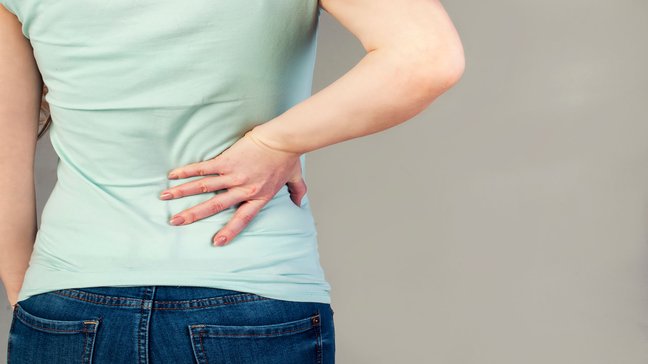
Glutealgia
Glutealgia, or buttock pain, is a symptom that can be caused by various factors. The pain is usually localized in the buttock area but can also radiate to the lower back, hip, or legs. Glutealgia significantly affects mobility and quality of life,…
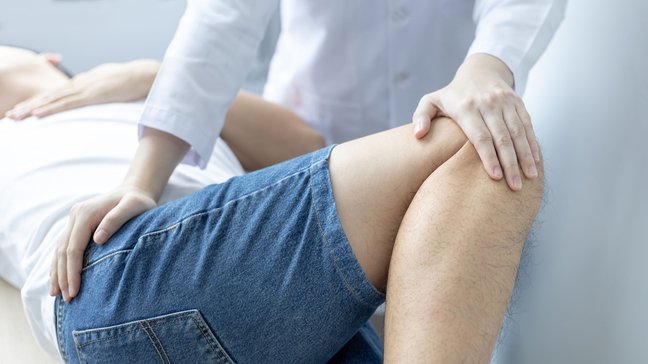
Labral tear of the hip
A labral tear of the hip refers to damage or injury to the acetabular labrum, a cartilage-like structure that surrounds the hip socket. The labrum stabilizes the hip joint by increasing the contact area between the socket and the head while…
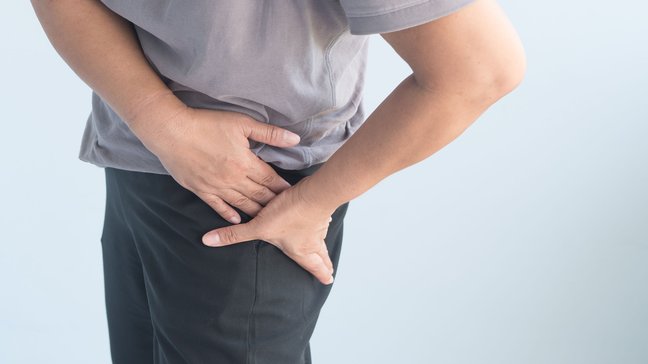
Hip joint inflammation (Coxitis)
Inflammation of the hip joint, medically referred to as coxitis, is an inflammation of the hip joint that can have both infectious and non-infectious causes. It typically manifests as pain in the groin area, restricted movement, and a protective…
Athlete's Groin
Classification of the Athlete's Groin
The athlete's groin is classified according to the affected structures and the underlying cause:
1. According to affected structures:
- Muscular athlete's groin: Injury or overload of the adductor muscles.
- Tendon-related athlete's groin: Irritation or inflammation of the tendon attachments of the abdominal or thigh muscles.
- Ligamentous athlete's groin: Overload of the inguinal ligaments.
2. According to cause:
- Acute athlete's groin: Sudden complaints due to an injury or trauma.
- Chronic athlete's groin: Long-term pain due to repeated stress or instability.
Causes of the athlete's groin
The causes of a sports hernia are diverse and can be divided into mechanical, muscular, and structural factors:
- Mechanical stress:
- Repeated, explosive movements such as quick changes of direction, stops, and starts that heavily strain the groin area.
- Sports like soccer, ice hockey, athletics, or tennis that require intense stress on the groin area.
- Muscular imbalances:
- Weakness of the abdominal muscles or adductors in relation to the opposing muscles.
- Structural factors:
- Misalignments or instabilities in the pelvic or hip region.
- Lack of recovery:
- Lack of recovery phases between intense training sessions.
Symptoms of the athlete's groin
The symptoms of a sports hernia are typically exercise-dependent and include:
- Local pain: Pain in the groin area that worsens with movement, especially during rotational movements or abrupt changes in direction.
- Radiating discomfort: Pain that radiates into the thigh, hip, or lower abdominal region.
- Movement restrictions: Limited mobility or stiffness in the hip region.
- Tenderness: Pain when touching the affected area.
- Loss of strength: Reduced performance in sports activities, especially when stressing the groin or hip region.
Diagnosis of the athlete's groin
The diagnosis of athlete's groin is made through a combination of medical history, clinical examination, and imaging techniques:
- Medical history:
- Collection of information about the sport, load pattern, and duration of symptoms.
- Physical examination:
- Palpation of the groin area for tenderness.
- Functional tests such as the adductor test or hip extension test to provoke pain.
- Imaging:
- Ultrasound: Visualization of soft tissue changes such as inflammation or small tears.
- MRI: For detailed assessment of muscle, tendon, and ligament injuries.
- X-ray: To rule out bony changes or stress fractures.
Treatment options for athletic pubalgia
Conservative Therapy
The treatment of sports hernia usually begins with conservative measures:
- Immobilization and load reduction:
- Avoidance of painful activities to relieve the affected structures.
- Physiotherapy:
- Exercises to strengthen the abdominal and pelvic muscles.
- Stretching exercises to improve mobility and relieve the affected region.
- Pain therapy:
- NSAIDs: To relieve pain and inflammation.
- Local cold therapy for acute complaints and heat applications for chronic complaints.
- Manual therapy:
- Mobilization techniques to improve pelvic stability.
- Alternative methods:
- Shock wave therapy to promote the healing of soft tissue structures.
Surgical Therapy
In case of persistent complaints or unsuccessful conservative treatment, surgery may be necessary:
- Reconstruction of soft tissues: Repair or reinforcement of damaged structures in the groin area.
- Minimally invasive procedures: Arthroscopic interventions to treat accompanying hip problems, such as labral lesions.
- Post-treatment: Use of physiotherapy to restore function and load-bearing capacity.
Preventive measures for the athlete's groin
To prevent sports hernia and reduce the risk of recurrence, the following measures are suitable:
- Targeted training: Strengthening of the abdominal, pelvic, and adductor muscles to improve stability.
- Regeneration: Sufficient recovery periods between training sessions.
- Ergonomic movements: Avoidance of incorrect loading through correct technique in the respective sport.
- Flexibility training: Regular stretching exercises to maintain mobility.
- Early detection: Early medical clarification and adjustment of training at the first signs of discomfort.
Glutealgia
Glutealgia, or buttock pain, is a symptom that can be caused by various factors. The pain is usually localized in the buttock area but can also radiate to the lower back, hip, or legs. Glutealgia significantly affects mobility and quality of life,…
Labral tear of the hip
A labral tear of the hip refers to damage or injury to the acetabular labrum, a cartilage-like structure that surrounds the hip socket. The labrum stabilizes the hip joint by increasing the contact area between the socket and the head while…
Hip joint inflammation (Coxitis)
Inflammation of the hip joint, medically referred to as coxitis, is an inflammation of the hip joint that can have both infectious and non-infectious causes. It typically manifests as pain in the groin area, restricted movement, and a protective…