

Perthes disease
Classification of Perthes disease
Perthes disease can be divided into different stages that describe the course of the disease:
- Initial stage:
The femoral head loses stability due to the reduced blood supply. - Fragmentation stage:
The dead bone disintegrates, and the femoral head becomes deformed. - Reparative stage:
New bone tissue begins to form, but the shape of the femoral head often remains altered. - Final stage:
Bone remodeling is complete, and the femoral head may be deformed, leading to permanent limitations.
Causes of Perthes disease
The exact cause of Perthes disease is not fully known; however, several factors play a role:
- Circulatory disorders:
- A disrupted blood supply to the femoral head is the main trigger.
- Genetic predisposition:
- In some cases, there is a familial clustering of the disease.
- Trauma:
- Minor injuries can impair the blood supply to the femoral head.
- Risk factors:
- Passive smoking, malnutrition, and hormonal influences during the growth phase.
Symptoms of Perthes disease
The symptoms of Perthes disease often develop gradually and vary depending on the stage of the disease:
- Pain:
Pain in the hip that often radiates to the thigh or the knee. - Movement limitations:
Difficulty with rotating, extending, or bending the hip joint. - Protective limp:
A typical limp, especially after exertion. - Muscle atrophy:
Decrease in muscle mass in the thigh due to limited movement. - Leg length discrepancy:
In advanced stages, the affected leg may appear shortened.
Diagnosis of Perthes disease
Diagnosis is made through a thorough medical history, clinical examination, and imaging procedures:
- Medical history:
- The physician asks about pain, mobility limitations, and family history.
- Physical examination:
- Assessment of range of motion and tenderness in the hip area.
- Imaging procedures:
- X-ray: Shows typical changes of the femoral head in the different stages.
- MRI: Detailed depiction of blood supply and early stages of the disease.
- Ultrasound: Supplementary examination if fluid accumulation in the joint is suspected.
Treatment options for Perthes disease
Conservative therapy
The treatment aims to relieve pressure on the femoral head and promote regeneration:
- Offloading the hip joint:
- Use of walking aids or orthoses to protect the joint.
- Physiotherapy:
- Exercises to improve mobility and strengthen the muscles.
- Pharmacological therapy:
- NSAIDs for pain relief and reduction of inflammation.
Surgical therapy
In severe cases or with pronounced deformities, surgery may be necessary:
- Realignment osteotomy:
- Correction of the leg axis to better center the femoral head in the acetabulum.
- Femoral or pelvic osteotomy:
- Adjustment of the bone structure to promote healing.
- Endoprosthetics:
- Joint replacement in rare cases of irreversible damage.
Preventive measures for Morbus Perthes
Since the exact causes are not fully known, there are no specific preventive measures. General recommendations include:
- Regular exercise: Promoting joint health through age-appropriate activities.
- Reduce risk factors: Avoiding secondhand smoke and promoting a balanced diet.
- Early detection: At the first signs such as hip pain or limping, early medical evaluation.
- Adjust load: Reducing intense physical activities during growth phases.
Osteonecrosis in childhood
Osteonecroses in childhood are conditions in which there is a localized blood flow disorder in the bone, leading to the death of the affected tissue. These disorders often occur at the growth zones (epiphyses) and are typically associated with pain,…

Epiphysiolysis of the femoral head
Epiphysiolysis capitis femoris (ECF), also referred to as juvenile femoral head slippage, is an orthopedic condition in which the femoral head slips along the growth plate (epiphyseal plate) of the femur. This condition typically occurs in…
Perthes disease
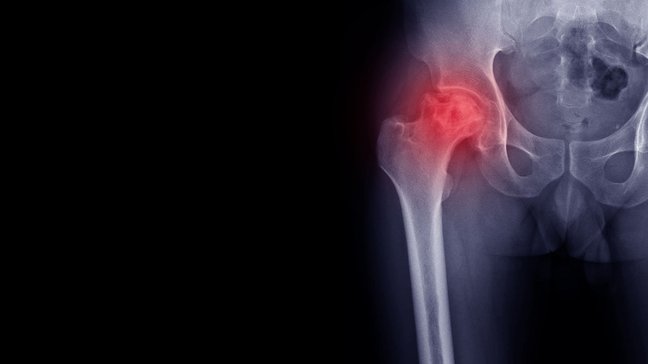
Morbus Perthes, also known as Perthes disease, is a rare disorder of the hip joint in children. It arises from a temporary interruption of the blood supply to the femoral head, which leads to the death of bone tissue (aseptic necrosis of the femoral…
Trigger finger/thumb
Der Schnappfinger oder Schnappdaumen, medizinisch als Triggerfinger bezeichnet, ist eine Erkrankung der Beugesehnen der Finger oder des Daumens, bei der die Bewegung durch eine Verdickung der Sehne oder der Ringbänder behindert wird. Diese Verdickung…
Perthes disease
Classification of Perthes disease
Perthes disease can be divided into different stages that describe the course of the disease:
- Initial stage:
The femoral head loses stability due to the reduced blood supply. - Fragmentation stage:
The dead bone disintegrates, and the femoral head becomes deformed. - Reparative stage:
New bone tissue begins to form, but the shape of the femoral head often remains altered. - Final stage:
Bone remodeling is complete, and the femoral head may be deformed, leading to permanent limitations.
Causes of Perthes disease
The exact cause of Perthes disease is not fully known; however, several factors play a role:
- Circulatory disorders:
- A disrupted blood supply to the femoral head is the main trigger.
- Genetic predisposition:
- In some cases, there is a familial clustering of the disease.
- Trauma:
- Minor injuries can impair the blood supply to the femoral head.
- Risk factors:
- Passive smoking, malnutrition, and hormonal influences during the growth phase.
Symptoms of Perthes disease
The symptoms of Perthes disease often develop gradually and vary depending on the stage of the disease:
- Pain:
Pain in the hip that often radiates to the thigh or the knee. - Movement limitations:
Difficulty with rotating, extending, or bending the hip joint. - Protective limp:
A typical limp, especially after exertion. - Muscle atrophy:
Decrease in muscle mass in the thigh due to limited movement. - Leg length discrepancy:
In advanced stages, the affected leg may appear shortened.
Diagnosis of Perthes disease
Diagnosis is made through a thorough medical history, clinical examination, and imaging procedures:
- Medical history:
- The physician asks about pain, mobility limitations, and family history.
- Physical examination:
- Assessment of range of motion and tenderness in the hip area.
- Imaging procedures:
- X-ray: Shows typical changes of the femoral head in the different stages.
- MRI: Detailed depiction of blood supply and early stages of the disease.
- Ultrasound: Supplementary examination if fluid accumulation in the joint is suspected.
Treatment options for Perthes disease
Conservative therapy
The treatment aims to relieve pressure on the femoral head and promote regeneration:
- Offloading the hip joint:
- Use of walking aids or orthoses to protect the joint.
- Physiotherapy:
- Exercises to improve mobility and strengthen the muscles.
- Pharmacological therapy:
- NSAIDs for pain relief and reduction of inflammation.
Surgical therapy
In severe cases or with pronounced deformities, surgery may be necessary:
- Realignment osteotomy:
- Correction of the leg axis to better center the femoral head in the acetabulum.
- Femoral or pelvic osteotomy:
- Adjustment of the bone structure to promote healing.
- Endoprosthetics:
- Joint replacement in rare cases of irreversible damage.
Preventive measures for Morbus Perthes
Since the exact causes are not fully known, there are no specific preventive measures. General recommendations include:
- Regular exercise: Promoting joint health through age-appropriate activities.
- Reduce risk factors: Avoiding secondhand smoke and promoting a balanced diet.
- Early detection: At the first signs such as hip pain or limping, early medical evaluation.
- Adjust load: Reducing intense physical activities during growth phases.
Osteonecrosis in childhood
Osteonecroses in childhood are conditions in which there is a localized blood flow disorder in the bone, leading to the death of the affected tissue. These disorders often occur at the growth zones (epiphyses) and are typically associated with pain,…
Epiphysiolysis of the femoral head
Epiphysiolysis capitis femoris (ECF), also referred to as juvenile femoral head slippage, is an orthopedic condition in which the femoral head slips along the growth plate (epiphyseal plate) of the femur. This condition typically occurs in…
Perthes disease
Morbus Perthes, also known as Perthes disease, is a rare disorder of the hip joint in children. It arises from a temporary interruption of the blood supply to the femoral head, which leads to the death of bone tissue (aseptic necrosis of the femoral…
Trigger finger/thumb
Der Schnappfinger oder Schnappdaumen, medizinisch als Triggerfinger bezeichnet, ist eine Erkrankung der Beugesehnen der Finger oder des Daumens, bei der die Bewegung durch eine Verdickung der Sehne oder der Ringbänder behindert wird. Diese Verdickung…