

Olecranon spur
Classification of Olecranon Spur
An olecranon spur can be classified according to cause and manifestation:
- Mechanical olecranon spur: Arises from repeated mechanical stresses, for example in craftsmen or athletes.
- Degenerative olecranon spur: Develops in connection with age-related changes or osteoarthritis.
- Inflammatory olecranon spur: Caused by inflammatory processes, such as in gout or rheumatoid arthritis.
Causes of olecranon spur
The main causes for the development of an olecranon spur are:
- Chronic mechanical stress:
- Repeated stress from sports like tennis or from occupational activities.
- Misalignments:
- Poor posture or unilateral stress on the elbow.
- Osteoarthritis:
- Degenerative changes in the elbow can promote the formation of bony outgrowths.
- Inflammatory diseases:
- Gout or rheumatoid arthritis can favor bony changes on the olecranon.
- Injuries:
- Traumatic events such as fractures or bruises can contribute to the development of a spur.
Symptoms of olecranon spur
The symptoms of an olecranon spur are often characteristic and include:
- Local pain: Pain in the area of the elbow, especially when pressed or moved.
- Swelling: Visible and palpable swelling around the olecranon.
- Movement restrictions: Difficulty bending or extending the elbow.
- Tenderness: Pain when touching or putting pressure on the elbow.
- Friction or crunching: Mechanical noises or sensations when moving the elbow.
Diagnosis of olecranon spur
The diagnosis is made through a combination of medical history, clinical examination, and imaging techniques:
- Medical history:
- The doctor asks about symptoms, stress patterns, and possible pre-existing conditions.
- Clinical examination:
- Palpation of the elbow to locate the pain and assess swelling.
- Imaging techniques:
- X-ray: Visualization of the bony spur and possible degenerative changes.
- MRI: Assessment of soft tissue damage and inflammatory processes.
- Ultrasound: Examination of bursitis or soft tissue changes.
Treatment options for olecranon spur
Conservative Therapy
In most cases, the olecranon spur can be treated without surgery:
- Pain relief:
- Use of NSAIDs to reduce pain and inflammation.
- Physiotherapy:
- Exercises to relieve and mobilize the elbow.
- Cushioning:
- Use of elbow braces or pads to relieve pressure.
- Cold and heat applications:
- Application of cold for acute discomfort or heat to relax the muscles.
- Injections:
- Cortisone injections to treat inflammation.
Surgical Therapy
In cases of severe pain or therapy-resistant complaints, surgery may be necessary:
- Removal of the spur:
- Removal of the bony growth to relieve pain.
- Treatment of accompanying damage:
- Surgical treatment of inflamed bursae or damaged structures.
Preventive measures for olecranon spur
The following measures are helpful in preventing an olecranon spur:
- Ergonomic work practices: Adjusting the workplace and tools to reduce mechanical stress.
- Regular breaks: Avoiding continuous strain through adequate rest periods.
- Targeted training: Exercises to strengthen muscles and improve mobility.
- Resting when experiencing discomfort: Responding promptly to pain or swelling to reduce strain.
- Use of protective padding: Using elbow protectors during repeated stress.
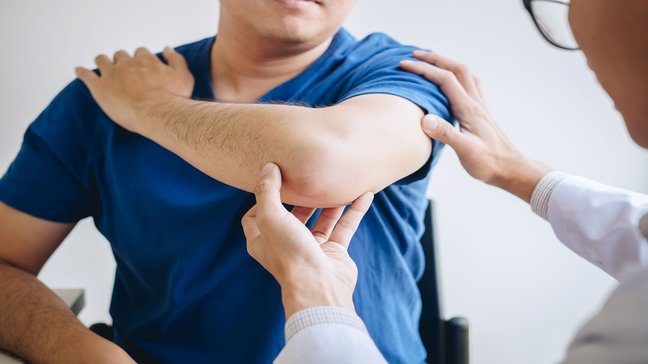
Ulnar nerve sulcus syndrome (elbow tingling)
The ulnar nerve sulcus syndrome, colloquially known as elbow tingling, is a common nerve compression disorder where the ulnar nerve is constricted in the area of the elbow (sulcus nervi ulnaris). This compression leads to abnormal sensations, pain,…
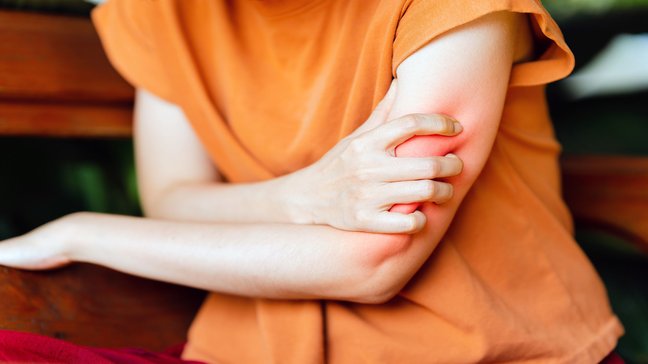
Distal biceps tendon rupture
A rupture of the distal biceps tendon refers to the complete or partial severing of the tendon that connects the biceps muscle to the radial bone in the elbow area. This injury often occurs in middle-aged men and is usually caused by a sudden…
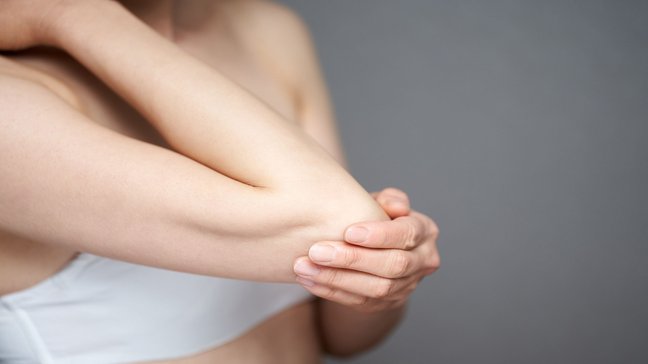
Golfer's elbow (medial epicondylitis)
Golfer's elbow, medically referred to as medial epicondylitis, is a painful overuse condition affecting the tendon attachments of the wrist and finger flexor muscles on the inside of the elbow. Despite its name, this condition does not only occur in…
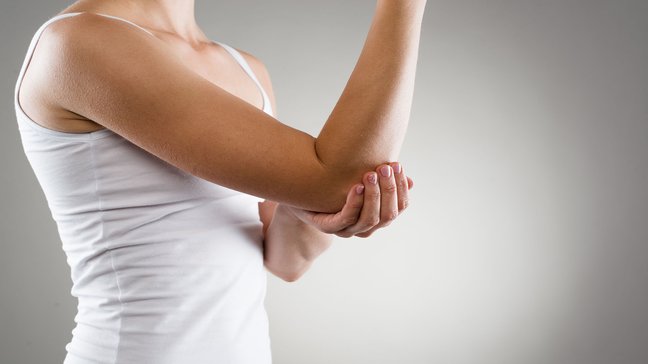
Osteoarthritis in the elbow
Elbow osteoarthritis, also known as cubital osteoarthritis, is a degenerative condition in which the cartilage in the elbow joint is gradually broken down. This form of osteoarthritis occurs less frequently than in joints with higher stress, such as…
Olecranon spur
Classification of Olecranon Spur
An olecranon spur can be classified according to cause and manifestation:
- Mechanical olecranon spur: Arises from repeated mechanical stresses, for example in craftsmen or athletes.
- Degenerative olecranon spur: Develops in connection with age-related changes or osteoarthritis.
- Inflammatory olecranon spur: Caused by inflammatory processes, such as in gout or rheumatoid arthritis.
Causes of olecranon spur
The main causes for the development of an olecranon spur are:
- Chronic mechanical stress:
- Repeated stress from sports like tennis or from occupational activities.
- Misalignments:
- Poor posture or unilateral stress on the elbow.
- Osteoarthritis:
- Degenerative changes in the elbow can promote the formation of bony outgrowths.
- Inflammatory diseases:
- Gout or rheumatoid arthritis can favor bony changes on the olecranon.
- Injuries:
- Traumatic events such as fractures or bruises can contribute to the development of a spur.
Symptoms of olecranon spur
The symptoms of an olecranon spur are often characteristic and include:
- Local pain: Pain in the area of the elbow, especially when pressed or moved.
- Swelling: Visible and palpable swelling around the olecranon.
- Movement restrictions: Difficulty bending or extending the elbow.
- Tenderness: Pain when touching or putting pressure on the elbow.
- Friction or crunching: Mechanical noises or sensations when moving the elbow.
Diagnosis of olecranon spur
The diagnosis is made through a combination of medical history, clinical examination, and imaging techniques:
- Medical history:
- The doctor asks about symptoms, stress patterns, and possible pre-existing conditions.
- Clinical examination:
- Palpation of the elbow to locate the pain and assess swelling.
- Imaging techniques:
- X-ray: Visualization of the bony spur and possible degenerative changes.
- MRI: Assessment of soft tissue damage and inflammatory processes.
- Ultrasound: Examination of bursitis or soft tissue changes.
Treatment options for olecranon spur
Conservative Therapy
In most cases, the olecranon spur can be treated without surgery:
- Pain relief:
- Use of NSAIDs to reduce pain and inflammation.
- Physiotherapy:
- Exercises to relieve and mobilize the elbow.
- Cushioning:
- Use of elbow braces or pads to relieve pressure.
- Cold and heat applications:
- Application of cold for acute discomfort or heat to relax the muscles.
- Injections:
- Cortisone injections to treat inflammation.
Surgical Therapy
In cases of severe pain or therapy-resistant complaints, surgery may be necessary:
- Removal of the spur:
- Removal of the bony growth to relieve pain.
- Treatment of accompanying damage:
- Surgical treatment of inflamed bursae or damaged structures.
Preventive measures for olecranon spur
The following measures are helpful in preventing an olecranon spur:
- Ergonomic work practices: Adjusting the workplace and tools to reduce mechanical stress.
- Regular breaks: Avoiding continuous strain through adequate rest periods.
- Targeted training: Exercises to strengthen muscles and improve mobility.
- Resting when experiencing discomfort: Responding promptly to pain or swelling to reduce strain.
- Use of protective padding: Using elbow protectors during repeated stress.
Ulnar nerve sulcus syndrome (elbow tingling)
The ulnar nerve sulcus syndrome, colloquially known as elbow tingling, is a common nerve compression disorder where the ulnar nerve is constricted in the area of the elbow (sulcus nervi ulnaris). This compression leads to abnormal sensations, pain,…
Distal biceps tendon rupture
A rupture of the distal biceps tendon refers to the complete or partial severing of the tendon that connects the biceps muscle to the radial bone in the elbow area. This injury often occurs in middle-aged men and is usually caused by a sudden…
Golfer's elbow (medial epicondylitis)
Golfer's elbow, medically referred to as medial epicondylitis, is a painful overuse condition affecting the tendon attachments of the wrist and finger flexor muscles on the inside of the elbow. Despite its name, this condition does not only occur in…
Osteoarthritis in the elbow
Elbow osteoarthritis, also known as cubital osteoarthritis, is a degenerative condition in which the cartilage in the elbow joint is gradually broken down. This form of osteoarthritis occurs less frequently than in joints with higher stress, such as…