

Medial collateral ligament tear
Classification of Medial Ligament Tears
Medial collateral ligament injuries are classified into three grades based on severity:
- Grade I:
- Mild overstretching without structural damage, minimal pain, and no instability.
- Grade II:
- Partial tear of the ligament with moderate pain, swelling, and slight instability.
- Grade III:
- Complete tear of the medial collateral ligament, severe pain, significant swelling, and noticeable instability.
Causes of medial ligament tear
The causes of a medial collateral ligament tear are usually due to direct or indirect force impacts:
- Direct force impact:
- A blow or impact to the outside of the knee leads to overstretching of the medial collateral ligament.
- Sports injuries:
- Common in sports with sudden changes of direction, jumps, or body contact, such as soccer, basketball, or martial arts.
- Twisting:
- Rotational movements of the knee, for example, during falls or abrupt movements on slippery surfaces, strain the medial collateral ligament.
- Overuse:
- Chronic stress from repeated movements can weaken the ligament and lead to micro-injuries.
Symptoms of medial ligament tear
The symptoms of a medial collateral ligament tear vary depending on the severity of the injury:
- Pain:
- Acute pain on the inside of the knee, especially when pressure is applied or during movement.
- Swelling:
- Swelling of the knee occurs within a few hours after the injury.
- Instability:
- A feeling of uncertainty or instability in the knee, especially under load.
- Movement restrictions:
- Difficulty fully extending or bending the knee.
- Bruising:
- In more severe injuries, hematomas may be visible on the inside of the knee.
Diagnosis of medial collateral ligament tear
The diagnosis is made through a combination of medical history, clinical examination, and imaging techniques:
- Medical history:
- The doctor inquires about the accident, the type of strain, and the symptoms.
- Clinical examination:
- Tests such as the valgus stress test are performed to check the stability of the medial ligament.
- Imaging techniques:
- MRI: Visualization of the tear and any accompanying injuries such as meniscus or cruciate ligament injuries.
- Ultrasound: Examination of soft tissue damage and inflammation.
- X-ray: To rule out bone injuries or splinters.
Treatment options for medial collateral ligament tear
Conservative Therapy
Most medial collateral ligament tears, especially Grade I and II, can be treated conservatively:
- Immobilization:
- Use of a knee brace or splint to stabilize the joint.
- Cold Applications:
- Reduction of swelling and pain through cold packs.
- Physiotherapy:
- Exercises to strengthen the surrounding muscles and restore mobility.
- Medication Therapy:
- Use of nonsteroidal anti-inflammatory drugs (NSAIDs) for pain relief and anti-inflammation.
Surgical Therapy
In cases of complete tears (Grade III) or additional injuries, surgery may be necessary:
- Reconstruction of the Medial Collateral Ligament:
- Suturing or reattaching the torn ligament.
- Tendon Replacement:
- Use of the body's own tendon material to stabilize the joint in cases of irreparable damage.
- Arthroscopic Procedures:
- Treatment of accompanying injuries such as meniscus damage or cartilage injuries.
Preventive measures for medial collateral ligament tear
To prevent a medial collateral ligament tear, the following measures are recommended:
- Regular warm-up: Warm up the joints before engaging in sports activities to avoid injuries.
- Strengthening the muscles: Targeted training of the thigh and calf muscles to stabilize the knee.
- Use of protective gear: Knee braces or orthoses can reduce the risk of injuries.
- Technique training: Optimization of movement sequences in sports with a high risk of injury.
- Avoiding overstrain: Ensure sufficient breaks and recovery phases to relieve the knee.

Knee joint inflammation (arthritis)
Inflammation of the knee joint, medically referred to as arthritis of the knee joint, is an inflammatory condition that affects the knee joint. It can be triggered by infections, autoimmune diseases, or overuse and leads to pain, swelling, and…
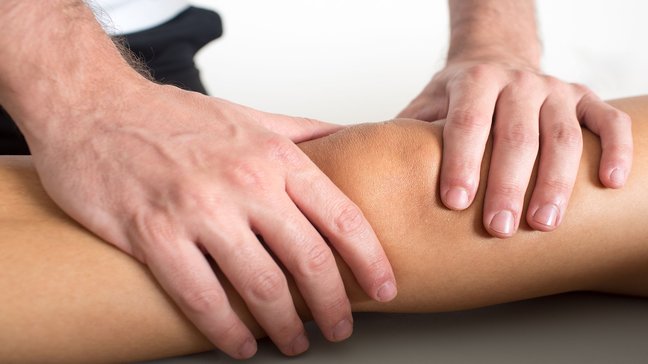
Meniscus tear
A meniscus tear, medically referred to as a rupture of the meniscus, is a common injury of the knee joint. The meniscus consists of two cartilage-like structures (medial and lateral meniscus) that serve as shock absorbers and stabilizers in the knee…
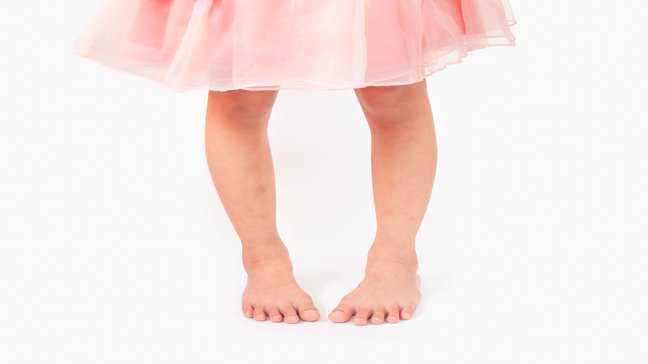
Desalineaciones en niños
Misalignments of the legs, such as knock-knees (genu valgum) and bowlegs (genu varum), are common observations in children. These deviations from the normal leg axis can be both physiological and pathological and affect the development and mobility…
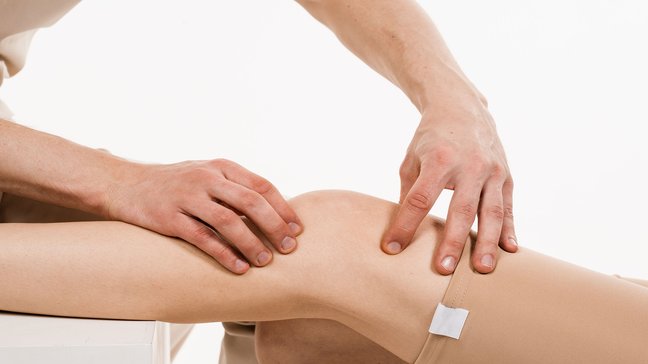
Knee pain
Knee pain is a common symptom that can affect people of all ages. It can result from acute injuries, chronic conditions, or overuse. The knee joint is one of the largest and most complex joints in the human body, making it particularly susceptible to…
Medial collateral ligament tear
Classification of Medial Ligament Tears
Medial collateral ligament injuries are classified into three grades based on severity:
- Grade I:
- Mild overstretching without structural damage, minimal pain, and no instability.
- Grade II:
- Partial tear of the ligament with moderate pain, swelling, and slight instability.
- Grade III:
- Complete tear of the medial collateral ligament, severe pain, significant swelling, and noticeable instability.
Causes of medial ligament tear
The causes of a medial collateral ligament tear are usually due to direct or indirect force impacts:
- Direct force impact:
- A blow or impact to the outside of the knee leads to overstretching of the medial collateral ligament.
- Sports injuries:
- Common in sports with sudden changes of direction, jumps, or body contact, such as soccer, basketball, or martial arts.
- Twisting:
- Rotational movements of the knee, for example, during falls or abrupt movements on slippery surfaces, strain the medial collateral ligament.
- Overuse:
- Chronic stress from repeated movements can weaken the ligament and lead to micro-injuries.
Symptoms of medial ligament tear
The symptoms of a medial collateral ligament tear vary depending on the severity of the injury:
- Pain:
- Acute pain on the inside of the knee, especially when pressure is applied or during movement.
- Swelling:
- Swelling of the knee occurs within a few hours after the injury.
- Instability:
- A feeling of uncertainty or instability in the knee, especially under load.
- Movement restrictions:
- Difficulty fully extending or bending the knee.
- Bruising:
- In more severe injuries, hematomas may be visible on the inside of the knee.
Diagnosis of medial collateral ligament tear
The diagnosis is made through a combination of medical history, clinical examination, and imaging techniques:
- Medical history:
- The doctor inquires about the accident, the type of strain, and the symptoms.
- Clinical examination:
- Tests such as the valgus stress test are performed to check the stability of the medial ligament.
- Imaging techniques:
- MRI: Visualization of the tear and any accompanying injuries such as meniscus or cruciate ligament injuries.
- Ultrasound: Examination of soft tissue damage and inflammation.
- X-ray: To rule out bone injuries or splinters.
Treatment options for medial collateral ligament tear
Conservative Therapy
Most medial collateral ligament tears, especially Grade I and II, can be treated conservatively:
- Immobilization:
- Use of a knee brace or splint to stabilize the joint.
- Cold Applications:
- Reduction of swelling and pain through cold packs.
- Physiotherapy:
- Exercises to strengthen the surrounding muscles and restore mobility.
- Medication Therapy:
- Use of nonsteroidal anti-inflammatory drugs (NSAIDs) for pain relief and anti-inflammation.
Surgical Therapy
In cases of complete tears (Grade III) or additional injuries, surgery may be necessary:
- Reconstruction of the Medial Collateral Ligament:
- Suturing or reattaching the torn ligament.
- Tendon Replacement:
- Use of the body's own tendon material to stabilize the joint in cases of irreparable damage.
- Arthroscopic Procedures:
- Treatment of accompanying injuries such as meniscus damage or cartilage injuries.
Preventive measures for medial collateral ligament tear
To prevent a medial collateral ligament tear, the following measures are recommended:
- Regular warm-up: Warm up the joints before engaging in sports activities to avoid injuries.
- Strengthening the muscles: Targeted training of the thigh and calf muscles to stabilize the knee.
- Use of protective gear: Knee braces or orthoses can reduce the risk of injuries.
- Technique training: Optimization of movement sequences in sports with a high risk of injury.
- Avoiding overstrain: Ensure sufficient breaks and recovery phases to relieve the knee.
Knee joint inflammation (arthritis)
Inflammation of the knee joint, medically referred to as arthritis of the knee joint, is an inflammatory condition that affects the knee joint. It can be triggered by infections, autoimmune diseases, or overuse and leads to pain, swelling, and…
Meniscus tear
A meniscus tear, medically referred to as a rupture of the meniscus, is a common injury of the knee joint. The meniscus consists of two cartilage-like structures (medial and lateral meniscus) that serve as shock absorbers and stabilizers in the knee…
Desalineaciones en niños
Misalignments of the legs, such as knock-knees (genu valgum) and bowlegs (genu varum), are common observations in children. These deviations from the normal leg axis can be both physiological and pathological and affect the development and mobility…
Knee pain
Knee pain is a common symptom that can affect people of all ages. It can result from acute injuries, chronic conditions, or overuse. The knee joint is one of the largest and most complex joints in the human body, making it particularly susceptible to…