

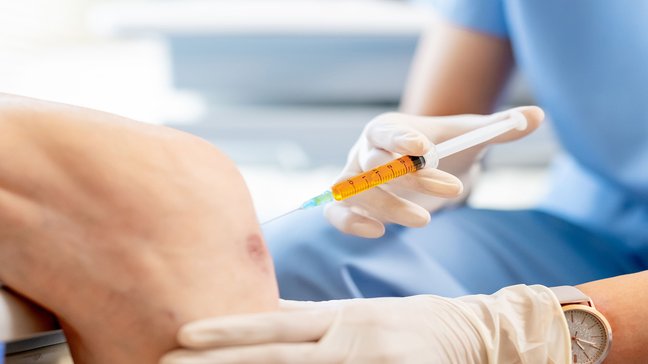
Injection therapy
When is injection therapy used?
The injection therapy is used for various complaints and conditions, including:
- Joint pain and arthritis
- Back pain and herniated discs
- Tendonitis and bursitis
- Muscle tension and trigger points
- Nerve inflammation and pain
- Sports injuries
- Chronic pain syndromes
Advantages of Injection Therapy
- Fast pain relief: Direct administration of painkillers and anti-inflammatory drugs to the affected area.
- Targeted treatment: Local treatment allows for a higher concentration of the medication in the affected tissue.
- Reduced side effects: Lower systemic burden compared to oral medications.
- Promotion of healing: Supports tissue regeneration and reduction of inflammation.
- Versatility: Can be used for a variety of orthopedic and rheumatic conditions.
Administration of injection therapy
The injection therapy includes various techniques and types of medication, selected according to the diagnosis and symptoms:
-
Corticosteroid injections:
- Effect: Reduce inflammation and relieve pain.
- Application: Commonly used for joint inflammation, tendonitis, and back pain.
-
Hyaluronic acid injections:
- Effect: Improve joint lubrication and reduce pain in osteoarthritis.
- Application: Especially for knee and hip osteoarthritis.
-
Local anesthetics:
- Effect: Temporarily block pain transmission.
- Application: For immediate pain relief in acute pain and for diagnostics.
-
Platelet-rich plasma (PRP):
- Effect: Promotes healing using the body's own growth factors.
- Application: For tendon injuries, osteoarthritis, and muscle injuries.
-
Botulinum toxin injections:
- Effect: Relax overactive muscles and relieve chronic pain.
- Application: For muscular pain syndromes and spasticity.
What you need to consider before injection therapy
- Health issues: Inform the doctor about existing health problems, especially infections, blood clotting disorders, or allergies.
- Medications: Inform the doctor about which medications you are taking, including blood thinners and dietary supplements.
- Allergies: Inform the doctor about known allergies to medications or local anesthetics.
- Preparation: Follow the doctor's instructions for preparation for the injection, such as fasting or adjusting medication.
Debriefing and Consultation
After the injection therapy, the doctor will discuss the results and your reaction to the treatment. The doctor will assess whether further injections or additional therapies are necessary. Additional recommendations may include physiotherapy, special exercises, or adjustments in daily life to support healing and pain relief.

Vitamin C infusions
Vitamin C infusions are a special form of infusion therapy in which high-dose vitamin C is administered directly into the bloodstream. This method allows for higher absorption and effectiveness of vitamin C compared to oral intake. Vitamin C is an…

Infusion therapy
Infusion therapy is a medical treatment method in which fluids, nutrients, or medications are administered directly into the bloodstream. This method allows for the rapid and effective delivery of substances required for the treatment of acute and…

Traumatology
Traumatology is a specialized field of medicine that deals with the diagnosis, treatment, and rehabilitation of injuries and wounds. These can be caused by accidents, acts of violence, or other traumas. The goal of traumatology is to restore the…
Therapy for arthrosis
Arthrosis therapy includes a range of treatment approaches to alleviate symptoms and slow the progression of osteoarthritis. It is a degenerative joint disease characterized by the breakdown of cartilage tissue in the joints. The treatment aims to…
Injection therapy
When is injection therapy used?
The injection therapy is used for various complaints and conditions, including:
- Joint pain and arthritis
- Back pain and herniated discs
- Tendonitis and bursitis
- Muscle tension and trigger points
- Nerve inflammation and pain
- Sports injuries
- Chronic pain syndromes
Advantages of Injection Therapy
- Fast pain relief: Direct administration of painkillers and anti-inflammatory drugs to the affected area.
- Targeted treatment: Local treatment allows for a higher concentration of the medication in the affected tissue.
- Reduced side effects: Lower systemic burden compared to oral medications.
- Promotion of healing: Supports tissue regeneration and reduction of inflammation.
- Versatility: Can be used for a variety of orthopedic and rheumatic conditions.
Administration of injection therapy
The injection therapy includes various techniques and types of medication, selected according to the diagnosis and symptoms:
-
Corticosteroid injections:
- Effect: Reduce inflammation and relieve pain.
- Application: Commonly used for joint inflammation, tendonitis, and back pain.
-
Hyaluronic acid injections:
- Effect: Improve joint lubrication and reduce pain in osteoarthritis.
- Application: Especially for knee and hip osteoarthritis.
-
Local anesthetics:
- Effect: Temporarily block pain transmission.
- Application: For immediate pain relief in acute pain and for diagnostics.
-
Platelet-rich plasma (PRP):
- Effect: Promotes healing using the body's own growth factors.
- Application: For tendon injuries, osteoarthritis, and muscle injuries.
-
Botulinum toxin injections:
- Effect: Relax overactive muscles and relieve chronic pain.
- Application: For muscular pain syndromes and spasticity.
What you need to consider before injection therapy
- Health issues: Inform the doctor about existing health problems, especially infections, blood clotting disorders, or allergies.
- Medications: Inform the doctor about which medications you are taking, including blood thinners and dietary supplements.
- Allergies: Inform the doctor about known allergies to medications or local anesthetics.
- Preparation: Follow the doctor's instructions for preparation for the injection, such as fasting or adjusting medication.
Debriefing and Consultation
After the injection therapy, the doctor will discuss the results and your reaction to the treatment. The doctor will assess whether further injections or additional therapies are necessary. Additional recommendations may include physiotherapy, special exercises, or adjustments in daily life to support healing and pain relief.
Vitamin C infusions
Vitamin C infusions are a special form of infusion therapy in which high-dose vitamin C is administered directly into the bloodstream. This method allows for higher absorption and effectiveness of vitamin C compared to oral intake. Vitamin C is an…
Infusion therapy
Infusion therapy is a medical treatment method in which fluids, nutrients, or medications are administered directly into the bloodstream. This method allows for the rapid and effective delivery of substances required for the treatment of acute and…
Traumatology
Traumatology is a specialized field of medicine that deals with the diagnosis, treatment, and rehabilitation of injuries and wounds. These can be caused by accidents, acts of violence, or other traumas. The goal of traumatology is to restore the…
Therapy for arthrosis
Arthrosis therapy includes a range of treatment approaches to alleviate symptoms and slow the progression of osteoarthritis. It is a degenerative joint disease characterized by the breakdown of cartilage tissue in the joints. The treatment aims to…