

Infiltration of the shoulder
What is an infiltration of the shoulder?
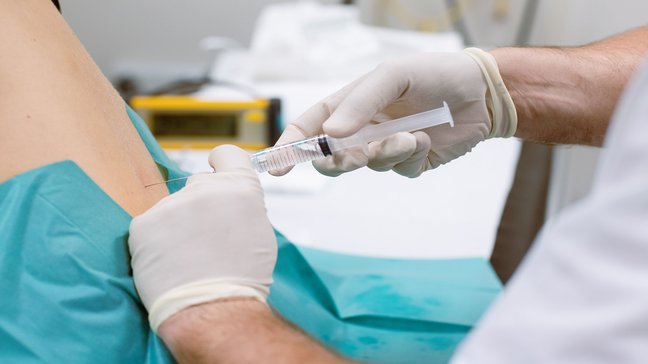
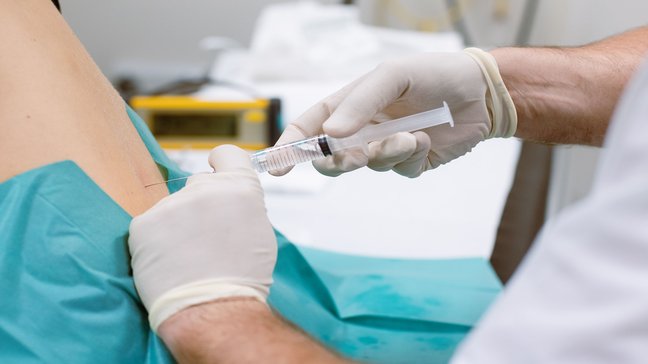
In a shoulder infiltration, a medication is injected with a fine needle specifically into the shoulder joint or to an affected structure in its vicinity. Depending on the diagnosis, the treatment can, for example, be performed in the joint, under the shoulder roof, or in the area of an irritated bursa.
Shoulder infiltration is one of the various forms of infiltrations. The goal is to administer the active substance as directly as possible at the treatment site. Since the shoulder consists of several joints, tendons, bursae, and other structures, it must be determined precisely before treatment where the symptoms come from.
When can a shoulder infiltration be useful?
A shoulder infiltration may be considered, among other things, for the following complaints:
- inflammatory irritation of the shoulder joint;
- shoulder osteoarthritis;
- shoulder impingement and subacromial symptoms;
- bursitis in the shoulder region;
- Frozen Shoulder;
- certain irritations of the tendons and tendon insertions;
- persistent shoulder pain after medical evaluation.
For subacromial symptoms, injections can be used in selected cases as part of conservative treatment. Physiotherapy and targeted exercises remain important components of the treatment concept.
Not all shoulder pain is suitable for an infiltration. Complaints can, for example, also be caused by a calcific shoulder, a rupture of the rotator cuff, instability, or an injury. Therefore, a thorough orthopedic examination is required before treatment.
Which areas of the shoulder can be infiltrated?
Depending on the cause of the symptoms, different target areas can be treated:
- the actual shoulder joint;
- the space under the shoulder roof;
- an irritated bursa;
- the acromioclavicular joint;
- certain tendon sheaths or surrounding soft tissues.
The selection of the target structure is based on the examination and the diagnosis. Therefore, an infiltration must not be performed solely on the basis of the general location of the shoulder pain.
Which medications can be used?
Which medication is used depends on the diagnosis and the goal of the treatment. Possible options include, for example:
- Local anesthetics for local pain relief;
- Anti-inflammatory medications such as corticosteroids;
- Individually selected active ingredients or combinations of active ingredients.
Corticosteroid injections can provide temporary pain relief for certain shoulder conditions. However, the indication, dosage, and possible repetition must be determined individually by a physician.
How is a shoulder infiltration performed?
Medical Examination
Before the treatment, the location, duration, and possible triggers of the symptoms are discussed. The doctor examines the mobility, stability, and strength of the shoulder. Existing X-ray, ultrasound, or MRI findings can be included in the assessment.
Determination of the Target Structure
Based on the examination, it is decided whether, for example, the shoulder joint, the subacromial space, a bursa, or another structure should be treated.
Preparation
The shoulder area is carefully disinfected. The appropriate injection site is then determined.
Targeted Injection
The selected medication is delivered to the intended position using a fine needle. Depending on the target structure and the anatomical situation, the treatment can be performed under ultrasound guidance.
Follow-up Observation
After the treatment, the immediate response is checked. The doctor explains how much the shoulder can be stressed afterward and when a follow-up check is advisable.
Ultrasound-guided infiltration of the shoulder
During an ultrasound-guided shoulder infiltration, the joint, tendons, bursae, and surrounding soft tissues can be visualized during treatment. This makes it possible to identify the target structure and control the position of the needle.
Further information on the image-guided procedure can be found on the page for ultrasound-guided pain therapy. The procedure is used at the Orthopedic Center for shoulder complaints as well as tendon and bursal problems, among other things.
What should be considered before shoulder infiltration?
Inform the treating physician in particular about:
- blood-thinning medications;
- known blood clotting disorders;
- allergies to medications, disinfectants, or local anesthetics;
- acute infections or fever;
- skin changes in the area of the planned injection site;
- diabetes mellitus;
- a planned or recently performed shoulder surgery;
- pregnancy;
- medications taken regularly.
Medications must not be discontinued or altered without consulting a physician. For corticosteroid injections, among other things, infections, metabolic disorders, and the timing relative to possible surgeries must be taken into account.
Behavior after the shoulder infiltration
After the treatment, it may be advisable to initially rest the shoulder and temporarily avoid strenuous physical activity. The specific recommendations depend on the treated structure and the medication used.
In case of increasing pain, pronounced swelling, severe redness, fever, or other unusual symptoms, the treating practice should be contacted.
Shoulder infiltration as part of the treatment plan
An infiltration can affect pain and inflammatory irritation but does not automatically eliminate the underlying cause. Depending on the diagnosis, it can be combined with additional measures, such as:
- Physiotherapy;
- Exercises to improve mobility;
- Strengthening of the rotator cuff and the scapular musculature;
- Adjustment of strain-inducing movement patterns;
- Medication-based treatment;
- Shockwave therapy when appropriately indicated;
- Further diagnostic or surgical evaluation.
In particular for subacromial complaints, active rehabilitation plays a central role. Therefore, an infiltration should be integrated into an individually tailored treatment plan.
Frequently Asked Questions about Shoulder Infiltration
No. First, it must be determined which structure is causing the symptoms. An injection into the shoulder joint is not automatically appropriate if the pain, for example, originates from a tendon, a bursa, or the cervical spine.
That depends on the target structure and the physician's assessment. Ultrasound can be particularly helpful in visualizing tendons, bursae, joints, and the position of the needle during the treatment.
The onset of action depends on the medication used and the cause of the symptoms. A local anesthetic can take effect early, whereas the effect of an anti-inflammatory medication may develop only later.
The duration of effect varies from person to person. Lasting freedom from symptoms cannot be guaranteed by a single infiltration.
Whether a repeat is advisable depends on the diagnosis, the medication used, the response so far, and the potential risks. Repeated corticosteroid injections should only be administered after an individualized medical benefit-risk assessment.
Infiltration at the Dorsal Ramus
Infiltration at the dorsal ramus is a minimally invasive treatment method used to relieve pain caused by irritation or inflammation of the dorsal branches (ramus dorsalis) of the spinal nerves. These nerve branches supply the facet joints, the back…
Infiltrations
Infiltrations are a medical treatment method in which medications are injected directly into the affected tissue, particularly in and around joints, tendons, or nerves, to relieve pain and reduce inflammation. This therapy is often used for…
Infiltration of the shoulder
What is an infiltration of the shoulder?
In a shoulder infiltration, a medication is injected with a fine needle specifically into the shoulder joint or to an affected structure in its vicinity. Depending on the diagnosis, the treatment can, for example, be performed in the joint, under the shoulder roof, or in the area of an irritated bursa.
Shoulder infiltration is one of the various forms of infiltrations. The goal is to administer the active substance as directly as possible at the treatment site. Since the shoulder consists of several joints, tendons, bursae, and other structures, it must be determined precisely before treatment where the symptoms come from.
When can a shoulder infiltration be useful?
A shoulder infiltration may be considered, among other things, for the following complaints:
- inflammatory irritation of the shoulder joint;
- shoulder osteoarthritis;
- shoulder impingement and subacromial symptoms;
- bursitis in the shoulder region;
- Frozen Shoulder;
- certain irritations of the tendons and tendon insertions;
- persistent shoulder pain after medical evaluation.
For subacromial symptoms, injections can be used in selected cases as part of conservative treatment. Physiotherapy and targeted exercises remain important components of the treatment concept.
Not all shoulder pain is suitable for an infiltration. Complaints can, for example, also be caused by a calcific shoulder, a rupture of the rotator cuff, instability, or an injury. Therefore, a thorough orthopedic examination is required before treatment.
Which areas of the shoulder can be infiltrated?
Depending on the cause of the symptoms, different target areas can be treated:
- the actual shoulder joint;
- the space under the shoulder roof;
- an irritated bursa;
- the acromioclavicular joint;
- certain tendon sheaths or surrounding soft tissues.
The selection of the target structure is based on the examination and the diagnosis. Therefore, an infiltration must not be performed solely on the basis of the general location of the shoulder pain.
Which medications can be used?
Which medication is used depends on the diagnosis and the goal of the treatment. Possible options include, for example:
- Local anesthetics for local pain relief;
- Anti-inflammatory medications such as corticosteroids;
- Individually selected active ingredients or combinations of active ingredients.
Corticosteroid injections can provide temporary pain relief for certain shoulder conditions. However, the indication, dosage, and possible repetition must be determined individually by a physician.
How is a shoulder infiltration performed?
Medical Examination
Before the treatment, the location, duration, and possible triggers of the symptoms are discussed. The doctor examines the mobility, stability, and strength of the shoulder. Existing X-ray, ultrasound, or MRI findings can be included in the assessment.
Determination of the Target Structure
Based on the examination, it is decided whether, for example, the shoulder joint, the subacromial space, a bursa, or another structure should be treated.
Preparation
The shoulder area is carefully disinfected. The appropriate injection site is then determined.
Targeted Injection
The selected medication is delivered to the intended position using a fine needle. Depending on the target structure and the anatomical situation, the treatment can be performed under ultrasound guidance.
Follow-up Observation
After the treatment, the immediate response is checked. The doctor explains how much the shoulder can be stressed afterward and when a follow-up check is advisable.
Ultrasound-guided infiltration of the shoulder
During an ultrasound-guided shoulder infiltration, the joint, tendons, bursae, and surrounding soft tissues can be visualized during treatment. This makes it possible to identify the target structure and control the position of the needle.
Further information on the image-guided procedure can be found on the page for ultrasound-guided pain therapy. The procedure is used at the Orthopedic Center for shoulder complaints as well as tendon and bursal problems, among other things.
What should be considered before shoulder infiltration?
Inform the treating physician in particular about:
- blood-thinning medications;
- known blood clotting disorders;
- allergies to medications, disinfectants, or local anesthetics;
- acute infections or fever;
- skin changes in the area of the planned injection site;
- diabetes mellitus;
- a planned or recently performed shoulder surgery;
- pregnancy;
- medications taken regularly.
Medications must not be discontinued or altered without consulting a physician. For corticosteroid injections, among other things, infections, metabolic disorders, and the timing relative to possible surgeries must be taken into account.
Behavior after the shoulder infiltration
After the treatment, it may be advisable to initially rest the shoulder and temporarily avoid strenuous physical activity. The specific recommendations depend on the treated structure and the medication used.
In case of increasing pain, pronounced swelling, severe redness, fever, or other unusual symptoms, the treating practice should be contacted.
Shoulder infiltration as part of the treatment plan
An infiltration can affect pain and inflammatory irritation but does not automatically eliminate the underlying cause. Depending on the diagnosis, it can be combined with additional measures, such as:
- Physiotherapy;
- Exercises to improve mobility;
- Strengthening of the rotator cuff and the scapular musculature;
- Adjustment of strain-inducing movement patterns;
- Medication-based treatment;
- Shockwave therapy when appropriately indicated;
- Further diagnostic or surgical evaluation.
In particular for subacromial complaints, active rehabilitation plays a central role. Therefore, an infiltration should be integrated into an individually tailored treatment plan.
Frequently Asked Questions about Shoulder Infiltration
No. First, it must be determined which structure is causing the symptoms. An injection into the shoulder joint is not automatically appropriate if the pain, for example, originates from a tendon, a bursa, or the cervical spine.
That depends on the target structure and the physician's assessment. Ultrasound can be particularly helpful in visualizing tendons, bursae, joints, and the position of the needle during the treatment.
The onset of action depends on the medication used and the cause of the symptoms. A local anesthetic can take effect early, whereas the effect of an anti-inflammatory medication may develop only later.
The duration of effect varies from person to person. Lasting freedom from symptoms cannot be guaranteed by a single infiltration.
Whether a repeat is advisable depends on the diagnosis, the medication used, the response so far, and the potential risks. Repeated corticosteroid injections should only be administered after an individualized medical benefit-risk assessment.
Infiltration at the Dorsal Ramus
Infiltration at the dorsal ramus is a minimally invasive treatment method used to relieve pain caused by irritation or inflammation of the dorsal branches (ramus dorsalis) of the spinal nerves. These nerve branches supply the facet joints, the back…
Infiltrations
Infiltrations are a medical treatment method in which medications are injected directly into the affected tissue, particularly in and around joints, tendons, or nerves, to relieve pain and reduce inflammation. This therapy is often used for…