

Golfer's elbow (medial epicondylitis)
Classification of Golfer's Elbow
The golfer's elbow is classified according to cause and course:
1. **Acute golfer's elbow:**
- Sudden onset of pain, usually after intense exertion.
2. **Chronic golfer's elbow:**
- Prolonged discomfort due to repeated or sustained overuse.
3. **Secondary golfer's elbow:**
- Pain as a result of other conditions, such as misalignments or rheumatic diseases.
Causes of Golfer's Elbow
The main causes of golfer's elbow lie in the overuse of the forearm flexor muscles:
- Sporting activities:
- Repeated movements, such as those in golfing, throwing, or tennis, strain the tendon attachments.
- Occupational strains:
- Activities like painting, hammering, or working on a computer lead to overload due to monotonous movements.
- Leisure activities:
- Gardening, playing music (e.g., playing guitar), or DIY can also promote its development.
- Mechanical misloads:
- Poor technique or ergonomically unfavorable postures increase the strain on the inner side of the elbow.
Symptoms of golfer's elbow
The symptoms vary depending on the severity and course of the disease:
- **Pain on the inside of the elbow:**
- Initially, pain occurs only under stress, later also at rest.
- **Tenderness:**
- The tendon attachments on the inside of the elbow are sensitive to pressure.
- **Radiating pain:**
- Pain can radiate into the forearm and wrist.
- **Loss of strength:**
- Affected individuals often have difficulty gripping or lifting objects.
- **Stiffness:**
- The elbow often feels stiff, especially in the morning.
Diagnosis of Golfer's Elbow
The diagnosis is made through a combination of medical history, clinical examination, and, if necessary, imaging techniques:
- Medical history:
- Recording of symptoms, duration, and possible causes of stress.
- Clinical examination:
- Checking for pain points and mobility. Tests such as the Mittelgriff test can confirm the diagnosis.
- Imaging techniques:
- Ultrasound: Visualization of inflammation or tendon damage.
- MRI: Detailed assessment of soft tissues, especially in chronic cases.
Treatment options for golfer's elbow
Conservative Therapy
Most cases of golfer's elbow can be treated without surgery:
- Physiotherapy:
- Stretching and strengthening exercises to relieve the flexor muscles.
- Manual therapy to resolve tension and adhesions.
- Pain therapy:
- Non-steroidal anti-inflammatory drugs (NSAIDs) like ibuprofen for pain relief and anti-inflammation.
- Orthoses or braces:
- Support for the elbow to reduce strain.
- Shock wave therapy:
- Promotion of blood circulation and healing through mechanical stimuli.
- Injections:
- Local injections with cortisone or hyaluronic acid for severe pain.
Surgical Therapy
If symptoms persist despite conservative measures, surgery may be necessary:
- Tendon release:
- Surgical release of the stressed tendon attachments.
- Minimally invasive procedures:
- Modern techniques to spare the surrounding tissue.
Preventive measures for golfer's elbow
To prevent golfer's elbow, it is recommended to:
- Optimize technique: Use ergonomic aids and seek professional guidance during sports activities.
- Take regular breaks: Avoid unilateral strain by allowing sufficient recovery periods.
- Perform stretching and strengthening exercises: Enhance muscles to reduce stress on tendons.
- Ensure ergonomic workplace design: Adjust work equipment to prevent poor posture.
- Seek early treatment: Immediate therapy at the first signs of discomfort.
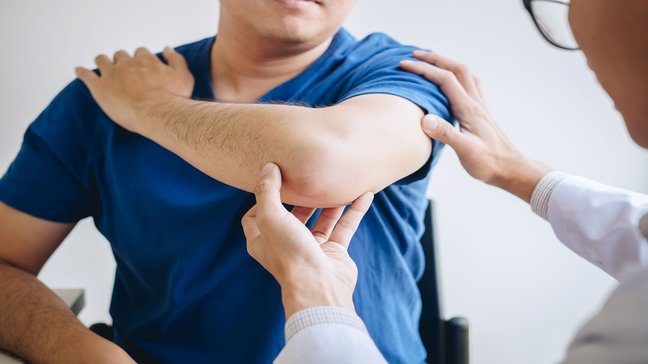
Ulnar nerve sulcus syndrome (elbow tingling)
The ulnar nerve sulcus syndrome, colloquially known as elbow tingling, is a common nerve compression disorder where the ulnar nerve is constricted in the area of the elbow (sulcus nervi ulnaris). This compression leads to abnormal sensations, pain,…
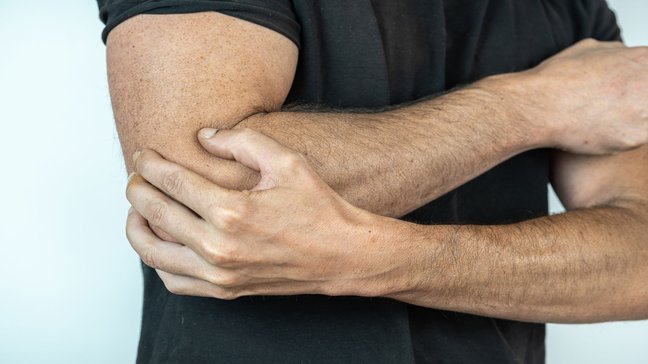
Olecranon spur
An olecranon spur is a bony growth on the olecranon, the upper end of the ulna in the elbow area. These changes usually arise from chronic irritation or mechanical overload. The olecranon spur can cause pain and restricted movement, especially during…

Tennis elbow (lateral epicondylitis)
Tennis elbow, medically referred to as lateral epicondylitis, is a common condition where the tendon attachments of the forearm extensor muscles at the lateral (outer) epicondyle of the upper arm are inflamed or irritated. The condition often occurs…
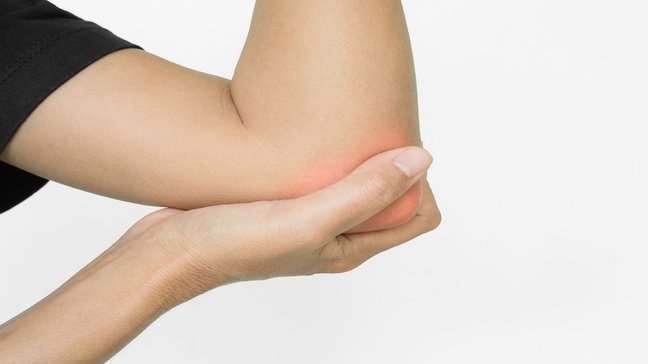
Bursitis (Olecranon bursitis)
Olecranon bursitis, also known as elbow bursitis, is a common condition in which the bursa (bursa olecrani) becomes inflamed. This bursa is located on the back of the elbow and serves as a cushion between the skin and the bony olecranon. The…
Golfer's elbow (medial epicondylitis)
Classification of Golfer's Elbow
The golfer's elbow is classified according to cause and course:
1. **Acute golfer's elbow:**
- Sudden onset of pain, usually after intense exertion.
2. **Chronic golfer's elbow:**
- Prolonged discomfort due to repeated or sustained overuse.
3. **Secondary golfer's elbow:**
- Pain as a result of other conditions, such as misalignments or rheumatic diseases.
Causes of Golfer's Elbow
The main causes of golfer's elbow lie in the overuse of the forearm flexor muscles:
- Sporting activities:
- Repeated movements, such as those in golfing, throwing, or tennis, strain the tendon attachments.
- Occupational strains:
- Activities like painting, hammering, or working on a computer lead to overload due to monotonous movements.
- Leisure activities:
- Gardening, playing music (e.g., playing guitar), or DIY can also promote its development.
- Mechanical misloads:
- Poor technique or ergonomically unfavorable postures increase the strain on the inner side of the elbow.
Symptoms of golfer's elbow
The symptoms vary depending on the severity and course of the disease:
- **Pain on the inside of the elbow:**
- Initially, pain occurs only under stress, later also at rest.
- **Tenderness:**
- The tendon attachments on the inside of the elbow are sensitive to pressure.
- **Radiating pain:**
- Pain can radiate into the forearm and wrist.
- **Loss of strength:**
- Affected individuals often have difficulty gripping or lifting objects.
- **Stiffness:**
- The elbow often feels stiff, especially in the morning.
Diagnosis of Golfer's Elbow
The diagnosis is made through a combination of medical history, clinical examination, and, if necessary, imaging techniques:
- Medical history:
- Recording of symptoms, duration, and possible causes of stress.
- Clinical examination:
- Checking for pain points and mobility. Tests such as the Mittelgriff test can confirm the diagnosis.
- Imaging techniques:
- Ultrasound: Visualization of inflammation or tendon damage.
- MRI: Detailed assessment of soft tissues, especially in chronic cases.
Treatment options for golfer's elbow
Conservative Therapy
Most cases of golfer's elbow can be treated without surgery:
- Physiotherapy:
- Stretching and strengthening exercises to relieve the flexor muscles.
- Manual therapy to resolve tension and adhesions.
- Pain therapy:
- Non-steroidal anti-inflammatory drugs (NSAIDs) like ibuprofen for pain relief and anti-inflammation.
- Orthoses or braces:
- Support for the elbow to reduce strain.
- Shock wave therapy:
- Promotion of blood circulation and healing through mechanical stimuli.
- Injections:
- Local injections with cortisone or hyaluronic acid for severe pain.
Surgical Therapy
If symptoms persist despite conservative measures, surgery may be necessary:
- Tendon release:
- Surgical release of the stressed tendon attachments.
- Minimally invasive procedures:
- Modern techniques to spare the surrounding tissue.
Preventive measures for golfer's elbow
To prevent golfer's elbow, it is recommended to:
- Optimize technique: Use ergonomic aids and seek professional guidance during sports activities.
- Take regular breaks: Avoid unilateral strain by allowing sufficient recovery periods.
- Perform stretching and strengthening exercises: Enhance muscles to reduce stress on tendons.
- Ensure ergonomic workplace design: Adjust work equipment to prevent poor posture.
- Seek early treatment: Immediate therapy at the first signs of discomfort.
Ulnar nerve sulcus syndrome (elbow tingling)
The ulnar nerve sulcus syndrome, colloquially known as elbow tingling, is a common nerve compression disorder where the ulnar nerve is constricted in the area of the elbow (sulcus nervi ulnaris). This compression leads to abnormal sensations, pain,…
Olecranon spur
An olecranon spur is a bony growth on the olecranon, the upper end of the ulna in the elbow area. These changes usually arise from chronic irritation or mechanical overload. The olecranon spur can cause pain and restricted movement, especially during…
Tennis elbow (lateral epicondylitis)
Tennis elbow, medically referred to as lateral epicondylitis, is a common condition where the tendon attachments of the forearm extensor muscles at the lateral (outer) epicondyle of the upper arm are inflamed or irritated. The condition often occurs…
Bursitis (Olecranon bursitis)
Olecranon bursitis, also known as elbow bursitis, is a common condition in which the bursa (bursa olecrani) becomes inflamed. This bursa is located on the back of the elbow and serves as a cushion between the skin and the bony olecranon. The…