

Spinal canal stenosis
Classification of Spinal Canal Stenosis
Spinal canal stenosis is classified according to location, cause, and severity:
- By location:
- Cervical spinal canal stenosis: Narrowing in the cervical spine area.
- Thoracic spinal canal stenosis: Rare form affecting the thoracic spine.
- Lumbar spinal canal stenosis: Most common form in the lumbar spine area.
- By cause:
- Degenerative: Age-related wear of discs, vertebral joints, or ligaments.
- Congenital: Congenital narrowing of the spinal canal.
- Traumatic: Caused by spinal injuries.
- Inflammatory: Due to arthritis or other inflammatory diseases.
- By severity:
- Mild: No or minor symptoms that only occur under stress.
- Moderate: Significant discomfort during daily activities.
- Severe: Persistent pain and neurological deficits.
Causes of Spinal Canal Stenosis
The main causes of spinal canal stenosis can be divided into degenerative, traumatic, and inflammatory factors:
- Degenerative causes:
- Disc wear with bulging (disc protrusion) or herniation.
- Thickening of the ligaments (ligamentum flavum) and bony growths (osteophytes).
- Arthrosis of the vertebral joints.
- Congenital causes:
- Congenitally narrow spinal canal due to anatomical peculiarities.
- Traumatic causes:
- Vertebral fractures or dislocations due to accidents.
- Inflammatory causes:
- Rheumatoid arthritis or ankylosing spondylitis.
- Tumors or space-occupying lesions:
- Rare causes due to tumor growth or cysts in the spinal canal.
Symptoms of spinal canal stenosis
The symptoms vary depending on the location and severity of the narrowing, but often include:
- Pain: Local or radiating pain, e.g., in the legs (lumbar stenosis) or arms (cervical stenosis).
- Numbness and tingling: Often in the extremities, depending on the affected nerve root.
- Muscle weakness: Reduced strength in legs or arms, making everyday activities difficult.
- Spinal claudication: Pain and weakness in the legs when walking for extended periods, relieved by bending the torso forward.
- Movement restrictions: Difficulty walking or standing for long periods.
- Neurological deficits: In severe cases, e.g., bladder or bowel dysfunction.
Diagnosis of spinal canal stenosis
The diagnosis is made through a combination of medical history, clinical examination, and imaging techniques:
- Medical history:
- Collection of medical history, symptoms, and possible triggers.
- Physical examination:
- Checking reflexes, sensitivity, and muscle strength to identify neurological deficits.
- Functional tests, e.g., the walking distance test.
- Imaging:
- MRI: Gold standard for depicting constrictions, disc changes, and soft tissues.
- CT: Assessment of bony changes and narrowings.
- X-ray: Depiction of spinal misalignments or osteoarthritis.
- Electrophysiological tests: To measure nerve conduction velocity in case of suspected nerve damage.
Treatment options for spinal canal stenosis
Conservative Therapy
In many cases, symptoms can be alleviated without surgery:
- Medication Therapy:
- NSAIDs: For pain relief and anti-inflammation.
- Muscle relaxants to relax tense muscles.
- X-ray guided corticosteroid injections into the epidural space.
- Physiotherapy:
- Exercises to stabilize the spine and strengthen the back muscles.
- Mobilization techniques to improve mobility.
- Pain Therapy:
- Application of heat or cold therapy.
- Ergonomic Adjustment: Training for back-friendly movements and posture.
Surgical Therapy
Surgery is considered when conservative measures do not bring sufficient improvement:
- Decompression: Widening of the spinal canal by removing bony or soft tissue.
- Laminectomy: Removal of part of the vertebral arch to relieve pressure.
- Stabilization Operations: Fusion of unstable vertebrae with screws or plates.
- Minimally Invasive Procedures: Gentle techniques with shorter recovery time.
Preventive measures for spinal canal stenosis
The following measures are suitable for prevention and support of treatment:
- Back training: Regular exercises to strengthen the back muscles.
- Ergonomic posture: Avoidance of poor posture at work and during leisure time.
- Weight control: Reducing the load on the spine through a healthy body weight.
- Regular exercise: Promoting flexibility and stability of the spine.
- Early detection: Medical advice should be sought at the first signs of pain or numbness.

Dizziness
Dizziness is a common symptom characterized by a disturbed sense of balance. Affected individuals often describe dizziness as a feeling of spinning, swaying, or unsteadiness in space. While dizziness is often due to neurological or internal medical…
Sacroiliac joint pain
The sacroiliac joint pain, also known as SIJ pain, affects the sacroiliac joint (SIJ), which forms the connection between the sacrum and the ilium. This joint plays a central role in the transmission of force between the upper body and the legs.…
Rib blockade
A rib blockage refers to a functional disorder of mobility in the area of the vertebra-rib joints or the rib cartilage, which can lead to pain and restricted breathing. It often occurs suddenly and is usually associated with a sharp pain in the chest…
Herniated disc
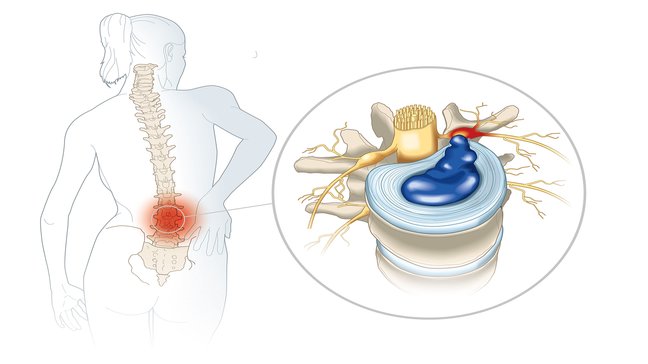
A herniated disc (disc prolapse) occurs when the gelatinous core (nucleus pulposus) of a disc protrudes through the fibrous ring (annulus fibrosus). This condition can lead to pain, numbness, and restricted movement, especially if the protruding disc…
Spinal canal stenosis
Classification of Spinal Canal Stenosis
Spinal canal stenosis is classified according to location, cause, and severity:
- By location:
- Cervical spinal canal stenosis: Narrowing in the cervical spine area.
- Thoracic spinal canal stenosis: Rare form affecting the thoracic spine.
- Lumbar spinal canal stenosis: Most common form in the lumbar spine area.
- By cause:
- Degenerative: Age-related wear of discs, vertebral joints, or ligaments.
- Congenital: Congenital narrowing of the spinal canal.
- Traumatic: Caused by spinal injuries.
- Inflammatory: Due to arthritis or other inflammatory diseases.
- By severity:
- Mild: No or minor symptoms that only occur under stress.
- Moderate: Significant discomfort during daily activities.
- Severe: Persistent pain and neurological deficits.
Causes of Spinal Canal Stenosis
The main causes of spinal canal stenosis can be divided into degenerative, traumatic, and inflammatory factors:
- Degenerative causes:
- Disc wear with bulging (disc protrusion) or herniation.
- Thickening of the ligaments (ligamentum flavum) and bony growths (osteophytes).
- Arthrosis of the vertebral joints.
- Congenital causes:
- Congenitally narrow spinal canal due to anatomical peculiarities.
- Traumatic causes:
- Vertebral fractures or dislocations due to accidents.
- Inflammatory causes:
- Rheumatoid arthritis or ankylosing spondylitis.
- Tumors or space-occupying lesions:
- Rare causes due to tumor growth or cysts in the spinal canal.
Symptoms of spinal canal stenosis
The symptoms vary depending on the location and severity of the narrowing, but often include:
- Pain: Local or radiating pain, e.g., in the legs (lumbar stenosis) or arms (cervical stenosis).
- Numbness and tingling: Often in the extremities, depending on the affected nerve root.
- Muscle weakness: Reduced strength in legs or arms, making everyday activities difficult.
- Spinal claudication: Pain and weakness in the legs when walking for extended periods, relieved by bending the torso forward.
- Movement restrictions: Difficulty walking or standing for long periods.
- Neurological deficits: In severe cases, e.g., bladder or bowel dysfunction.
Diagnosis of spinal canal stenosis
The diagnosis is made through a combination of medical history, clinical examination, and imaging techniques:
- Medical history:
- Collection of medical history, symptoms, and possible triggers.
- Physical examination:
- Checking reflexes, sensitivity, and muscle strength to identify neurological deficits.
- Functional tests, e.g., the walking distance test.
- Imaging:
- MRI: Gold standard for depicting constrictions, disc changes, and soft tissues.
- CT: Assessment of bony changes and narrowings.
- X-ray: Depiction of spinal misalignments or osteoarthritis.
- Electrophysiological tests: To measure nerve conduction velocity in case of suspected nerve damage.
Treatment options for spinal canal stenosis
Conservative Therapy
In many cases, symptoms can be alleviated without surgery:
- Medication Therapy:
- NSAIDs: For pain relief and anti-inflammation.
- Muscle relaxants to relax tense muscles.
- X-ray guided corticosteroid injections into the epidural space.
- Physiotherapy:
- Exercises to stabilize the spine and strengthen the back muscles.
- Mobilization techniques to improve mobility.
- Pain Therapy:
- Application of heat or cold therapy.
- Ergonomic Adjustment: Training for back-friendly movements and posture.
Surgical Therapy
Surgery is considered when conservative measures do not bring sufficient improvement:
- Decompression: Widening of the spinal canal by removing bony or soft tissue.
- Laminectomy: Removal of part of the vertebral arch to relieve pressure.
- Stabilization Operations: Fusion of unstable vertebrae with screws or plates.
- Minimally Invasive Procedures: Gentle techniques with shorter recovery time.
Preventive measures for spinal canal stenosis
The following measures are suitable for prevention and support of treatment:
- Back training: Regular exercises to strengthen the back muscles.
- Ergonomic posture: Avoidance of poor posture at work and during leisure time.
- Weight control: Reducing the load on the spine through a healthy body weight.
- Regular exercise: Promoting flexibility and stability of the spine.
- Early detection: Medical advice should be sought at the first signs of pain or numbness.
Dizziness
Dizziness is a common symptom characterized by a disturbed sense of balance. Affected individuals often describe dizziness as a feeling of spinning, swaying, or unsteadiness in space. While dizziness is often due to neurological or internal medical…
Sacroiliac joint pain
The sacroiliac joint pain, also known as SIJ pain, affects the sacroiliac joint (SIJ), which forms the connection between the sacrum and the ilium. This joint plays a central role in the transmission of force between the upper body and the legs.…
Rib blockade
A rib blockage refers to a functional disorder of mobility in the area of the vertebra-rib joints or the rib cartilage, which can lead to pain and restricted breathing. It often occurs suddenly and is usually associated with a sharp pain in the chest…
Herniated disc
A herniated disc (disc prolapse) occurs when the gelatinous core (nucleus pulposus) of a disc protrudes through the fibrous ring (annulus fibrosus). This condition can lead to pain, numbness, and restricted movement, especially if the protruding disc…