

Knee osteoarthritis (gonarthrosis)
What is knee osteoarthritis?
Knee osteoarthritis, medically referred to as gonarthrosis, is a degenerative disease of the knee joint. In this condition, the articular cartilage changes and, over time, often other structures such as the underlying bone, the synovial membrane, and the joint capsule.
The symptoms and the course can vary greatly from person to person. It is not the X-ray alone that determines treatment, but above all the pain, mobility, and limitations in everyday life. Knee osteoarthritis is one of the conditions that can be treated as part of an individually planned osteoarthritis therapy.
Which areas of the knee joint can be affected?
The knee joint consists of several joint compartments. Depending on the location of the changes, different forms of gonarthrosis are distinguished:
- medial gonarthrosis: Osteoarthritis on the inner side of the knee joint;
- lateral gonarthrosis: Osteoarthritis on the outer side of the knee joint;
- patellofemoral osteoarthritis: Changes between the kneecap and thigh bone;
- gonarthrosis involving multiple joint compartments: Osteoarthritis in two or all three areas of the knee joint.
Which region is affected often influences which movements cause pain and which treatment options are appropriate.
Causes and Risk Factors
Knee osteoarthritis can develop without a clearly identifiable single cause. However, several factors often act together:
- advancing age;
- previous meniscal, cruciate ligament, or cartilage injuries;
- bowleg or knock-knee malalignments;
- repeated incorrect loading or overloading;
- overweight;
- inflammatory joint diseases;
- instability of the knee joint;
- previous surgeries or injuries;
- familial predisposition.
A malalignment can, for example, lead to a particular section of the knee joint being subjected to greater load. Previous injuries can change the stability and load distribution in the joint over the long term.
Symptoms of knee osteoarthritis.
At the beginning, the symptoms often occur only with greater strain. As the condition progresses, they can also occur with everyday movements or at rest.
Typical symptoms are:
- Pain when walking or standing for prolonged periods;
- Discomfort when climbing stairs;
- Start-up pain after prolonged sitting;
- Morning stiffness;
- Pain when bending or straightening;
- Recurrent swelling or joint effusions;
- Grinding or rubbing in the knee;
- Reduced mobility;
- Instability or giving way of the knee joint;
- Rest or night pain in advanced stages.
Not every knee pain is caused by osteoarthritis. The menisci, ligaments, tendons, bursae, or the kneecap can also be responsible for symptoms.
How is gonarthrosis diagnosed?
Medical consultation
First, the type, duration, and location of the pain are discussed. Previous injuries, surgeries, occupational or athletic stresses, and limitations in everyday life are also important.
Physical examination
The examination assesses, among other things, the following points:
- Range of motion of the knee joint;
- Pain localization;
- Swelling and joint effusions;
- Ligament stability;
- Leg axis;
- Muscle strength;
- Gait pattern.
Imaging studies
X-rays can show typical changes such as narrowing of the joint space, bone spurs, or changes of the joint surfaces.
Ultrasound can be used, for example, for joint effusions or changes in superficial soft tissues. An MRI examination is not required in every case of knee osteoarthritis, but it can be useful for additional questions concerning the menisci, ligaments, cartilage, or bone.
Knee osteoarthritis treatment in Vienna
The treatment is tailored to the symptoms, the affected joint segment, the stage of the disease, and personal goals. In many cases, several measures are combined.
Initially, conservative treatments are usually at the forefront. Surgery is considered in particular when there is severe pain and significant limitations and non-operative measures do not provide sufficient improvement.
Movement and physiotherapy
Targeted exercise is among the most important components of the treatment of knee osteoarthritis. The knee should not be completely rested, but rather loaded appropriately and in a controlled manner.
Physical therapy can pursue, among other things, the following goals:
- Strengthening of the thigh and hip muscles;
- Improvement of mobility;
- Stabilization of the knee joint;
- Training in appropriate movement patterns;
- Improvement of balance and coordination;
- gradual increase in load tolerance.
An individually tailored exercise program is particularly important, as not every exercise is equally suitable for every form of gonarthrosis. Therapeutic exercises are recommended in guidelines as a fundamental component of osteoarthritis treatment.
Relief and adjustment of the load
Depending on the findings, certain activities or movement patterns can be temporarily adjusted. Complete and permanent immobilization is generally not the goal.
Possible supportive measures are:
- Adjustment of sporting or occupational loads;
- joint-sparing forms of movement;
- knee orthoses or bandages;
- shoe insoles when appropriately indicated;
- temporary use of a walking aid;
- weight reduction in cases of overweight.
Weight reduction in cases of overweight can help reduce the load on the knee joint and improve pain and function.
Pharmacological treatment
Depending on the severity of the symptoms, pain-relieving or anti-inflammatory medications may be used.
Which medications are suitable depends, among other things, on comorbidities, other medications, and individual risks. Dosage and duration of use should be coordinated with a doctor.
Infiltration at the knee
For selected conditions, an infiltration at the knee can be considered. In this procedure, a selected medication is specifically introduced into the knee joint or to a pain-causing structure.
Possible applications include, for example, inflammation-activated osteoarthritis, painful irritative conditions, or a joint effusion. Which active substance is used and whether an image-guided procedure is appropriate is decided individually.
Anti-inflammatory corticosteroid injections can enable time-limited relief in selected patients. However, they do not eliminate the underlying osteoarthritis.
Hyaluronic acid at the knee
In hyaluronic acid therapy for the knee, hyaluronic acid is injected directly into the knee joint. Hyaluronic acid is a natural component of the joint fluid.
Whether treatment is an option is assessed individually. In particular, the stage of osteoarthritis, previous treatments, symptoms, and the personal treatment goal are taken into account.
Scientific recommendations for routine use vary. Therefore, neither a specific effect nor a fixed duration of effect should be guaranteed.
PRP therapy with autologous plasma
In PRP therapy, the patient’s own blood is drawn and processed. The platelet-rich plasma obtained is then injected into the intended treatment area.
The treatment can be considered for selected joint complaints as part of an individualized treatment plan. Whether it is suitable for knee osteoarthritis and how many sessions may be appropriate will be discussed after the examination.
Cartilage therapy at the knee
The term knee cartilage therapy encompasses different treatment approaches. Which therapy is appropriate depends on whether there is a localized cartilage injury or already more widespread knee osteoarthritis.
Possible components are:
- tailored training and physiotherapy;
- modification of unfavorable loading;
- treatment of malalignment or instability;
- injection therapies for selected symptoms;
- operative cartilage-preserving procedures when appropriately indicated;
- joint replacement for advanced osteoarthritis.
Extensively damaged articular cartilage cannot simply be fully restored by an injection. The aim of treatment is therefore primarily to reduce symptoms, support joint function, and maintain appropriate load-bearing capacity.
When can surgery make sense?
Surgical treatment may be considered if there is severe pain, significant movement limitations, or substantial problems in everyday life, and conservative measures are not sufficiently effective.
Depending on the findings, different procedures may be considered:
Correction of leg malalignment
In cases of pronounced bow-leg or knock-knee malalignment, a realignment surgery may be considered in selected cases. The goal is a more favorable distribution of load in the knee joint.
Partial joint replacement
If only a limited section of the knee joint is affected, a partial joint replacement may be an option under certain conditions.
Knee prosthesis
With advanced osteoarthritis in multiple joint compartments, a total knee joint replacement may be considered. The decisive factors are not only the X-ray images but above all pain, function, and limitations in everyday life.
Arthroscopy is not automatically performed in typical knee osteoarthritis. It can only be useful in certain additional mechanical problems.
How is the appropriate treatment selected?
Among other things, the following factors are considered for the treatment decision:
- Intensity and frequency of the pain;
- affected section of the knee joint;
- mobility and stability;
- leg axis;
- joint effusions or inflammatory irritation;
- limitations in everyday life;
- age and general health status;
- previous treatments;
- personal expectations and goals.
Therefore, knee osteoarthritis does not have to be treated in the same way in all patients.

Therapy for arthrosis
Arthrosis therapy includes a range of treatment approaches to alleviate symptoms and slow the progression of osteoarthritis. It is a degenerative joint disease characterized by the breakdown of cartilage tissue in the joints. The treatment aims to…
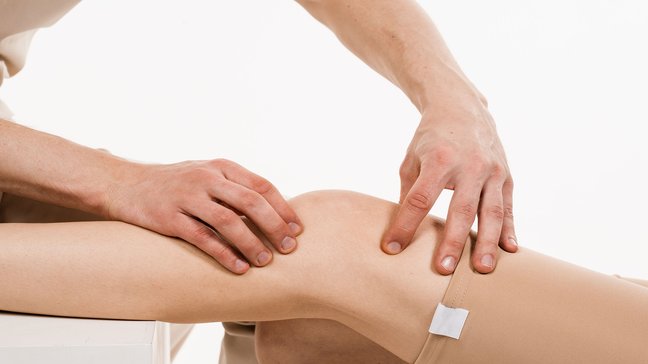
Knieschmerzen
Knieschmerzen sind ein häufiges Symptom, das Menschen jeden Alters betreffen kann. Sie können durch akute Verletzungen, chronische Erkrankungen oder Überbelastung entstehen. Das Kniegelenk ist eines der größten und komplexesten Gelenke im…
Knee osteoarthritis (gonarthrosis)
What is knee osteoarthritis?
Knee osteoarthritis, medically referred to as gonarthrosis, is a degenerative disease of the knee joint. In this condition, the articular cartilage changes and, over time, often other structures such as the underlying bone, the synovial membrane, and the joint capsule.
The symptoms and the course can vary greatly from person to person. It is not the X-ray alone that determines treatment, but above all the pain, mobility, and limitations in everyday life. Knee osteoarthritis is one of the conditions that can be treated as part of an individually planned osteoarthritis therapy.
Which areas of the knee joint can be affected?
The knee joint consists of several joint compartments. Depending on the location of the changes, different forms of gonarthrosis are distinguished:
- medial gonarthrosis: Osteoarthritis on the inner side of the knee joint;
- lateral gonarthrosis: Osteoarthritis on the outer side of the knee joint;
- patellofemoral osteoarthritis: Changes between the kneecap and thigh bone;
- gonarthrosis involving multiple joint compartments: Osteoarthritis in two or all three areas of the knee joint.
Which region is affected often influences which movements cause pain and which treatment options are appropriate.
Causes and Risk Factors
Knee osteoarthritis can develop without a clearly identifiable single cause. However, several factors often act together:
- advancing age;
- previous meniscal, cruciate ligament, or cartilage injuries;
- bowleg or knock-knee malalignments;
- repeated incorrect loading or overloading;
- overweight;
- inflammatory joint diseases;
- instability of the knee joint;
- previous surgeries or injuries;
- familial predisposition.
A malalignment can, for example, lead to a particular section of the knee joint being subjected to greater load. Previous injuries can change the stability and load distribution in the joint over the long term.
Symptoms of knee osteoarthritis.
At the beginning, the symptoms often occur only with greater strain. As the condition progresses, they can also occur with everyday movements or at rest.
Typical symptoms are:
- Pain when walking or standing for prolonged periods;
- Discomfort when climbing stairs;
- Start-up pain after prolonged sitting;
- Morning stiffness;
- Pain when bending or straightening;
- Recurrent swelling or joint effusions;
- Grinding or rubbing in the knee;
- Reduced mobility;
- Instability or giving way of the knee joint;
- Rest or night pain in advanced stages.
Not every knee pain is caused by osteoarthritis. The menisci, ligaments, tendons, bursae, or the kneecap can also be responsible for symptoms.
How is gonarthrosis diagnosed?
Medical consultation
First, the type, duration, and location of the pain are discussed. Previous injuries, surgeries, occupational or athletic stresses, and limitations in everyday life are also important.
Physical examination
The examination assesses, among other things, the following points:
- Range of motion of the knee joint;
- Pain localization;
- Swelling and joint effusions;
- Ligament stability;
- Leg axis;
- Muscle strength;
- Gait pattern.
Imaging studies
X-rays can show typical changes such as narrowing of the joint space, bone spurs, or changes of the joint surfaces.
Ultrasound can be used, for example, for joint effusions or changes in superficial soft tissues. An MRI examination is not required in every case of knee osteoarthritis, but it can be useful for additional questions concerning the menisci, ligaments, cartilage, or bone.
Knee osteoarthritis treatment in Vienna
The treatment is tailored to the symptoms, the affected joint segment, the stage of the disease, and personal goals. In many cases, several measures are combined.
Initially, conservative treatments are usually at the forefront. Surgery is considered in particular when there is severe pain and significant limitations and non-operative measures do not provide sufficient improvement.
Movement and physiotherapy
Targeted exercise is among the most important components of the treatment of knee osteoarthritis. The knee should not be completely rested, but rather loaded appropriately and in a controlled manner.
Physical therapy can pursue, among other things, the following goals:
- Strengthening of the thigh and hip muscles;
- Improvement of mobility;
- Stabilization of the knee joint;
- Training in appropriate movement patterns;
- Improvement of balance and coordination;
- gradual increase in load tolerance.
An individually tailored exercise program is particularly important, as not every exercise is equally suitable for every form of gonarthrosis. Therapeutic exercises are recommended in guidelines as a fundamental component of osteoarthritis treatment.
Relief and adjustment of the load
Depending on the findings, certain activities or movement patterns can be temporarily adjusted. Complete and permanent immobilization is generally not the goal.
Possible supportive measures are:
- Adjustment of sporting or occupational loads;
- joint-sparing forms of movement;
- knee orthoses or bandages;
- shoe insoles when appropriately indicated;
- temporary use of a walking aid;
- weight reduction in cases of overweight.
Weight reduction in cases of overweight can help reduce the load on the knee joint and improve pain and function.
Pharmacological treatment
Depending on the severity of the symptoms, pain-relieving or anti-inflammatory medications may be used.
Which medications are suitable depends, among other things, on comorbidities, other medications, and individual risks. Dosage and duration of use should be coordinated with a doctor.
Infiltration at the knee
For selected conditions, an infiltration at the knee can be considered. In this procedure, a selected medication is specifically introduced into the knee joint or to a pain-causing structure.
Possible applications include, for example, inflammation-activated osteoarthritis, painful irritative conditions, or a joint effusion. Which active substance is used and whether an image-guided procedure is appropriate is decided individually.
Anti-inflammatory corticosteroid injections can enable time-limited relief in selected patients. However, they do not eliminate the underlying osteoarthritis.
Hyaluronic acid at the knee
In hyaluronic acid therapy for the knee, hyaluronic acid is injected directly into the knee joint. Hyaluronic acid is a natural component of the joint fluid.
Whether treatment is an option is assessed individually. In particular, the stage of osteoarthritis, previous treatments, symptoms, and the personal treatment goal are taken into account.
Scientific recommendations for routine use vary. Therefore, neither a specific effect nor a fixed duration of effect should be guaranteed.
PRP therapy with autologous plasma
In PRP therapy, the patient’s own blood is drawn and processed. The platelet-rich plasma obtained is then injected into the intended treatment area.
The treatment can be considered for selected joint complaints as part of an individualized treatment plan. Whether it is suitable for knee osteoarthritis and how many sessions may be appropriate will be discussed after the examination.
Cartilage therapy at the knee
The term knee cartilage therapy encompasses different treatment approaches. Which therapy is appropriate depends on whether there is a localized cartilage injury or already more widespread knee osteoarthritis.
Possible components are:
- tailored training and physiotherapy;
- modification of unfavorable loading;
- treatment of malalignment or instability;
- injection therapies for selected symptoms;
- operative cartilage-preserving procedures when appropriately indicated;
- joint replacement for advanced osteoarthritis.
Extensively damaged articular cartilage cannot simply be fully restored by an injection. The aim of treatment is therefore primarily to reduce symptoms, support joint function, and maintain appropriate load-bearing capacity.
When can surgery make sense?
Surgical treatment may be considered if there is severe pain, significant movement limitations, or substantial problems in everyday life, and conservative measures are not sufficiently effective.
Depending on the findings, different procedures may be considered:
Correction of leg malalignment
In cases of pronounced bow-leg or knock-knee malalignment, a realignment surgery may be considered in selected cases. The goal is a more favorable distribution of load in the knee joint.
Partial joint replacement
If only a limited section of the knee joint is affected, a partial joint replacement may be an option under certain conditions.
Knee prosthesis
With advanced osteoarthritis in multiple joint compartments, a total knee joint replacement may be considered. The decisive factors are not only the X-ray images but above all pain, function, and limitations in everyday life.
Arthroscopy is not automatically performed in typical knee osteoarthritis. It can only be useful in certain additional mechanical problems.
How is the appropriate treatment selected?
Among other things, the following factors are considered for the treatment decision:
- Intensity and frequency of the pain;
- affected section of the knee joint;
- mobility and stability;
- leg axis;
- joint effusions or inflammatory irritation;
- limitations in everyday life;
- age and general health status;
- previous treatments;
- personal expectations and goals.
Therefore, knee osteoarthritis does not have to be treated in the same way in all patients.
Therapy for arthrosis
Arthrosis therapy includes a range of treatment approaches to alleviate symptoms and slow the progression of osteoarthritis. It is a degenerative joint disease characterized by the breakdown of cartilage tissue in the joints. The treatment aims to…
Knieschmerzen
Knieschmerzen sind ein häufiges Symptom, das Menschen jeden Alters betreffen kann. Sie können durch akute Verletzungen, chronische Erkrankungen oder Überbelastung entstehen. Das Kniegelenk ist eines der größten und komplexesten Gelenke im…