

Transient synovitis
Classification of hip cold
Transient synovitis of the hip is classified into the following categories based on its course and severity:
- Acute coxitis fugax:
- Sudden onset of pain and movement restrictions in the hip joint.
- Subacute coxitis fugax:
- Moderately pronounced symptoms that occur more slowly and are less severe.
Causes of hip cold
The exact cause of transient synovitis of the hip is not yet fully understood. However, there are several factors that are considered potential triggers:
- Upper respiratory tract infections:
- Transient synovitis of the hip often occurs after viral infections such as colds or flu.
- Immune system reactions:
- It is suspected that an overreaction of the immune system to an infection triggers the inflammation of the synovial membrane.
- Overexertion:
- In active children, physical stress on the hip joint can exacerbate the symptoms.
- Genetic predisposition:
- A familial occurrence suggests a possible genetic component.
Symptoms of hip cold
The symptoms of transient synovitis of the hip usually appear suddenly and can alarm parents and those affected:
- Pain in the groin or thigh:
- The pain often radiates to the knee.
- Limping or hobbling:
- Children avoid putting weight on the affected leg and develop a protective limp.
- Restricted movement:
- Particularly during internal rotation of the hip joint, mobility is significantly restricted.
- General discomfort:
- Children may feel tired and fatigued, but usually do not have a fever.
Diagnosis of hip cold
The diagnosis of transient synovitis of the hip is made through a combination of medical history, physical examination, and imaging techniques:
- Medical history:
- The doctor inquires about the course of symptoms, possible previous infections, and physical activities.
- Clinical examination:
- Checking the mobility of the hip joint, especially internal rotation, and the gait pattern.
- Imaging techniques:
- Ultrasound: Visualization of joint effusions, which are typical for transient synovitis of the hip.
- X-ray: To rule out other causes such as hip dysplasia or Legg-Calvé-Perthes disease.
- Laboratory diagnostics:
- Blood tests to determine inflammation markers, which are usually unremarkable in transient synovitis of the hip.
Treatment options for hip cold
Conservative Therapy
Hip synovitis usually heals on its own. The following measures can support recovery:
- Joint rest:
- Avoid physical strain until the symptoms have completely subsided.
- Pain medication:
- Use of nonsteroidal anti-inflammatory drugs (NSAIDs) like ibuprofen to relieve pain and inflammation.
- Cooling:
- Local application of cold packs to reduce swelling and pain.
- Physiotherapy:
- In rare cases, with prolonged symptoms, mobilization exercises can be helpful.
Surgical Therapy
Surgical treatment is not necessary for hip synovitis, as the condition is self-limiting.
Preventive measures for hip synovitis
Since the exact cause of transient synovitis of the hip is not known, there are no specific measures for prevention. However, the following general recommendations can reduce the risk of hip problems in children:
- Early treatment of infections: Seek medical help promptly for colds or flu.
- Rest after infections: Avoid physical overexertion after an infection.
- Regular exercise: Promote joint health through age-appropriate physical activities.
- Attention to symptoms: Consult a doctor early at the first signs of hip pain.
Hip dysplasia
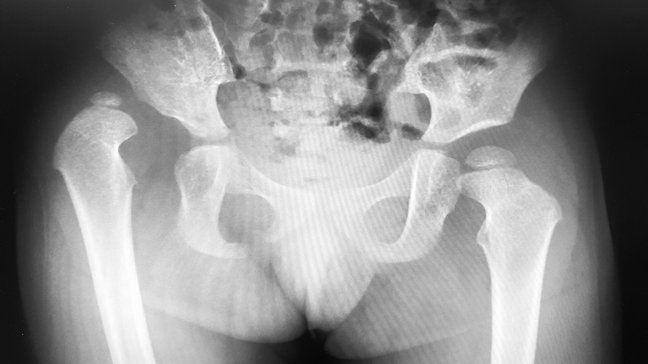
Hip dysplasia, also referred to as hip joint dysplasia, is a congenital or acquired malformation of the hip joint. The hip socket (acetabulum) is insufficiently developed, which leads to the femoral head (caput femoris) not sitting optimally in the…
Patellar luxation
Eine Patellaluxation bezeichnet das Herausspringen der Kniescheibe (Patella) aus ihrer natürlichen Position im Gleitlager des Oberschenkelknochens (Femur). Diese Verletzung tritt häufig bei jungen, aktiven Menschen auf und ist meist mit starken…
Calcaneal apophysitis
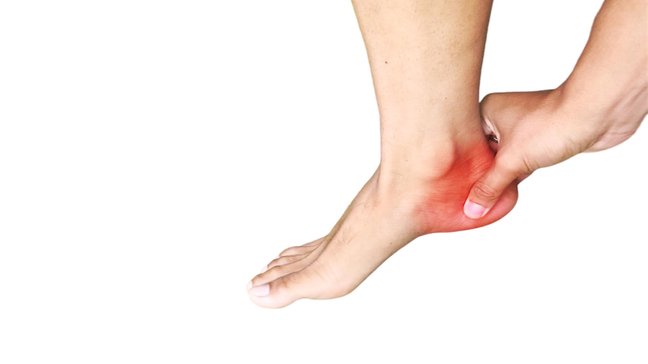
Apophysitis calcanei, also known as Sever’s disease, is an inflammatory condition of the growth plate (apophysis) of the heel bone. It occurs predominantly in children and adolescents aged 8 to 16 years, especially during growth phases. Those…
Scoliosis
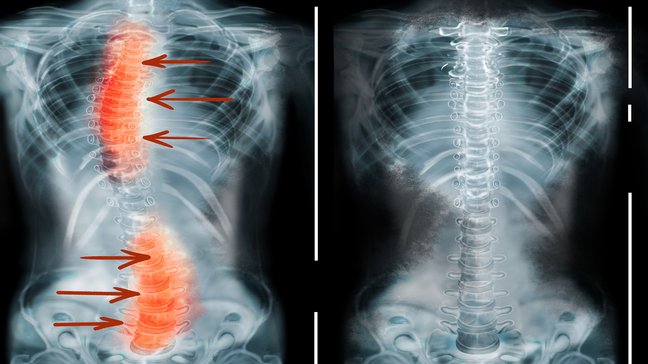
Scoliosis refers to a lateral curvature of the spine that is accompanied by a rotation of the vertebral bodies. This misalignment can occur in any section of the spine, but most commonly in the thoracic and lumbar spine. Scoliosis occurs in both…
Transient synovitis
Classification of hip cold
Transient synovitis of the hip is classified into the following categories based on its course and severity:
- Acute coxitis fugax:
- Sudden onset of pain and movement restrictions in the hip joint.
- Subacute coxitis fugax:
- Moderately pronounced symptoms that occur more slowly and are less severe.
Causes of hip cold
The exact cause of transient synovitis of the hip is not yet fully understood. However, there are several factors that are considered potential triggers:
- Upper respiratory tract infections:
- Transient synovitis of the hip often occurs after viral infections such as colds or flu.
- Immune system reactions:
- It is suspected that an overreaction of the immune system to an infection triggers the inflammation of the synovial membrane.
- Overexertion:
- In active children, physical stress on the hip joint can exacerbate the symptoms.
- Genetic predisposition:
- A familial occurrence suggests a possible genetic component.
Symptoms of hip cold
The symptoms of transient synovitis of the hip usually appear suddenly and can alarm parents and those affected:
- Pain in the groin or thigh:
- The pain often radiates to the knee.
- Limping or hobbling:
- Children avoid putting weight on the affected leg and develop a protective limp.
- Restricted movement:
- Particularly during internal rotation of the hip joint, mobility is significantly restricted.
- General discomfort:
- Children may feel tired and fatigued, but usually do not have a fever.
Diagnosis of hip cold
The diagnosis of transient synovitis of the hip is made through a combination of medical history, physical examination, and imaging techniques:
- Medical history:
- The doctor inquires about the course of symptoms, possible previous infections, and physical activities.
- Clinical examination:
- Checking the mobility of the hip joint, especially internal rotation, and the gait pattern.
- Imaging techniques:
- Ultrasound: Visualization of joint effusions, which are typical for transient synovitis of the hip.
- X-ray: To rule out other causes such as hip dysplasia or Legg-Calvé-Perthes disease.
- Laboratory diagnostics:
- Blood tests to determine inflammation markers, which are usually unremarkable in transient synovitis of the hip.
Treatment options for hip cold
Conservative Therapy
Hip synovitis usually heals on its own. The following measures can support recovery:
- Joint rest:
- Avoid physical strain until the symptoms have completely subsided.
- Pain medication:
- Use of nonsteroidal anti-inflammatory drugs (NSAIDs) like ibuprofen to relieve pain and inflammation.
- Cooling:
- Local application of cold packs to reduce swelling and pain.
- Physiotherapy:
- In rare cases, with prolonged symptoms, mobilization exercises can be helpful.
Surgical Therapy
Surgical treatment is not necessary for hip synovitis, as the condition is self-limiting.
Preventive measures for hip synovitis
Since the exact cause of transient synovitis of the hip is not known, there are no specific measures for prevention. However, the following general recommendations can reduce the risk of hip problems in children:
- Early treatment of infections: Seek medical help promptly for colds or flu.
- Rest after infections: Avoid physical overexertion after an infection.
- Regular exercise: Promote joint health through age-appropriate physical activities.
- Attention to symptoms: Consult a doctor early at the first signs of hip pain.
Hip dysplasia
Hip dysplasia, also referred to as hip joint dysplasia, is a congenital or acquired malformation of the hip joint. The hip socket (acetabulum) is insufficiently developed, which leads to the femoral head (caput femoris) not sitting optimally in the…
Patellar luxation
Eine Patellaluxation bezeichnet das Herausspringen der Kniescheibe (Patella) aus ihrer natürlichen Position im Gleitlager des Oberschenkelknochens (Femur). Diese Verletzung tritt häufig bei jungen, aktiven Menschen auf und ist meist mit starken…
Calcaneal apophysitis
Apophysitis calcanei, also known as Sever’s disease, is an inflammatory condition of the growth plate (apophysis) of the heel bone. It occurs predominantly in children and adolescents aged 8 to 16 years, especially during growth phases. Those…
Scoliosis
Scoliosis refers to a lateral curvature of the spine that is accompanied by a rotation of the vertebral bodies. This misalignment can occur in any section of the spine, but most commonly in the thoracic and lumbar spine. Scoliosis occurs in both…