

Vertebral fracture
Classification of Vertebral Fractures
Vertebral fractures are classified according to their cause, location, and stability:
- By cause:
- Traumatic vertebral fracture: Due to direct injuries, such as falls from great heights or traffic accidents.
- Pathological vertebral fracture: Due to bone weakness caused by osteoporosis, tumors, or infections.
- By location:
- Cervical fractures: In the area of the cervical spine.
- Thoracic fractures: In the area of the thoracic spine.
- Lumbar fractures: In the area of the lumbar spine.
- By stability:
- Stable fractures: No risk to the spinal cord or the stability of the spine.
- Unstable fractures: Risk of spinal cord injuries or spinal instability.
Causes of Vertebral Fracture
The causes of a vertebral fracture can be divided into traumatic and pathological factors:
- **Traumatic causes:**
- High-energy accidents such as falls, sports injuries, or traffic accidents.
- Low-energy trauma in patients with osteoporosis.
- **Pathological causes:**
- Osteoporosis, which reduces bone density and stability.
- Tumors that weaken the vertebral body, e.g., metastases.
- Infections such as spondylodiscitis.
- **Risk factors:**
- Age, lack of exercise, and a calcium-poor diet increase the risk of pathological fractures.
Symptoms of vertebral fracture
The symptoms depend on the severity of the fracture and possible involvement of the spinal cord:
- **Pain:**
- Localized, often severe pain at the fracture site, which increases with movement.
- Radiating pain in arms, legs, or the chest area.
- **Movement restrictions:**
- Difficulties in turning or bending the spine.
- **Deformities:** Visible misalignments, e.g., a hunchback (kyphosis).
- **Neurological deficits:**
- Numbness, tingling, or paralysis in case of spinal cord compression.
- **General symptoms:**
- In pathological fractures, often accompanied by fatigue or weight loss.
Diagnosis of vertebral fracture
The diagnosis is made through a combination of medical history, clinical examination, and imaging techniques:
- Medical History:
- Assessment of the accident mechanism or underlying disease.
- Clinical Examination:
- Palpation of the spine for tenderness and checking for misalignments.
- Neurological tests to assess spinal cord or nerve root damage.
- Imaging:
- X-ray: For initial diagnosis of fractures and assessment of stability.
- CT: Detailed representation of bony structures and fracture lines.
- MRI: Assessment of soft tissues, spinal cord, and tumor infiltration.
- Bone Density Measurement:
- For diagnosing osteoporosis as an underlying cause.
Treatment options for vertebral fracture
Conservative Therapy
Stable fractures or minor injuries can often be treated conservatively:
- Immobilization and Relief:
- Use of orthoses or corsets to stabilize the spine.
- Avoidance of heavy physical strain.
- Pain Therapy:
- NSAIDs: To relieve pain and inflammation.
- Stronger analgesics for acute pain.
- Physiotherapy:
- After the acute phase subsides, to restore mobility and muscle strength.
- Treatment of the Underlying Condition:
- Osteoporosis therapy with calcium, vitamin D, and bisphosphonates.
Surgical Therapy
Unstable fractures or those with neurological deficits often require surgical treatment:
- Decompression:
- Exposure of the spinal cord or nerve roots in case of compression.
- Stabilization:
- Use of screws, plates, or implants to restore spinal stability.
- Kyphoplasty or Vertebroplasty:
- Minimally invasive procedures where the vertebral body is stabilized by injecting bone cement.
- Tumor Treatment:
- Removal of tumor tissue or stabilization of the vertebra in pathological fractures.
Preventive measures for vertebral fracture
To prevent vertebral fractures and support recovery, the following measures are recommended:
- Promote bone health: Adequate intake of calcium and vitamin D as well as regular exercise.
- Fall prevention: Adapting the living environment and training balance skills.
- Osteoporosis therapy: Early treatment of osteoporosis to prevent fractures.
- Ergonomic stress: Gentle lifting and carrying in everyday life and work.
- Regular check-ups: Especially for at-risk patients for early detection of bone weakness.

Swayback (Hyperlordosis)
The hollow back, medically referred to as hyperlordosis, is an excessive forward curvature of the lumbar spine. This poor posture causes the abdomen and pelvis to tilt forward while the upper body is inclined backward. A hollow back can cause…
Lumbago
A lumbago, medically referred to as lumbago, is a sudden, sharp pain in the lower back, usually in the lumbar spine. It is one of the most common musculoskeletal complaints and affects people of all ages, with middle-aged adults being particularly…
Failed Back Surgery Syndrome (FBSS)
The Failed Back Surgery Syndrome (FBSS), also known as post-discectomy syndrome or post-nucleotomy syndrome, refers to persistent or newly occurring pain in the back and leg area after spinal surgery. Despite surgical interventions aimed at reducing…
Herniated disc
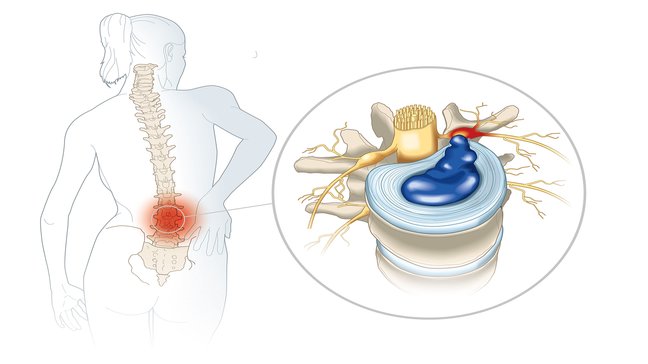
A herniated disc (disc prolapse) occurs when the gelatinous core (nucleus pulposus) of a disc protrudes through the fibrous ring (annulus fibrosus). This condition can lead to pain, numbness, and restricted movement, especially if the protruding disc…
Vertebral fracture
Classification of Vertebral Fractures
Vertebral fractures are classified according to their cause, location, and stability:
- By cause:
- Traumatic vertebral fracture: Due to direct injuries, such as falls from great heights or traffic accidents.
- Pathological vertebral fracture: Due to bone weakness caused by osteoporosis, tumors, or infections.
- By location:
- Cervical fractures: In the area of the cervical spine.
- Thoracic fractures: In the area of the thoracic spine.
- Lumbar fractures: In the area of the lumbar spine.
- By stability:
- Stable fractures: No risk to the spinal cord or the stability of the spine.
- Unstable fractures: Risk of spinal cord injuries or spinal instability.
Causes of Vertebral Fracture
The causes of a vertebral fracture can be divided into traumatic and pathological factors:
- **Traumatic causes:**
- High-energy accidents such as falls, sports injuries, or traffic accidents.
- Low-energy trauma in patients with osteoporosis.
- **Pathological causes:**
- Osteoporosis, which reduces bone density and stability.
- Tumors that weaken the vertebral body, e.g., metastases.
- Infections such as spondylodiscitis.
- **Risk factors:**
- Age, lack of exercise, and a calcium-poor diet increase the risk of pathological fractures.
Symptoms of vertebral fracture
The symptoms depend on the severity of the fracture and possible involvement of the spinal cord:
- **Pain:**
- Localized, often severe pain at the fracture site, which increases with movement.
- Radiating pain in arms, legs, or the chest area.
- **Movement restrictions:**
- Difficulties in turning or bending the spine.
- **Deformities:** Visible misalignments, e.g., a hunchback (kyphosis).
- **Neurological deficits:**
- Numbness, tingling, or paralysis in case of spinal cord compression.
- **General symptoms:**
- In pathological fractures, often accompanied by fatigue or weight loss.
Diagnosis of vertebral fracture
The diagnosis is made through a combination of medical history, clinical examination, and imaging techniques:
- Medical History:
- Assessment of the accident mechanism or underlying disease.
- Clinical Examination:
- Palpation of the spine for tenderness and checking for misalignments.
- Neurological tests to assess spinal cord or nerve root damage.
- Imaging:
- X-ray: For initial diagnosis of fractures and assessment of stability.
- CT: Detailed representation of bony structures and fracture lines.
- MRI: Assessment of soft tissues, spinal cord, and tumor infiltration.
- Bone Density Measurement:
- For diagnosing osteoporosis as an underlying cause.
Treatment options for vertebral fracture
Conservative Therapy
Stable fractures or minor injuries can often be treated conservatively:
- Immobilization and Relief:
- Use of orthoses or corsets to stabilize the spine.
- Avoidance of heavy physical strain.
- Pain Therapy:
- NSAIDs: To relieve pain and inflammation.
- Stronger analgesics for acute pain.
- Physiotherapy:
- After the acute phase subsides, to restore mobility and muscle strength.
- Treatment of the Underlying Condition:
- Osteoporosis therapy with calcium, vitamin D, and bisphosphonates.
Surgical Therapy
Unstable fractures or those with neurological deficits often require surgical treatment:
- Decompression:
- Exposure of the spinal cord or nerve roots in case of compression.
- Stabilization:
- Use of screws, plates, or implants to restore spinal stability.
- Kyphoplasty or Vertebroplasty:
- Minimally invasive procedures where the vertebral body is stabilized by injecting bone cement.
- Tumor Treatment:
- Removal of tumor tissue or stabilization of the vertebra in pathological fractures.
Preventive measures for vertebral fracture
To prevent vertebral fractures and support recovery, the following measures are recommended:
- Promote bone health: Adequate intake of calcium and vitamin D as well as regular exercise.
- Fall prevention: Adapting the living environment and training balance skills.
- Osteoporosis therapy: Early treatment of osteoporosis to prevent fractures.
- Ergonomic stress: Gentle lifting and carrying in everyday life and work.
- Regular check-ups: Especially for at-risk patients for early detection of bone weakness.
Swayback (Hyperlordosis)
The hollow back, medically referred to as hyperlordosis, is an excessive forward curvature of the lumbar spine. This poor posture causes the abdomen and pelvis to tilt forward while the upper body is inclined backward. A hollow back can cause…
Lumbago
A lumbago, medically referred to as lumbago, is a sudden, sharp pain in the lower back, usually in the lumbar spine. It is one of the most common musculoskeletal complaints and affects people of all ages, with middle-aged adults being particularly…
Failed Back Surgery Syndrome (FBSS)
The Failed Back Surgery Syndrome (FBSS), also known as post-discectomy syndrome or post-nucleotomy syndrome, refers to persistent or newly occurring pain in the back and leg area after spinal surgery. Despite surgical interventions aimed at reducing…
Herniated disc
A herniated disc (disc prolapse) occurs when the gelatinous core (nucleus pulposus) of a disc protrudes through the fibrous ring (annulus fibrosus). This condition can lead to pain, numbness, and restricted movement, especially if the protruding disc…