

Scheuermann's disease
Classification of Scheuermann's Disease
The disease is classified based on the location and severity:
- Thoracic type: Affects the thoracic spine and leads to pronounced kyphosis.
- Thoracolumbar type: Affects the transition between the thoracic and lumbar spine, which can cause a combination of kyphosis and lordosis.
- Lumbar type: Refers to the lumbar spine, where increased lordosis occurs.
- Severe course: Significant deformities of the vertebral bodies, leading to long-term movement restrictions and functional impairments.
Causes of Scheuermann's Disease
The exact causes of Scheuermann's disease are not fully known, but various factors play a role:
- Genetic predisposition:
- The disease often occurs more frequently in families, indicating a hereditary component.
- Growth disorders:
- An imbalance between the growth of the vertebral bodies and the stability of the surrounding structures can promote the disease.
- Mechanical stress:
- Repeated unilateral stresses or poor posture can additionally strain the spine.
- Weak musculature:
- Insufficiently developed back muscles can promote the progression of the disease.
Symptoms of Scheuermann's disease
The symptoms of Scheuermann's disease vary depending on the severity and stage of the condition:
- Postural defects: Noticeable kyphosis or hyperlordosis, often in combination with a "hunchback."
- Back pain: Pain in the area of the affected spine, especially after prolonged sitting or standing.
- Movement restrictions: Limited flexibility of the spine, particularly when bending and stretching.
- Muscle weakness: Weakness of the back muscles, which worsens posture.
- Restricted respiratory function: In severe cases, breathing may be impaired by the deformed thoracic spine.
Diagnosis of Scheuermann's disease
The diagnosis is made through a combination of medical history, clinical examination, and imaging techniques:
- Medical history:
- The doctor inquires about symptoms, disease progression, and family history.
- Clinical examination:
- Examination of the spine for curvatures, tenderness, and movement restrictions.
- Imaging techniques:
- X-ray: Shows typical wedge-shaped deformations of the vertebral bodies and increased kyphosis.
- MRI: Detailed representation of soft tissue structures and intervertebral discs.
- CT: Additional use in case of suspected bony changes.
Treatment options for Scheuermann's disease
Conservative Therapy
In most cases, surgery is not required, and the treatment aims to improve posture and relieve pain:
- Physiotherapy:
- Exercises to strengthen the back muscles and improve flexibility.
- Brace Therapy:
- In adolescents during the growth phase, a brace can correct the curvature.
- Medication Therapy:
- Pain relievers such as NSAIDs to alleviate discomfort.
- Ergonomic Adjustments:
- Optimization of sitting and working positions to relieve the spine.
Surgical Therapy
Surgery is considered in severe cases or persistent pain:
- Spinal Alignment:
- Correction of the curvature by implanting screws and rods.
- Spondylodesis:
- Fusion of certain vertebrae to restore the stability of the spine.
Preventive measures for Scheuermann's disease
To prevent or slow down the progression of the disease, the following measures are recommended:
- Regular exercise: Strengthening the back muscles through swimming, yoga, or similar sports.
- Ergonomic posture: Avoiding poor posture through optimal sitting and working.
- Early detection: Regular check-ups during adolescence if postural damage is suspected.
- Strengthening the muscles: Targeted training to support the spine.
- Movement breaks: Frequently changing positions when sitting or standing for extended periods.
Osteonecrosis in childhood
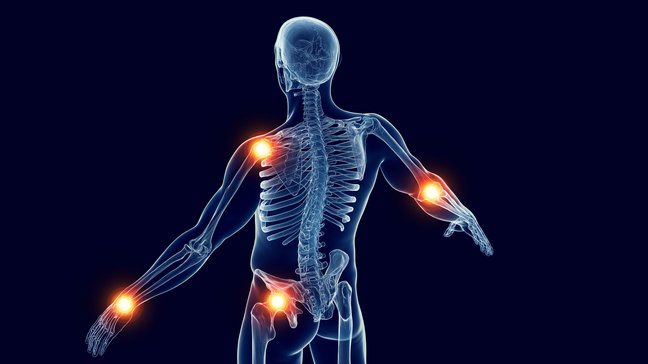
Osteonecroses in childhood are conditions in which there is a localized blood flow disorder in the bone, leading to the death of the affected tissue. These disorders often occur at the growth zones (epiphyses) and are typically associated with pain,…

Transient synovitis
Transient synovitis of the hip, medically referred to as Coxitis fugax, is a temporary, non-bacterial inflammation of the hip joint. This condition primarily affects children between the ages of three and ten, with boys being more frequently affected…
Epiphysiolysis of the femoral head
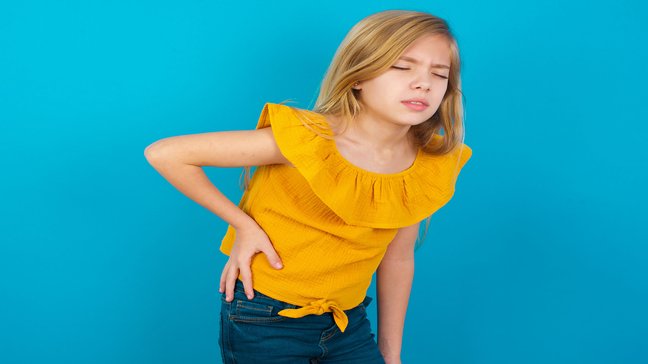
Epiphysiolysis capitis femoris (ECF), also referred to as juvenile femoral head slippage, is an orthopedic condition in which the femoral head slips along the growth plate (epiphyseal plate) of the femur. This condition typically occurs in…
Hip dysplasia
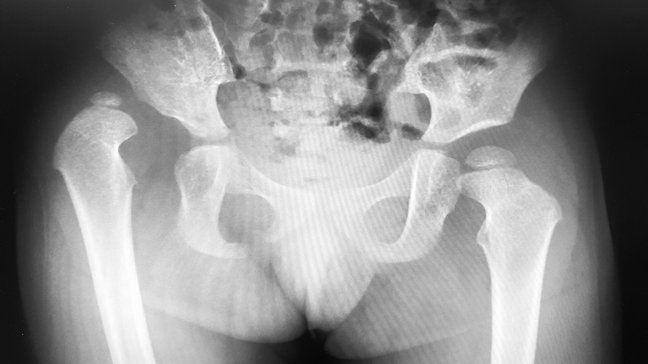
Hip dysplasia, also referred to as hip joint dysplasia, is a congenital or acquired malformation of the hip joint. The hip socket (acetabulum) is insufficiently developed, which leads to the femoral head (caput femoris) not sitting optimally in the…
Scheuermann's disease
Classification of Scheuermann's Disease
The disease is classified based on the location and severity:
- Thoracic type: Affects the thoracic spine and leads to pronounced kyphosis.
- Thoracolumbar type: Affects the transition between the thoracic and lumbar spine, which can cause a combination of kyphosis and lordosis.
- Lumbar type: Refers to the lumbar spine, where increased lordosis occurs.
- Severe course: Significant deformities of the vertebral bodies, leading to long-term movement restrictions and functional impairments.
Causes of Scheuermann's Disease
The exact causes of Scheuermann's disease are not fully known, but various factors play a role:
- Genetic predisposition:
- The disease often occurs more frequently in families, indicating a hereditary component.
- Growth disorders:
- An imbalance between the growth of the vertebral bodies and the stability of the surrounding structures can promote the disease.
- Mechanical stress:
- Repeated unilateral stresses or poor posture can additionally strain the spine.
- Weak musculature:
- Insufficiently developed back muscles can promote the progression of the disease.
Symptoms of Scheuermann's disease
The symptoms of Scheuermann's disease vary depending on the severity and stage of the condition:
- Postural defects: Noticeable kyphosis or hyperlordosis, often in combination with a "hunchback."
- Back pain: Pain in the area of the affected spine, especially after prolonged sitting or standing.
- Movement restrictions: Limited flexibility of the spine, particularly when bending and stretching.
- Muscle weakness: Weakness of the back muscles, which worsens posture.
- Restricted respiratory function: In severe cases, breathing may be impaired by the deformed thoracic spine.
Diagnosis of Scheuermann's disease
The diagnosis is made through a combination of medical history, clinical examination, and imaging techniques:
- Medical history:
- The doctor inquires about symptoms, disease progression, and family history.
- Clinical examination:
- Examination of the spine for curvatures, tenderness, and movement restrictions.
- Imaging techniques:
- X-ray: Shows typical wedge-shaped deformations of the vertebral bodies and increased kyphosis.
- MRI: Detailed representation of soft tissue structures and intervertebral discs.
- CT: Additional use in case of suspected bony changes.
Treatment options for Scheuermann's disease
Conservative Therapy
In most cases, surgery is not required, and the treatment aims to improve posture and relieve pain:
- Physiotherapy:
- Exercises to strengthen the back muscles and improve flexibility.
- Brace Therapy:
- In adolescents during the growth phase, a brace can correct the curvature.
- Medication Therapy:
- Pain relievers such as NSAIDs to alleviate discomfort.
- Ergonomic Adjustments:
- Optimization of sitting and working positions to relieve the spine.
Surgical Therapy
Surgery is considered in severe cases or persistent pain:
- Spinal Alignment:
- Correction of the curvature by implanting screws and rods.
- Spondylodesis:
- Fusion of certain vertebrae to restore the stability of the spine.
Preventive measures for Scheuermann's disease
To prevent or slow down the progression of the disease, the following measures are recommended:
- Regular exercise: Strengthening the back muscles through swimming, yoga, or similar sports.
- Ergonomic posture: Avoiding poor posture through optimal sitting and working.
- Early detection: Regular check-ups during adolescence if postural damage is suspected.
- Strengthening the muscles: Targeted training to support the spine.
- Movement breaks: Frequently changing positions when sitting or standing for extended periods.
Osteonecrosis in childhood
Osteonecroses in childhood are conditions in which there is a localized blood flow disorder in the bone, leading to the death of the affected tissue. These disorders often occur at the growth zones (epiphyses) and are typically associated with pain,…
Transient synovitis
Transient synovitis of the hip, medically referred to as Coxitis fugax, is a temporary, non-bacterial inflammation of the hip joint. This condition primarily affects children between the ages of three and ten, with boys being more frequently affected…
Epiphysiolysis of the femoral head
Epiphysiolysis capitis femoris (ECF), also referred to as juvenile femoral head slippage, is an orthopedic condition in which the femoral head slips along the growth plate (epiphyseal plate) of the femur. This condition typically occurs in…
Hip dysplasia
Hip dysplasia, also referred to as hip joint dysplasia, is a congenital or acquired malformation of the hip joint. The hip socket (acetabulum) is insufficiently developed, which leads to the femoral head (caput femoris) not sitting optimally in the…