

Knick-sink-foot
Classification of Pronation-Flatfoot
The flatfoot with inward rotation can be divided into different categories:
- Physiological flatfoot with inward rotation:
- Often occurs in children and corrects itself with age.
- Pathological flatfoot with inward rotation:
- Persists or develops in adulthood, often accompanied by pain and limitations.
- Acquired flatfoot with inward rotation:
- Develops due to external influences such as overweight, injuries, or other conditions.
Causes of flatfoot with inward rotation.
The causes of a flatfoot can be varied:
- Genetic predisposition:
- A familial accumulation of the deformity indicates a genetic component.
- Muscle weakness and ligament weakness:
- Lack of exercise, infrequent barefoot walking, or unsuitable footwear can weaken the muscles and lower the arch of the foot.
- Overweight:
- The increased body weight puts stress on the arch of the foot and promotes its flattening.
- Injuries and diseases:
- Damage to the tibialis posterior tendon, rheumatic diseases, or bone injuries can affect the foot's statics.
- Misloading:
- Frequent standing or working on hard surfaces favors the deformity.
Symptoms of flatfoot.
The symptoms depend on the severity of the misalignment and include:
- Pain:
- Discomfort usually occurs in the area of the inner edge of the foot, the inner ankle, or the plantar fascia. It can also radiate into the lower leg.
- Rapid fatigue:
- Affected individuals complain of tired feet after short walking distances or prolonged standing.
- Tension:
- Altered foot statics can cause muscle tension or cramps in the lower leg.
- Deformity:
- Visible flattening of the foot arch and inward tilting heel.
- Irregular shoe wear:
- Excessive wear on the inside of the shoes is a typical sign.
Diagnosis of flatfoot with valgus deformity.
The diagnosis is based on a thorough examination of the foot:
- Clinical examination:
- Assessment of foot position, mobility, muscle strength, and pain points.
- Footprint analysis:
- To determine the condition of the arch and pressure distribution.
- Imaging techniques:
- X-ray: Assessment of bone position and exclusion of other causes.
- MRI or ultrasound: Examination of soft tissues, especially the tibialis posterior tendon.
Treatment options for flatfoot.
Conservative Therapy
Most cases can be treated without surgery:
- Orthopedic Insoles:
- Custom-made insoles support the arch of the foot and correct the misalignment.
- Physiotherapy:
- Exercises to strengthen the foot and lower leg muscles and improve mobility.
- Shoe Fitting:
- Special footwear with good arch support can alleviate discomfort.
- Medication Treatment:
- NSAIDs to reduce pain and inflammation in acute cases.
Surgical Therapy
Surgery may be necessary for therapy-resistant or severe misalignments:
- Arthroereisis:
- Minimally invasive correction of heel position using implants.
- Tendon Reconstruction:
- Repair or reinforcement of damaged tendons, especially the tibialis posterior tendon.
- Osteotomies:
- Correction of bone position through surgical procedures.
Preventive measures for flatfoot.
To prevent a flatfoot, the following measures are recommended:
- Regular barefoot walking: Promotes the natural strengthening of the foot muscles.
- Targeted exercises: Strengthening of the foot muscles and improvement of foot statics through physiotherapy or special training programs.
- Suitable footwear: Wearing shoes with good cushioning and arch support.
- Weight control: Avoiding overweight to relieve the arch of the foot.
- Early treatment: Consult a doctor promptly at the first signs of a misalignment.
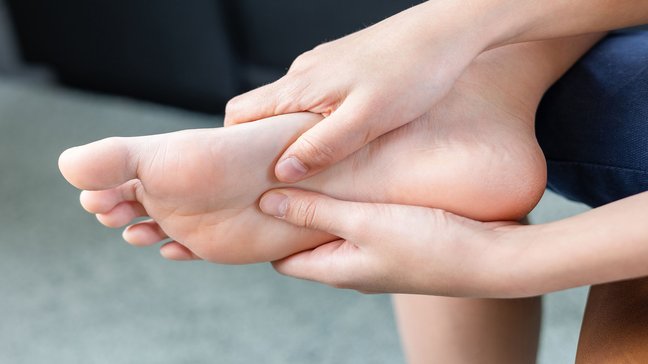
Metatarsalgia
Metatarsalgia describes pain in the forefoot area, often occurring under the metatarsal heads. These complaints usually arise from overuse, misalignments, or degenerative changes in the foot. People who stand a lot, walk, or are physically active are…

Morton Neuroma
Morton's neuroma, also known as Morton's metatarsalgia, is a painful thickening of nerve tissue that typically occurs between the metatarsal bones in the area of the third and fourth toes. It is a common cause of forefoot pain, caused by mechanical…

Tarsal arthritis
Tarsal arthritis, also known as osteoarthritis in the area of the tarsal bones, is a degenerative joint disease that affects the tarsal region. It often occurs in older people but can also be caused by injuries or misalignments. The disease leads to…
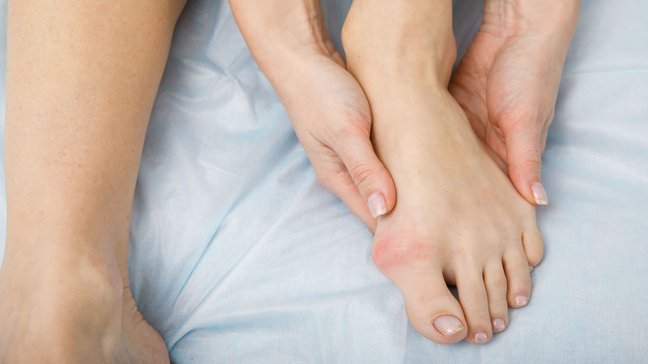
Hallux Valgus
Hallux valgus, colloquially known as a bunion, is a common foot deformity where the big toe (hallux) deviates towards the other toes. This results in a protrusion of the big toe joint, which is often painful and leads to problems when wearing shoes.…
Knick-sink-foot
Classification of Pronation-Flatfoot
The flatfoot with inward rotation can be divided into different categories:
- Physiological flatfoot with inward rotation:
- Often occurs in children and corrects itself with age.
- Pathological flatfoot with inward rotation:
- Persists or develops in adulthood, often accompanied by pain and limitations.
- Acquired flatfoot with inward rotation:
- Develops due to external influences such as overweight, injuries, or other conditions.
Causes of flatfoot with inward rotation.
The causes of a flatfoot can be varied:
- Genetic predisposition:
- A familial accumulation of the deformity indicates a genetic component.
- Muscle weakness and ligament weakness:
- Lack of exercise, infrequent barefoot walking, or unsuitable footwear can weaken the muscles and lower the arch of the foot.
- Overweight:
- The increased body weight puts stress on the arch of the foot and promotes its flattening.
- Injuries and diseases:
- Damage to the tibialis posterior tendon, rheumatic diseases, or bone injuries can affect the foot's statics.
- Misloading:
- Frequent standing or working on hard surfaces favors the deformity.
Symptoms of flatfoot.
The symptoms depend on the severity of the misalignment and include:
- Pain:
- Discomfort usually occurs in the area of the inner edge of the foot, the inner ankle, or the plantar fascia. It can also radiate into the lower leg.
- Rapid fatigue:
- Affected individuals complain of tired feet after short walking distances or prolonged standing.
- Tension:
- Altered foot statics can cause muscle tension or cramps in the lower leg.
- Deformity:
- Visible flattening of the foot arch and inward tilting heel.
- Irregular shoe wear:
- Excessive wear on the inside of the shoes is a typical sign.
Diagnosis of flatfoot with valgus deformity.
The diagnosis is based on a thorough examination of the foot:
- Clinical examination:
- Assessment of foot position, mobility, muscle strength, and pain points.
- Footprint analysis:
- To determine the condition of the arch and pressure distribution.
- Imaging techniques:
- X-ray: Assessment of bone position and exclusion of other causes.
- MRI or ultrasound: Examination of soft tissues, especially the tibialis posterior tendon.
Treatment options for flatfoot.
Conservative Therapy
Most cases can be treated without surgery:
- Orthopedic Insoles:
- Custom-made insoles support the arch of the foot and correct the misalignment.
- Physiotherapy:
- Exercises to strengthen the foot and lower leg muscles and improve mobility.
- Shoe Fitting:
- Special footwear with good arch support can alleviate discomfort.
- Medication Treatment:
- NSAIDs to reduce pain and inflammation in acute cases.
Surgical Therapy
Surgery may be necessary for therapy-resistant or severe misalignments:
- Arthroereisis:
- Minimally invasive correction of heel position using implants.
- Tendon Reconstruction:
- Repair or reinforcement of damaged tendons, especially the tibialis posterior tendon.
- Osteotomies:
- Correction of bone position through surgical procedures.
Preventive measures for flatfoot.
To prevent a flatfoot, the following measures are recommended:
- Regular barefoot walking: Promotes the natural strengthening of the foot muscles.
- Targeted exercises: Strengthening of the foot muscles and improvement of foot statics through physiotherapy or special training programs.
- Suitable footwear: Wearing shoes with good cushioning and arch support.
- Weight control: Avoiding overweight to relieve the arch of the foot.
- Early treatment: Consult a doctor promptly at the first signs of a misalignment.
Metatarsalgia
Metatarsalgia describes pain in the forefoot area, often occurring under the metatarsal heads. These complaints usually arise from overuse, misalignments, or degenerative changes in the foot. People who stand a lot, walk, or are physically active are…
Morton Neuroma
Morton's neuroma, also known as Morton's metatarsalgia, is a painful thickening of nerve tissue that typically occurs between the metatarsal bones in the area of the third and fourth toes. It is a common cause of forefoot pain, caused by mechanical…
Tarsal arthritis
Tarsal arthritis, also known as osteoarthritis in the area of the tarsal bones, is a degenerative joint disease that affects the tarsal region. It often occurs in older people but can also be caused by injuries or misalignments. The disease leads to…
Hallux Valgus
Hallux valgus, colloquially known as a bunion, is a common foot deformity where the big toe (hallux) deviates towards the other toes. This results in a protrusion of the big toe joint, which is often painful and leads to problems when wearing shoes.…