

Achillodynia
Classification of Achilles Tendinopathy
Achillodynia can be divided into different categories:
-
Acute Achillodynia: Sudden onset of pain due to short-term overload or injury to the Achilles tendon.
-
Chronic Achillodynia: Long-lasting discomfort, often caused by repeated microtrauma or degenerative changes in the tendon.
-
Insertional Achillodynia: Pain at the insertion of the Achilles tendon on the heel bone.
-
Non-insertional Achillodynia: Pain in the middle area of the tendon, away from the insertion.
Causes of Achilles tendinopathy
The main causes of Achilles tendinopathy can be divided into several categories:
Mechanical overload:
- Intensive sports activities such as running, jumping, or other explosive movements subject the Achilles tendon to enormous forces.
- Repeated stress without sufficient recovery phases can cause microtrauma and overload damage.
Misalignments:
- Foot deformities (e.g., flatfoot or high arch) alter the load distribution and lead to excessive strain on the Achilles tendon.
- Inappropriate footwear, especially shoes with insufficient cushioning, increases the risk.
Degenerative changes:
- With increasing age, the Achilles tendon loses elasticity and resilience, making it more susceptible to injuries.
- Chronic microtrauma can accelerate degenerative processes.
Inflammatory causes:
- Diseases such as rheumatoid arthritis or infections can cause inflammatory changes in the tendon.
Acute injuries:
- Direct trauma, such as a sudden rupture of the tendon during sports activity, is also among the Achilles tendon pathologies.
Symptoms of achillodynia
The symptoms vary depending on the type and severity of the pathology, but often include:
- **Localized pain:** Pain usually occurs at the transition between the tendon and heel (insertion) or in the middle area of the tendon.
- **Swelling and thickening:** The Achilles tendon may be visibly thickened or swollen.
- **Movement restrictions:** Activities such as running, jumping, or even walking can be painful and limit mobility.
- **Tenderness:** Even slight pressure on the tendon triggers pain.
- **Crepitus:** In inflammatory processes, crunching noises can be heard when moving the tendon.
- **Sudden pain and loss of function:** In the case of a tendon rupture, a loud popping sound is often heard, followed by severe pain and loss of function.
Diagnosis of Achilles tendinopathy
The diagnosis is made through a combination of medical history, physical examination, and imaging techniques:
- Medical History:
- The doctor asks about symptoms, duration of the illness, sports activities, and possible injuries.
- Physical Examination:
- Palpation of the Achilles tendon for swelling, tenderness, and thickening.
- Special tests, such as the Thompson test, help diagnose a tendon rupture.
- Imaging Techniques:
- Ultrasound: Shows inflammatory processes, tears, or thickening of the tendon.
- MRI: Provides detailed information about soft tissue damage, calcifications, or degenerative changes.
- X-ray: Useful in cases of suspected bony changes or calcifications.
Treatment options for Achilles tendinopathy
Conservative Therapy
Most cases of Achilles tendinopathy can be treated without surgery:
- Rest and Load Reduction:
- Avoidance of strenuous activities to give the tendon time to heal.
- Physiotherapy:
- Stretching Exercises: Promote the elasticity and resilience of the tendon.
- Strengthening Exercises: Stabilize the calf muscles and counteract degenerative processes.
- Shockwave Therapy (ESWT):
- High-energy sound waves promote healing and relieve pain.
- Injections:
- PRP (platelet-rich plasma): Promotes tissue regeneration.
- Hyaluronic Acid: Relieves inflammation and improves gliding ability.
- Orthotics:
- Special shoe inserts or orthotics relieve the Achilles tendon and support healing.
Surgical Therapy
In rare cases, surgery may be necessary, especially for persistent symptoms that do not respond to conservative measures:
- Debridement: Removal of inflamed or degeneratively altered tissue.
- Tendon Reconstruction: Repair of the Achilles tendon in cases of extensive damage.
- Minimally Invasive Techniques: Modern procedures allow for faster recovery and minimize the risk of complications.
Preventive measures for Achilles tendinopathy
To prevent Achilles tendinopathy, the following measures are recommended:
- Suitable footwear: With sufficient cushioning and arch support.
- Warming up and stretching: Before sports, to optimally prepare the tendon.
- Load management: Regular breaks and recovery times between intense training sessions.
- Strengthening the calf muscles: Supports the Achilles tendon and improves its resilience.
- Avoiding overload: Gradual increase in training intensity and duration.
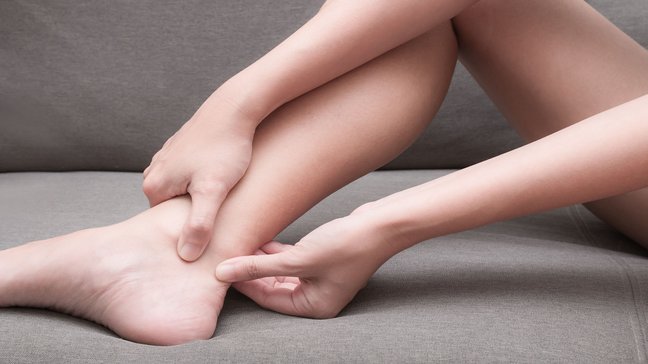
Inflammation/tear of the tibialis posterior tendon
The tibialis posterior tendon plays a crucial role in stabilizing the longitudinal arch of the foot and supporting foot movements. Inflammation or tears of this tendon can lead to significant functional impairments and foot deformities.

Achilles tendon pathologies
Achilles tendon pathologies include various diseases and injuries of the Achilles tendon, which can lead to pain, movement restrictions, and chronic complaints. They often affect athletes and active people, but can also arise from improper loading or…
Polyneuropathy
Polyneuropathy is a disease of the peripheral nervous system in which multiple nerves are affected simultaneously. It can impair motor, sensory, and autonomic nerve functions, leading to a variety of symptoms such as pain, numbness, or muscle…
Achillodynia
Classification of Achilles Tendinopathy
Achillodynia can be divided into different categories:
-
Acute Achillodynia: Sudden onset of pain due to short-term overload or injury to the Achilles tendon.
-
Chronic Achillodynia: Long-lasting discomfort, often caused by repeated microtrauma or degenerative changes in the tendon.
-
Insertional Achillodynia: Pain at the insertion of the Achilles tendon on the heel bone.
-
Non-insertional Achillodynia: Pain in the middle area of the tendon, away from the insertion.
Causes of Achilles tendinopathy
The main causes of Achilles tendinopathy can be divided into several categories:
Mechanical overload:
- Intensive sports activities such as running, jumping, or other explosive movements subject the Achilles tendon to enormous forces.
- Repeated stress without sufficient recovery phases can cause microtrauma and overload damage.
Misalignments:
- Foot deformities (e.g., flatfoot or high arch) alter the load distribution and lead to excessive strain on the Achilles tendon.
- Inappropriate footwear, especially shoes with insufficient cushioning, increases the risk.
Degenerative changes:
- With increasing age, the Achilles tendon loses elasticity and resilience, making it more susceptible to injuries.
- Chronic microtrauma can accelerate degenerative processes.
Inflammatory causes:
- Diseases such as rheumatoid arthritis or infections can cause inflammatory changes in the tendon.
Acute injuries:
- Direct trauma, such as a sudden rupture of the tendon during sports activity, is also among the Achilles tendon pathologies.
Symptoms of achillodynia
The symptoms vary depending on the type and severity of the pathology, but often include:
- **Localized pain:** Pain usually occurs at the transition between the tendon and heel (insertion) or in the middle area of the tendon.
- **Swelling and thickening:** The Achilles tendon may be visibly thickened or swollen.
- **Movement restrictions:** Activities such as running, jumping, or even walking can be painful and limit mobility.
- **Tenderness:** Even slight pressure on the tendon triggers pain.
- **Crepitus:** In inflammatory processes, crunching noises can be heard when moving the tendon.
- **Sudden pain and loss of function:** In the case of a tendon rupture, a loud popping sound is often heard, followed by severe pain and loss of function.
Diagnosis of Achilles tendinopathy
The diagnosis is made through a combination of medical history, physical examination, and imaging techniques:
- Medical History:
- The doctor asks about symptoms, duration of the illness, sports activities, and possible injuries.
- Physical Examination:
- Palpation of the Achilles tendon for swelling, tenderness, and thickening.
- Special tests, such as the Thompson test, help diagnose a tendon rupture.
- Imaging Techniques:
- Ultrasound: Shows inflammatory processes, tears, or thickening of the tendon.
- MRI: Provides detailed information about soft tissue damage, calcifications, or degenerative changes.
- X-ray: Useful in cases of suspected bony changes or calcifications.
Treatment options for Achilles tendinopathy
Conservative Therapy
Most cases of Achilles tendinopathy can be treated without surgery:
- Rest and Load Reduction:
- Avoidance of strenuous activities to give the tendon time to heal.
- Physiotherapy:
- Stretching Exercises: Promote the elasticity and resilience of the tendon.
- Strengthening Exercises: Stabilize the calf muscles and counteract degenerative processes.
- Shockwave Therapy (ESWT):
- High-energy sound waves promote healing and relieve pain.
- Injections:
- PRP (platelet-rich plasma): Promotes tissue regeneration.
- Hyaluronic Acid: Relieves inflammation and improves gliding ability.
- Orthotics:
- Special shoe inserts or orthotics relieve the Achilles tendon and support healing.
Surgical Therapy
In rare cases, surgery may be necessary, especially for persistent symptoms that do not respond to conservative measures:
- Debridement: Removal of inflamed or degeneratively altered tissue.
- Tendon Reconstruction: Repair of the Achilles tendon in cases of extensive damage.
- Minimally Invasive Techniques: Modern procedures allow for faster recovery and minimize the risk of complications.
Preventive measures for Achilles tendinopathy
To prevent Achilles tendinopathy, the following measures are recommended:
- Suitable footwear: With sufficient cushioning and arch support.
- Warming up and stretching: Before sports, to optimally prepare the tendon.
- Load management: Regular breaks and recovery times between intense training sessions.
- Strengthening the calf muscles: Supports the Achilles tendon and improves its resilience.
- Avoiding overload: Gradual increase in training intensity and duration.
Inflammation/tear of the tibialis posterior tendon
The tibialis posterior tendon plays a crucial role in stabilizing the longitudinal arch of the foot and supporting foot movements. Inflammation or tears of this tendon can lead to significant functional impairments and foot deformities.
Achilles tendon pathologies
Achilles tendon pathologies include various diseases and injuries of the Achilles tendon, which can lead to pain, movement restrictions, and chronic complaints. They often affect athletes and active people, but can also arise from improper loading or…
Polyneuropathy
Polyneuropathy is a disease of the peripheral nervous system in which multiple nerves are affected simultaneously. It can impair motor, sensory, and autonomic nerve functions, leading to a variety of symptoms such as pain, numbness, or muscle…